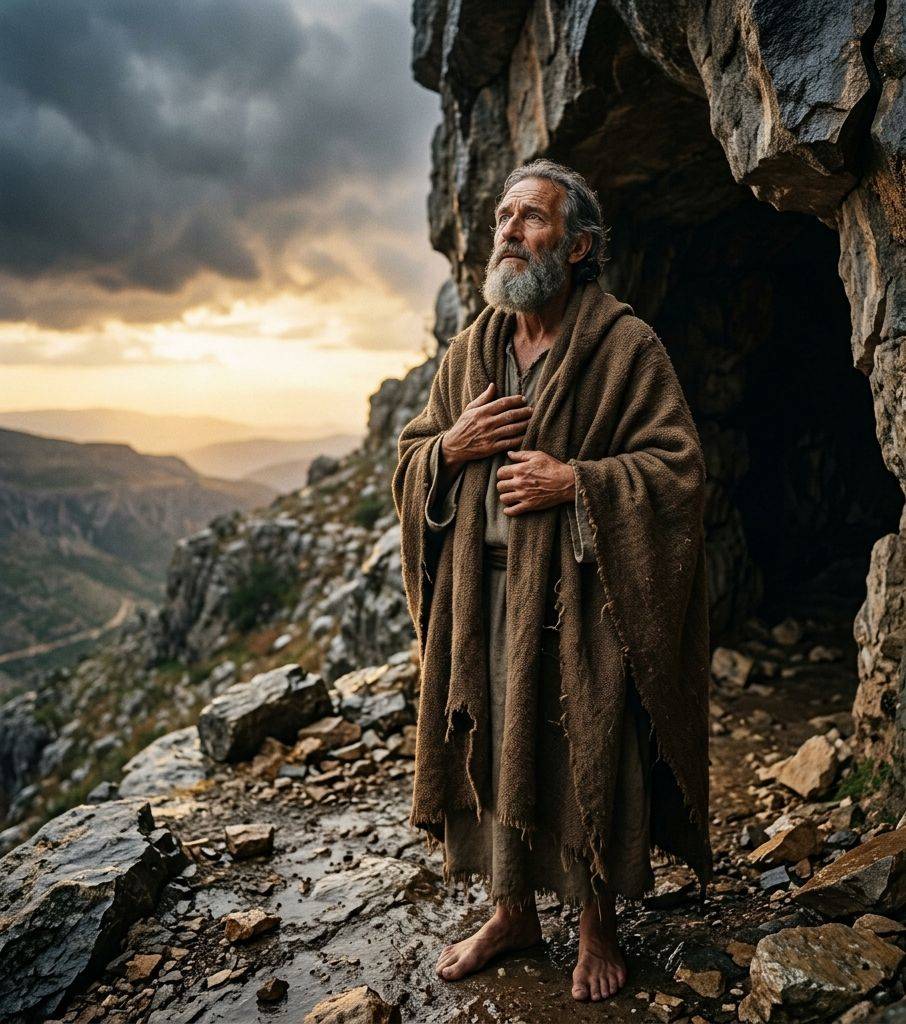

The Silence was Worse than the Storm.
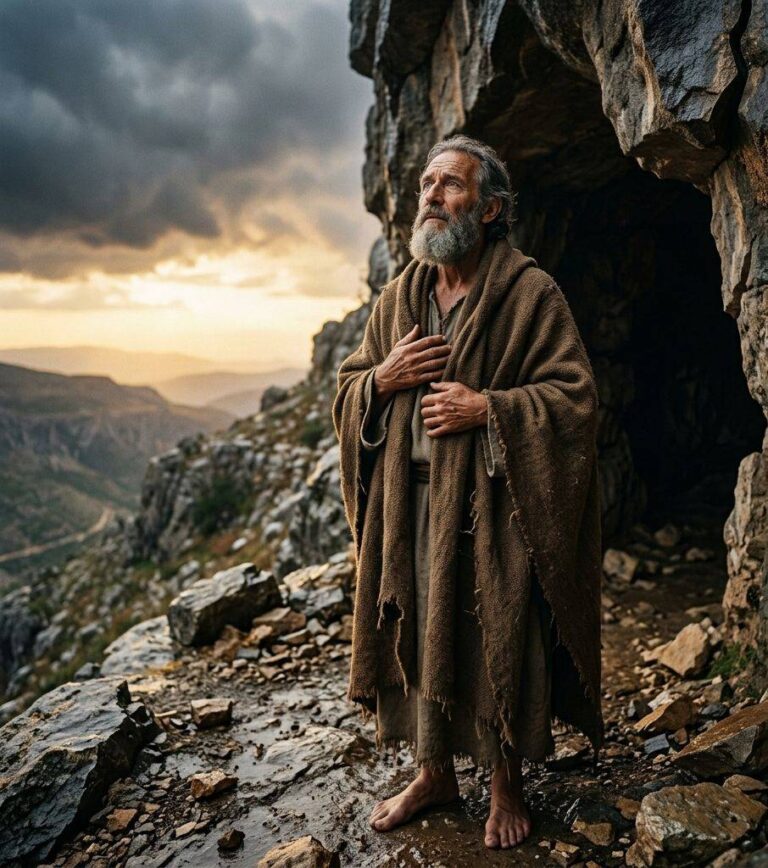
Elijah pressed his back against the cold stone of the cave mouth and listened to the wind tear at the mountain like a living thing trying to rip the world apart. It had been blowing for hours, a howl that shook the rocks and sent loose stones clattering down the slopes outside. He had come to this place because he was tired. Tired of running. Tired of being afraid. Tired of carrying a message that nobody wanted to hear and a God who felt further away with every step.
The wind screamed and he closed his eyes. He had seen fire fall from the sky. He had watched a nation choose a golden calf over the living God. He had stood alone against four hundred prophets and won, and then he had run into the wilderness and begged to die. That was the truth of it. The victory had felt hollow, like emptying himself of everything and receiving nothing back but silence.
The wind stopped.
The sudden absence of sound was a physical thing, a pressure lifting from his ears. Elijah opened his eyes but did not move. He had learned that silence could be a weapon. He had learned that the absence of God was sometimes more present than His voice.
Then the earth began to shake.
The mountain itself groaned and shuddered as if the roots of the world were being torn apart. Rocks fell from the ceiling of the cave and shattered at his feet. Elijah pressed himself against the wall and felt the stone vibrate against his spine. This was the God he knew. The God of fire and earthquake and wind that split mountains. The God who had answered him on Carmel with flame from heaven. If God was going to speak again, surely it would be like this. Surely the voice would come in the destruction.
The earthquake stopped.
Silence again, thick and heavy, and then light. A fierce, consuming brightness filled the cave and made his eyes burn even behind closed lids. Fire. He could feel the heat of it on his face, could smell the sharp tang of ozone and burning rock. This was how God had always come to him. In the fire that consumed the sacrifice. In the lightning that answered his prayer. In the anger and the power and the undeniable proof that the Lord was God.
But the voice did not come in the fire.
Elijah waited, his breath caught in his chest, his hands pressed against the stone. The fire faded and the darkness returned and the silence stretched on and on until he thought he could bear it no longer. And then, in the quiet, he heard something he had never expected.
A whisper.
It was so soft that he almost missed it, a sound like wind through dry grass, like a mother murmuring to a child in the dark. It asked him a question, and the question caught him off guard. It avoided every inquiry about his victories or his failures or his flight into the wilderness. It bypassed any demand to defend himself or explain himself or prove that he had been faithful. It simply asked him what he was doing there, in that cave, on that mountain, so far from the people he had been sent to serve.
And Elijah, who had faced kings and called down fire and challenged an entire nation, found that he could give no answer. Because the truth was unflattering. The truth was that he had run because he was afraid. The truth was that he had given up because the silence had grown too heavy to carry. The truth was that he had come to this cave seeking a hiding place rather than God, and the whisper had found him anyway.
The wind had passed. The earthquake had faded. The fire had burned out.
In the silence after the storm, when every defense had been stripped away and every excuse had been exhausted and every mask had been removed, God had spoken in a voice so small that only a broken man could hear it.
Elijah wrapped his cloak around his face and stepped out of the cave. Answers had deserted him. Strength had abandoned him. The certainty he had carried when he first raised his voice against the prophets of Baal was gone, replaced by something quieter and truer. But he had found something else in that dark place, something the wind and the quake and the fire could never have given him. He had found the knowledge that God was present in the whisper as much as in the flame. And the whisper was enough to send him back.
He walked down the mountain into the valley where his work was waiting. The storm was over. The silence remained. And somewhere in that silence, a still small voice had told him that he was never alone.