
The Last Words of a Dying Man
Memory Verse:
“Then said Jesus, Father, forgive them; for they know not what they do. And they parted his raiment, and cast lots.” – Luke 23:34 (KJV)
Bible Reading:
Luke 23:33–38 (KJV)
“And when they were come to the place, which is called Calvary, there they crucified him, and the malefactors, one on the right hand, and the other on the left. Then said Jesus, Father, forgive them; for they know not what they do. And they parted his raiment, and cast lots. And the people stood beholding. And the rulers also with them derided him, saying, He saved others; let him save himself, if he be Christ, the chosen of God. And the soldiers also mocked him, coming to him, and offering him vinegar, And saying, If thou be the king of the Jews, save thyself. And a superscription also was written over him in letters of Greek, and Latin, and Hebrew, THIS IS THE KING OF THE JEWS.”
When a Dying Man Speaks
Some words carry the weight of eternity. A man may forget his wealth when pain grips his bones, but what remains in his final breath often reveals where his treasure truly lies. At the edge of death, stripped, torn, bleeding, and mocked Jesus whispered mercy. And not for Himself.
No one asked Him to say that. Nobody deserved it. Yet from bruised lips came forgiveness.
This was not whispered in a quiet corner, but spoken publicly with nails through His hands and a crowd that spat curses. If there ever was a moment to curse back this looked like it.
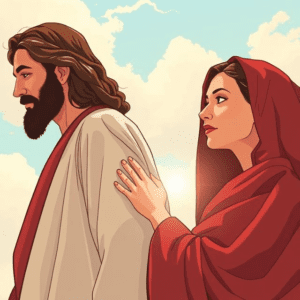
He said, “Father, forgive them…” That cry was for the soldiers, sinners, skeptics and for every soul who has ever wounded another or carried the guilt of a heavy past.
It reaches far into the quiet places where guilt still hides. It ministers to everyone.
The Deepest Forgiveness in the Darkest Hour
The Cross was more than a punishment, it became a pulpit. In that moment, Jesus taught us that Heaven is accessed through surrender, not through retaliation.
The verse said, “Father, forgive them; for they know not what they do.” That “them” was not limited to Roman soldiers alone. It included every careless word ever spoken, every betrayal by those who once said “I love you,” every slap of injustice, every blind choice, and every proud heart.
A child of God may wonder, “Could mercy really reach me after all I’ve done?” But this was not a forgiveness earned, it was poured out like oil on the altar. Without being begged, without being asked, the Lamb gave pardon freely.
He still speaks. Forgiveness was not delayed, it was declared immediately. That shows us that God doesn’t wait for perfection before He offers grace. He doesn’t first demand the apology. He sees the blindness of mankind and still loves ( John 3:16).
The more striking aspect was that He said it before anyone changed their mind. Even when no confession was made from the crowd, nor admission of guilt from the executioners, Still, He said, “Forgive them.”
This shows that divine love sees the sinner through the eyes of purpose, not punishment.
Forgiveness in Our Hands
Someone once said, “You never really know the strength of your faith until you are asked to forgive what deeply hurt you.” True.
There are believers who smile in the choir but weep in the dark, not because of their sins, but because they carry wounds that were never acknowledged. Some hurts were never followed by apologies. Yet here we are face to face with the example of Jesus, who released mercy while the hammer was still swinging.
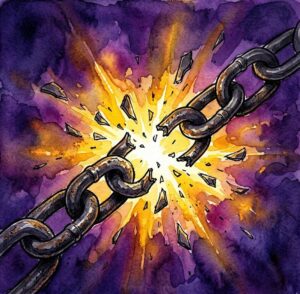
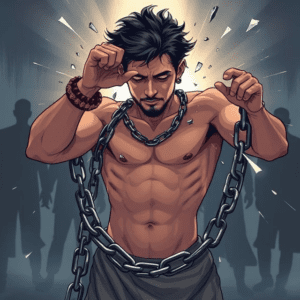
A Christian woman once shared how God healed her not through the justice she prayed for, but through a quiet whisper that told her to let go of the grudge. She said, “I kept waiting for him to say sorry. But the Holy Ghost kept saying ‘You’re holding chains that I already broke.’” And she realized that forgiveness was not setting her enemy free, but setting herself free.
This doesn’t mean pretending the wound never happened but trusting God to hold the scale of justice while we choose freedom over bitterness.
For many, this is hard. A person who was abandoned, or betrayed, or falsely accused might say, “But they never understood what they did.” That’s exactly what Jesus said: “…for they know not what they do.”
So we learn that God doesn’t ask us to erase our memory; He invites us to give Him the pain of it. And through the Spirit, the same power that enabled Jesus say those words can fill our hearts, too.
Some wounds feel too deep, yes! But the deeper the cut, the louder the cry of mercy ought to be. Even for those who will never say sorry, we can still release them even if they have not changed.
When Calvary Speaks Louder
A soul pressing through pain may ask, “What now? What if I’m the one who failed others?” There’s good news.
The same voice that forgave murderers and mockers still whispers hope to the guilty and the grieving. Even if the memory still burns, even if the silence after our mistake feels loud, the Calvary speaks mercy.
Forgiveness may not erase the past but it holds the future with gentler hands. A believer who forgives becomes a vessel of peace in a world that knows only revenge.
Many have tasted the sweetness of grace only after forgiving those who never deserved it. And they found that something strange happened after that prayer. The heaviness was lifted.
Beloveth, today, as we remember the last words of a dying man, Jesus Christ on the cross, let every Christian understand that mercy speaks louder than pain. At Calvary, His blood flowed for salvation, His final words carried grace, and through grace, we have eternal life.
Further Reading:
📖 Psalm 103:10–12 – “He hath not dealt with us after our sins…”
📖 Ephesians 4:32 – “And be ye kind one to another…”
📖 Matthew 6:14 – “For if ye forgive men their trespasses…” (KJV)