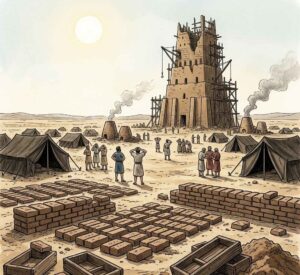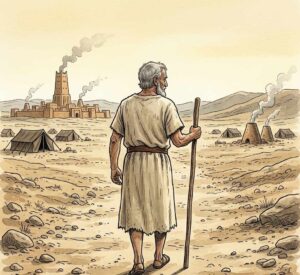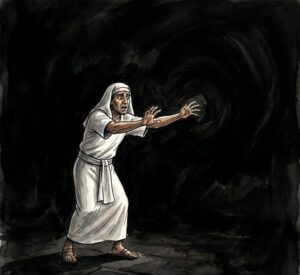
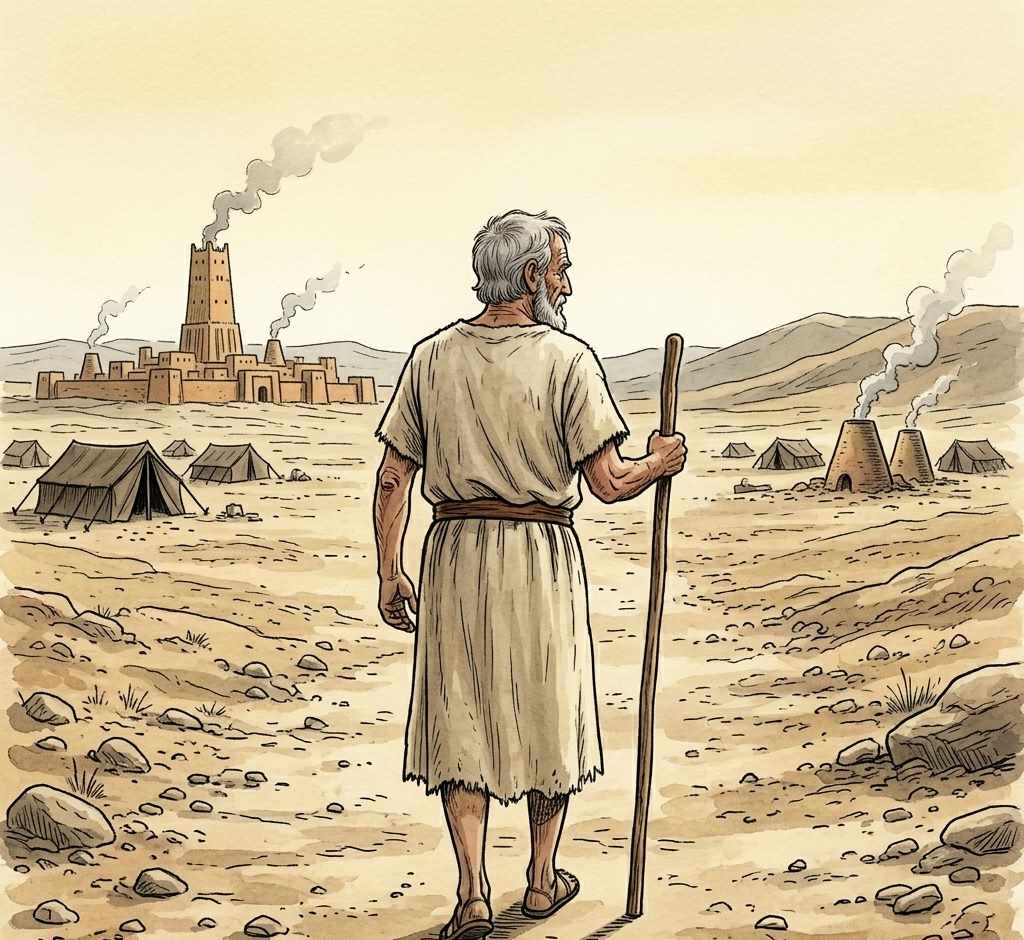

The voice came to him in Ur of the Chaldees, a city of baked brick and narrow streets and a great temple tower that rose toward the sky. He was seventy-five years old, a man with flocks and herds and servants and a wife named Sarai who had borne him no children. His father Terah had brought the family from Ur and settled them in Haran, a city to the north, and there the old man had died. And now the voice spoke to the son.
“Get thee out of thy country, and from thy kindred, and from thy father’s house, unto a land that I will shew thee.”
The words were a command and a promise wrapped together. Leave everything. Your country. Your people. Your father’s house. The three circles of belonging that define a man’s life, the places where his name is known and his history is written. The voice told him to walk away from all of it and go to a land he had never seen, a land the voice would show him only after he started walking.
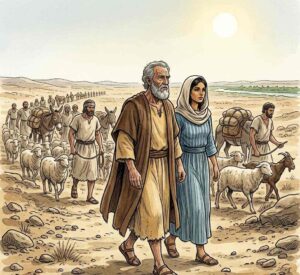
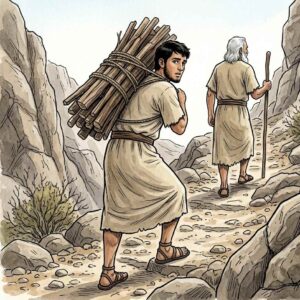
The old man did not argue. He did not ask questions. He did not ask for a map or a sign or a guarantee. He packed his tents and gathered his flocks and took Sarai his wife and Lot his nephew and all the people of his household and all the goods they had gathered in Haran, and he set out. He walked away from the city where his father was buried, away from the streets he knew, away from everything that could be called home, and he walked south toward a land he could not name.
The Promise Spoken on the Road
The voice had made him a promise, and the promise was large enough to carry a man across a desert. The Lord had said that he would make of Abram a great nation. He would bless him and make his name great, and he would be a blessing. The Lord would bless those who blessed him and curse those who cursed him, and in him all the families of the earth would be blessed.
These words must have turned over and over in the mind of the old man as he walked. A great nation from a man whose wife was barren. A great name from a man who was leaving his name behind in the city of his fathers. A blessing for all families from a man who had no family to carry on his line except a nephew who was not his own son. The promise made no sense by the measurements of the world. But the voice had spoken, and the old man had believed, and the believing was counted to him as righteousness.
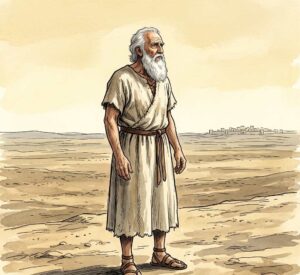
He was seventy-five years old when he left Haran. His hair was grey. His back was bent. His hands were worn from years of tending flocks and leading a household. He was not a young man setting out to make his fortune. He was an old man walking away from everything he had built, chasing a promise that would not be fulfilled for generations, believing that the One who had spoken would do what he had said.
The Land He Did Not Know
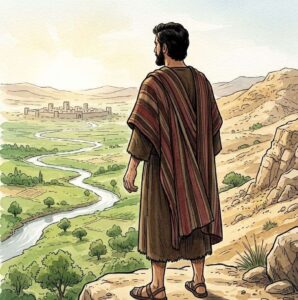
They traveled south. The Scripture gives no details of the journey, no record of the days and nights on the road, no account of the rivers they crossed or the hills they climbed or the dangers they faced. It simply says that they went forth to go into the land of Canaan, and into the land of Canaan they came. The journey that must have taken weeks or months is compressed into a single verse, a single breath, as if the writer was in a hurry to get to the destination because the destination was the point.
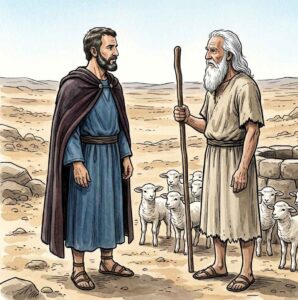
Abram passed through the land. He did not stop at the border. He did not build a house and settle down. He passed through, a stranger moving through a strange country, his tents pitched and struck and pitched again. The land was already occupied. The Canaanite was in the land, living in cities and farming the valleys and worshipping their gods on the high places. Abram was a foreigner, a man without a country, walking through fields that belonged to other people on the strength of a promise that had no visible proof.
He came to a place called Sichem, to the plain of Moreh. There was an oak tree there, a great tree that spread its branches wide over the plain. And the Lord appeared to Abram at that place.
“Unto thy seed will I give this land.”
The promise was made again, more specific now. Not just any land. This land. The land he was standing on. The land where the Canaanites lived and built and worshipped. The land that did not belong to him and would not belong to his children for more than four hundred years. The voice spoke it as if it was already done, and Abram believed it.
The Altar in the Strange Land
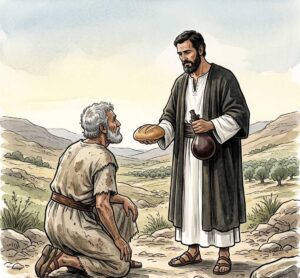
And there, under the oak at Moreh, Abram built an altar to the Lord who had appeared to him. He gathered stones from the plain and stacked them one on top of another, and he called on the name of the Lord. The altar was a mark in the earth, a sign that the God who had called him out of Ur had brought him to this place and would give this place to his children.
He did not stay there. He moved from Sichem to a mountain on the east of Bethel, and there he pitched his tent with Bethel on the west and Hai on the east. And he built another altar there. Another pile of stones. Another calling on the name of the Lord. The land was being marked by worship before it was ever marked by ownership. The altars were the first deeds, the first signs that this ground belonged to the Lord and would one day belong to the children of the promise.
And then Abram kept moving. He journeyed, going on still toward the south. He did not stop. He did not settle. He was a pilgrim in the land he had been promised, a stranger walking through his own inheritance, and he would die without ever owning a foot of it except the cave where he would bury Sarai.
The Road He Did Not Look Back On
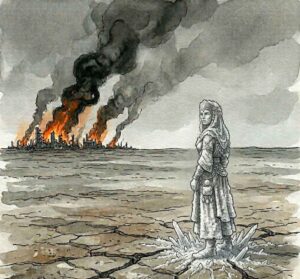
The Scripture never says that Abram looked back. Unlike Lot, who would later pitch his tent toward Sodom. Unlike the wife of Lot, who would turn and look and become a pillar of salt. Unlike the Israelites in the wilderness, who would grumble and long for the fleshpots of Egypt. Abram walked out of Ur and Haran, and the record contains no backward glance, no moment of hesitation, no longing for the city he had left.
He had been called, and he had gone. That was the whole story. The obedience was complete and immediate, and it became the pattern by which every later generation would measure faith. The writer of the letter to the Hebrews would say that by faith Abraham, when he was called to go out into a place which he should after receive for an inheritance, obeyed. And he went out, not knowing whither he went. By faith he sojourned in the land of promise, as in a strange country, dwelling in tents with Isaac and Jacob, the heirs with him of the same promise. For he looked for a city which hath foundations, whose builder and maker is God.
The tents were temporary. The altars were permanent. The man who walked out of Ur was not looking for a place to pitch his tent forever. He was looking for a city he could not see, a city built by hands that were not human, a city where the foundations were deeper than any stone laid in the earth. And because he believed in that city, he could live in tents. Because he trusted the promise, he could die without receiving it. Because he had heard the voice, he could walk away from everything he knew and never look back.
The Dust of the Road
The sun set over the land of Canaan, and Abram sat at the door of his tent. Sarai was inside, her face lined with years and the ache of a womb that had never quickened. The flocks were settled. The servants were eating their evening meal. Lot was somewhere among his own tents, his own herds growing larger with each passing season. And the old man looked out over the land that the Lord had promised to his seed, the land he would never own, the land where he would die a stranger and a pilgrim.
He did not look back toward Ur. He did not wonder what might have been if he had stayed. The voice had spoken, and he had followed, and that was enough. The altars stood behind him at Sichem and Bethel, piles of stone that marked the path of a man who was walking toward a promise that was larger than his own life. And somewhere ahead, in the darkness beyond the hills, the city with foundations was waiting, the city whose builder and maker is God.
The dust of the road was still on his sandals. The road went on toward the south. And in the morning, he would strike his tent and keep walking.