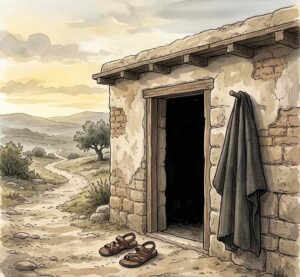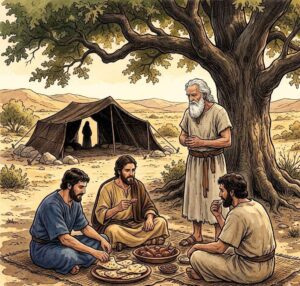

The feast had lasted seven days. The wine had flowed. The music had played. The guests had eaten and drunk and celebrated the marriage of Jacob to the woman he loved. He had worked seven years for her, seven years of tending flocks in the heat of the day and the cold of the night, seven years of waiting and wanting and dreaming of the moment when she would finally be his. And now the wedding was over. The feast was finished. The bride had been brought to his tent.
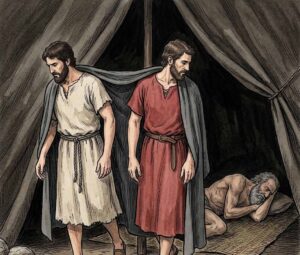
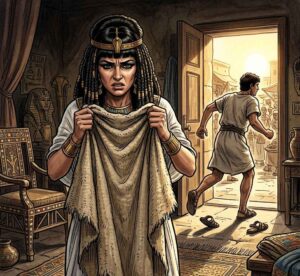
But when the morning light crept through the fabric of the tent, Jacob opened his eyes and saw the face of the woman beside him. It was not Rachel.
The woman in his bed was Leah.
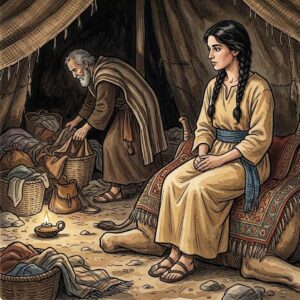
The elder sister. The one with the tender eyes. The one no one had asked for. The one who had been given in place of the beloved. Laban had taken her by the hand in the darkness and led her into the tent of Jacob, and Jacob had spent the night with a woman he thought was Rachel. The wine had dulled his senses. The darkness had hidden her face. The veil had concealed her identity. And now the morning had come, and the truth was lying beside him, and he could not undo what had been done.
The Deceiver Deceived
Jacob rose from his bed and went to find Laban. His voice was sharp with anger. “What is this thou hast done unto me? Did not I serve with thee for Rachel? Wherefore then hast thou beguiled me?”
The words were heavy with irony. Jacob, the supplanter, the deceiver who had worn goat skins on his arms and lied to his blind father, was now the one who had been deceived. He had stolen his brother’s blessing through a father who could not see, and now his uncle had stolen his wedding night through a sister who was hidden in the dark. The measure he had used was being measured back to him. The deceiver had met a greater deceiver, and the student had been outmatched by the master.
Laban answered him without shame. “It must not be so done in our country, to give the younger before the firstborn. Fulfil her week, and we will give thee this also for the service which thou shalt serve with me yet seven other years.”
The custom of the land, Laban said. The elder must be married before the younger. If Jacob wanted Rachel, he would have to take Leah first. And he would have to work another seven years. The bargain was cruel, but Jacob had no choice. He loved Rachel. He had worked seven years for her, and they had seemed but a few days. He would work seven more. And so he agreed.
The Morning of Leah
But what of Leah?
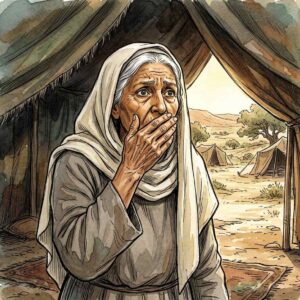
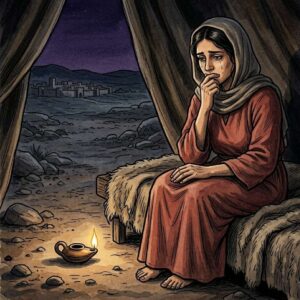
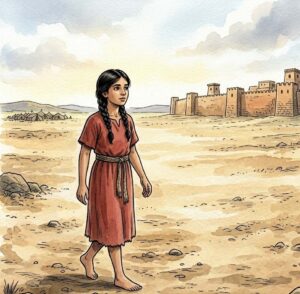
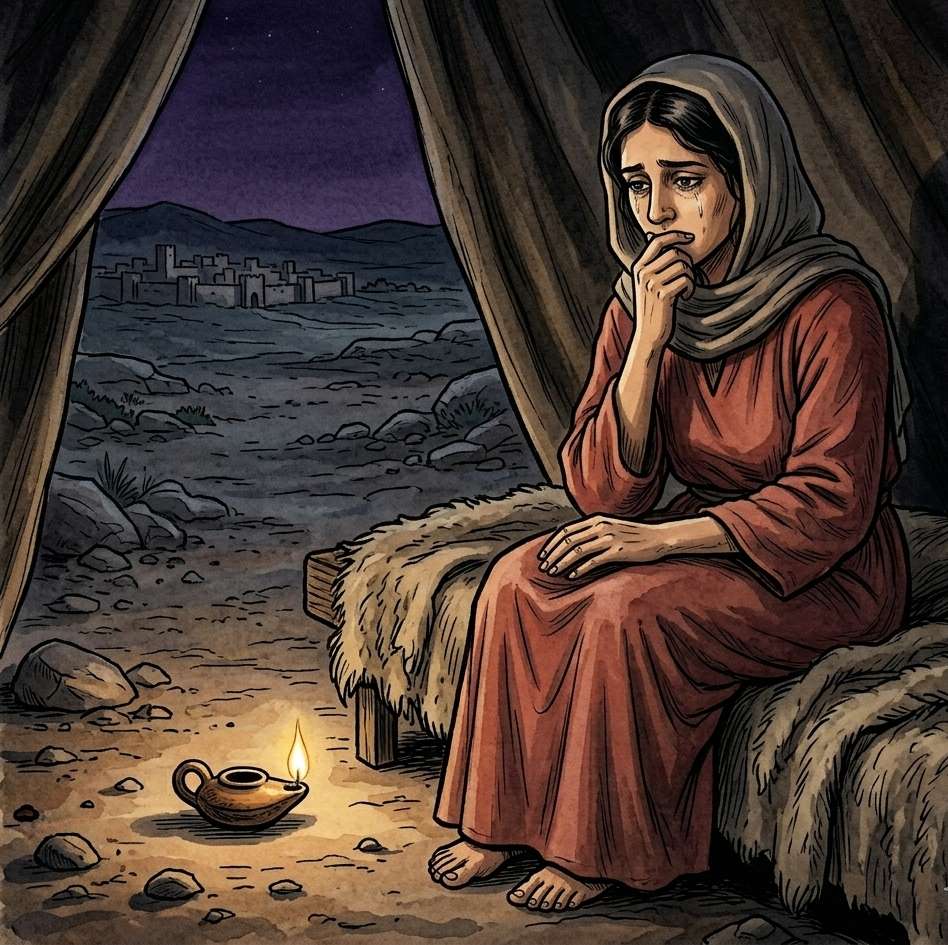
The Scripture gives no voice to Leah in this moment. It does not record what she said to Jacob when the morning light revealed her face. It does not tell us if she wept or stood silent or tried to explain. She had been a pawn in her father’s scheme, a daughter given in marriage without being asked, a bride who knew her husband did not want her. She had been led into the tent in the darkness, and she had known that the man who held her was thinking of her sister.
She woke up the morning after her wedding and saw the disappointment in her husband’s eyes. The look that passed across his face when he realized who she was must have cut her deeper than any words. She was the unloved wife, the unwanted bride, the woman whose only crime was being the elder sister in a land where the elder must be married first. She had done what her father commanded. She had played her part in the deception. And now she would spend the rest of her life in a marriage where she would always be second, always be the one he settled for, always be the woman he woke up next to wishing she were someone else.
Jacob fulfilled her week. He stayed with her for the seven days of the marriage feast, and then Laban gave him Rachel as well. Two wives in one household. Two sisters sharing one husband. The tension that had begun in the womb of Rebekah, the struggle between the elder and the younger, was now repeating itself in the tents of Jacob. And the Lord saw that Leah was hated, and he opened her womb. But Rachel was barren.
The God Who Sees the Unloved
The Lord saw Leah. He saw her in her pain, in her loneliness, in her desperate longing for the love of a husband who would never fully give it. And he gave her children. She conceived and bore a son, and she called his name Reuben, which means “see, a son.” “Surely the Lord hath looked upon my affliction. Now therefore my husband will love me.”
She conceived again and bore a second son, and she called his name Simeon, which means “hearing.” “Because the Lord hath heard that I was hated, he hath therefore given me this son also.”
She conceived a third time and bore a son, and she called his name Levi, which means “joined.” “Now this time will my husband be joined unto me, because I have born him three sons.”
Each name was a prayer. Each name was a hope that the child in her arms would finally win the heart of the man who had never wanted her. But Jacob’s heart remained with Rachel. The sons did not change his love. The children did not make him forget the woman he had worked fourteen years to possess.
And then Leah conceived a fourth time and bore a son, and she called his name Judah, which means “praise.” But this time her words were different. “Now will I praise the Lord.”
No mention of her husband. No plea for his love. No hope that this child would finally make him turn toward her. Just praise. Pure, unadorned praise for the God who had seen her affliction and heard her cry and given her children when her sister had none. She had stopped looking to Jacob for her worth. She had started looking to the Lord. And the son she bore in that moment of surrender would become the ancestor of David, the ancestor of Solomon, the ancestor of the Lion of the tribe of Judah, the one who would come to save his people from their sins.
The unloved wife had become the mother of kings. The woman who woke up the morning after her wedding to disappointment and rejection had been chosen by God to carry the line of the promise. And Leah learned, in the long years of sharing a husband with her sister, that the love of the Lord is better than the love of man.