
The people thirsted again. The wilderness of Sin was behind them, and the manna still fell each morning on the desert floor, but now they had camped in Rephidim, and there was no water for the people to drink. The children of Israel had seen the Nile turn to blood and the Red Sea divide before them. They had watched bitter water become sweet at the touch of a tree. They had eaten bread from heaven and meat from the sky. But the thirst was upon them again, and the memory of miracles could not wet their tongues.
They turned on Moses with the same fury they had shown at Marah and at the edge of the sea. “Give us water that we may drink.” The demand was sharp and desperate. The people were not asking. They were commanding, their thirst making them bold, their fear making them cruel.
Moses answered them with words that revealed the depth of their unbelief. “Why chide ye with me? Wherefore do ye tempt the Lord?”
The people did not hear the warning in his voice. They were too focused on their own suffering to see that they were testing the God who had delivered them. They murmured against Moses and said, “Wherefore is this that thou hast brought us up out of Egypt, to kill us and our children and our cattle with thirst?”
The accusation was the same one they had made at the sea and at Marah. You brought us here to die. The deliverance from Egypt was not a gift but a plot. The freedom they had been given was a death sentence disguised as liberty. The thirst had twisted their minds until they could see only the present suffering and not the past salvation.
The Cry of Moses
Moses cried unto the Lord. His voice rose from the dry ground of Rephidim, the voice of a man who had been given an impossible task. “What shall I do unto this people? They be almost ready to stone me.”
The servant of God was afraid. The same people who had followed him through the sea and gathered the manna in the morning were now on the verge of picking up stones to kill him. The thirst had turned them into a mob, and Moses stood before them with nothing but the word of the Lord and the staff that had become a serpent in Egypt.
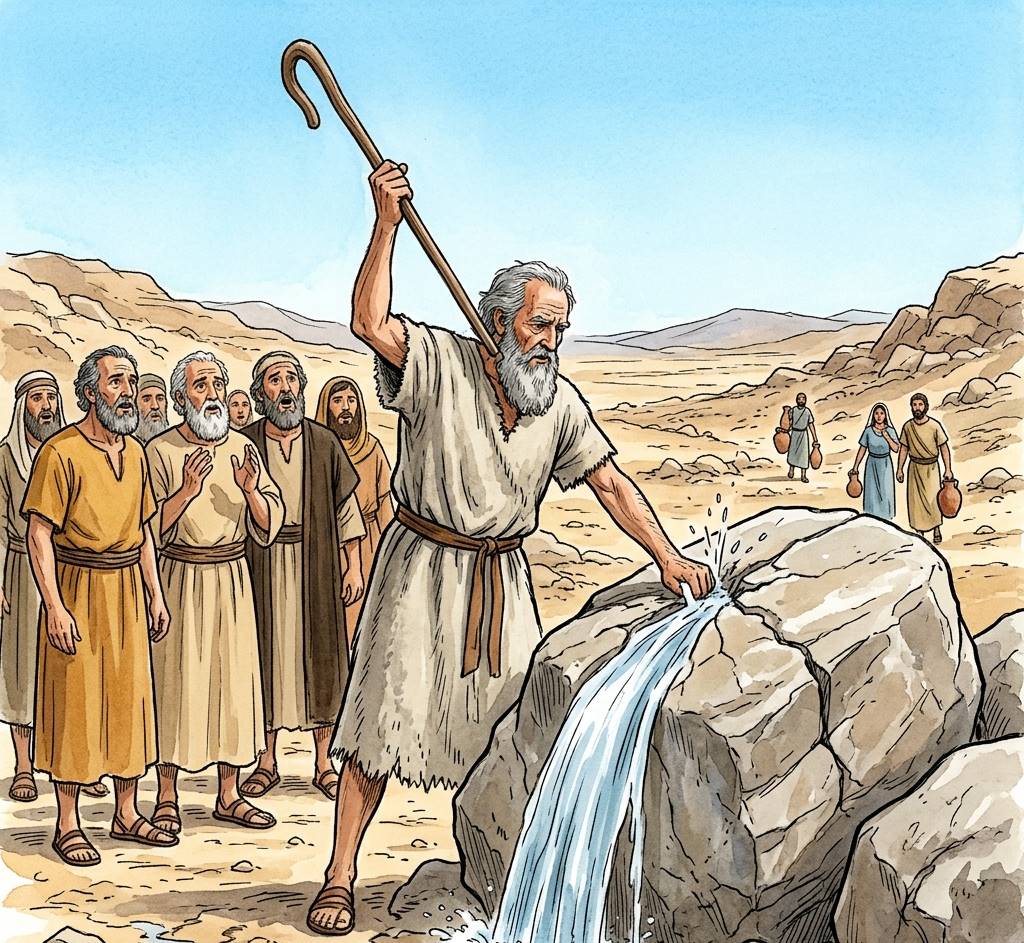
The Lord answered him with a command that must have seemed strange to human reason. “Go on before the people, and take with thee of the elders of Israel. And thy rod, wherewith thou smotest the river, take in thine hand, and go. Behold, I will stand before thee there upon the rock in Horeb. And thou shalt smite the rock, and there shall come water out of it, that the people may drink.”
The answer to thirst was a rock. The answer to the people’s fury was a piece of stone in the wilderness. The Lord was standing upon the rock, his presence resting on the hard surface, waiting for Moses to act. The God who had divided the sea would now bring water from solid stone.
The Strike That Brought Water
Moses took the elders of Israel and went to the rock at Horeb. The leaders of the tribes walked with him, witnesses to what the Lord was about to do. They were the representatives of the grumbling people, and their eyes would see the power that their mouths had doubted.
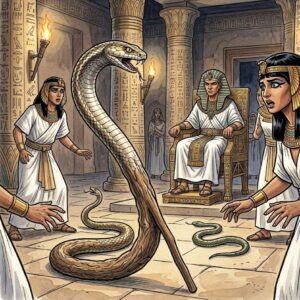
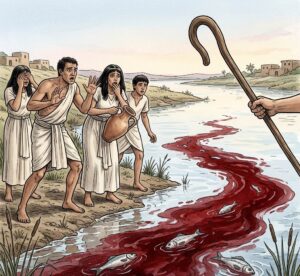
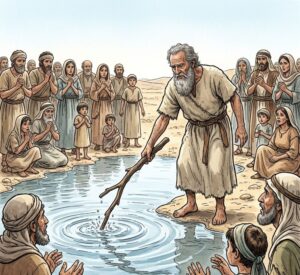
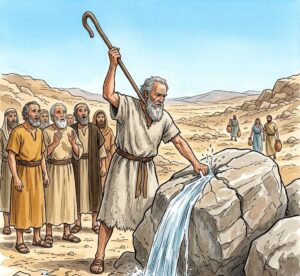
He took the rod in his hand. The same staff that had stretched out over the Red Sea, the same staff that had struck the Nile and turned it to blood, the same staff that had become a serpent before Pharaoh, was now lifted above a rock in the wilderness. The shepherd’s tool that had been the instrument of judgment in Egypt was about to become the instrument of provision in the desert.
Moses struck the rock. The wood hit the stone with a crack that echoed across the barren landscape. The elders watched. The people waited. And water came out of the rock.
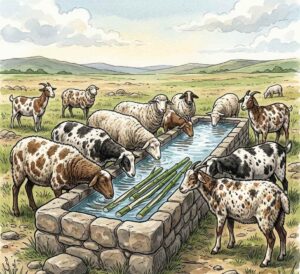
The water poured forth in abundance. It gushed from the stone like a fountain, clear and cold and life-giving. The rock that had stood in the wilderness since the foundation of the world became a spring. The hard surface that had offered nothing but dryness was now a source of life. The people who had thirsted and murmured and threatened to stone Moses now bent down to drink. They filled their vessels and their waterskins. They gave water to their children and their cattle. The thirst was gone. The Lord had provided from the rock.
The Place of Testing
Moses called the name of the place Massah, which means testing, and Meribah, which means quarreling. The names were a permanent reminder of what had happened there. The people had tested the Lord by saying, “Is the Lord among us, or not?” The question was the heart of their unbelief. They had seen the plagues fall on Egypt. They had walked through the sea on dry ground. They had gathered the manna from the desert floor. And still they asked whether the Lord was with them.
The water from the rock was the answer to their question. The Lord was among them. The Lord was providing for them. The Lord was patient with them even when they doubted him. The rock that gave water was a sign of the God who could bring life from death and abundance from emptiness. The people drank and were satisfied, and the water continued to flow, a river in the desert, a promise that the Lord would never leave his people nor forsake them.
The apostle Paul would later write that the rock was Christ. The spiritual rock that followed them through the wilderness, the rock that was struck so that the people might drink, was a foreshadowing of the One who would be struck for the sins of the world. The water that gushed from the stone at Horeb was a promise written in geology, a declaration that the Lord would one day open a fountain for sin and uncleanness, and all who thirsted might come and drink.