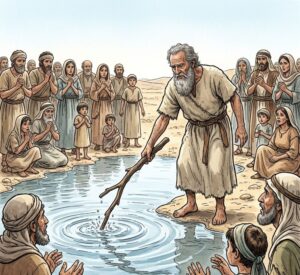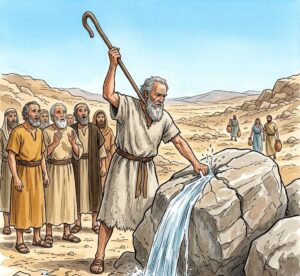

The water had flowed from the rock at Rephidim, and the people had drunk their fill. The thirst that had made them murmur against Moses and the Lord was quenched, but a new danger was approaching. The Amalekites had come to fight against Israel in Rephidim. The descendants of Esau, the tribe of warriors who inhabited the wilderness of Sinai, had seen the multitude of Hebrews moving through their territory and had come to destroy them.
Moses called Joshua to his side. The young man who had been his servant and aide, the warrior who would one day lead Israel into the promised land, was given his first military command. “Choose us out men, and go out, fight with Amalek. Tomorrow I will stand on the top of the hill with the rod of God in mine hand.”
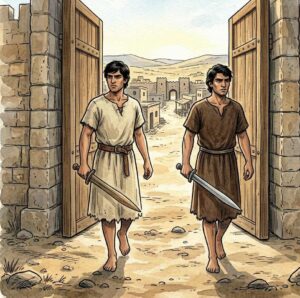
Joshua did as Moses had said. He chose the strongest men from among the Hebrews, men who had never held a sword but who had seen the Egyptians drown in the Red Sea. They were shepherds and brickmakers, not soldiers. Their hands were calloused from labor, not from war. But Joshua led them out to meet the Amalekites on the plain below, and the battle began.
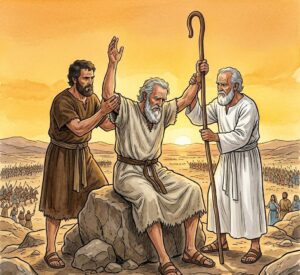
Moses climbed the hill with Aaron and Hur. The three men ascended the slope above the battlefield, their feet finding purchase on the rocky ground. Aaron was the older brother of Moses, the spokesman who had stood before Pharaoh, the first high priest of Israel. Hur was a man of Judah, a leader among his people, the grandfather of Bezaleel who would one day build the tabernacle. The two men accompanied the prophet to the summit, and they watched as Moses lifted the rod of God toward heaven.
The Hands That Held the Rod
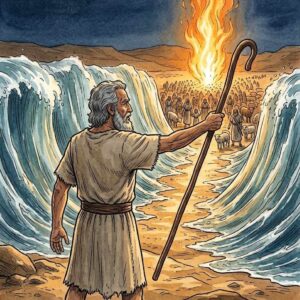
The rod went up, and the battle turned. Moses held the staff above his head, the same staff that had divided the Red Sea and brought water from the rock. The rod was a symbol of the presence and power of the Lord, and as long as it was lifted toward heaven, the men of Israel prevailed against the Amalekites. The Hebrews who had never fought before fought like warriors. The shepherds who had never held a sword cut down the seasoned fighters of the desert. The battle was not being won by the strength of Joshua or the courage of his men. It was being won by the power of God flowing through the lifted hands of his servant.
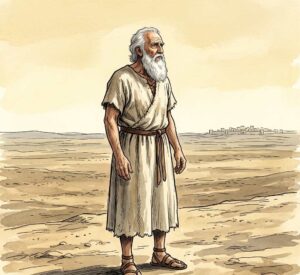
But Moses was an old man. He was eighty years old, his body worn from decades of shepherding in the wilderness of Midian and months of confronting Pharaoh. The rod was heavy in his grip. His arms began to ache. His shoulders began to burn. His muscles, which had been strong in his youth, were failing him now. And when his hands grew heavy and the rod began to sink, the Amalekites prevailed.
The battle rose and fell with the hands of Moses. When the rod was up, Israel pushed forward. When the rod came down, Amalek drove them back. The fate of the entire nation was suspended on the strength of one old man’s arms, and the arms were failing.
The Stone and the Hands
Aaron and Hur saw what was happening. They watched the hands of Moses begin to tremble. They saw the rod dip toward the earth and the Amalekites surge forward. They understood that the battle below was being decided by the strength on the hill above. And they moved.
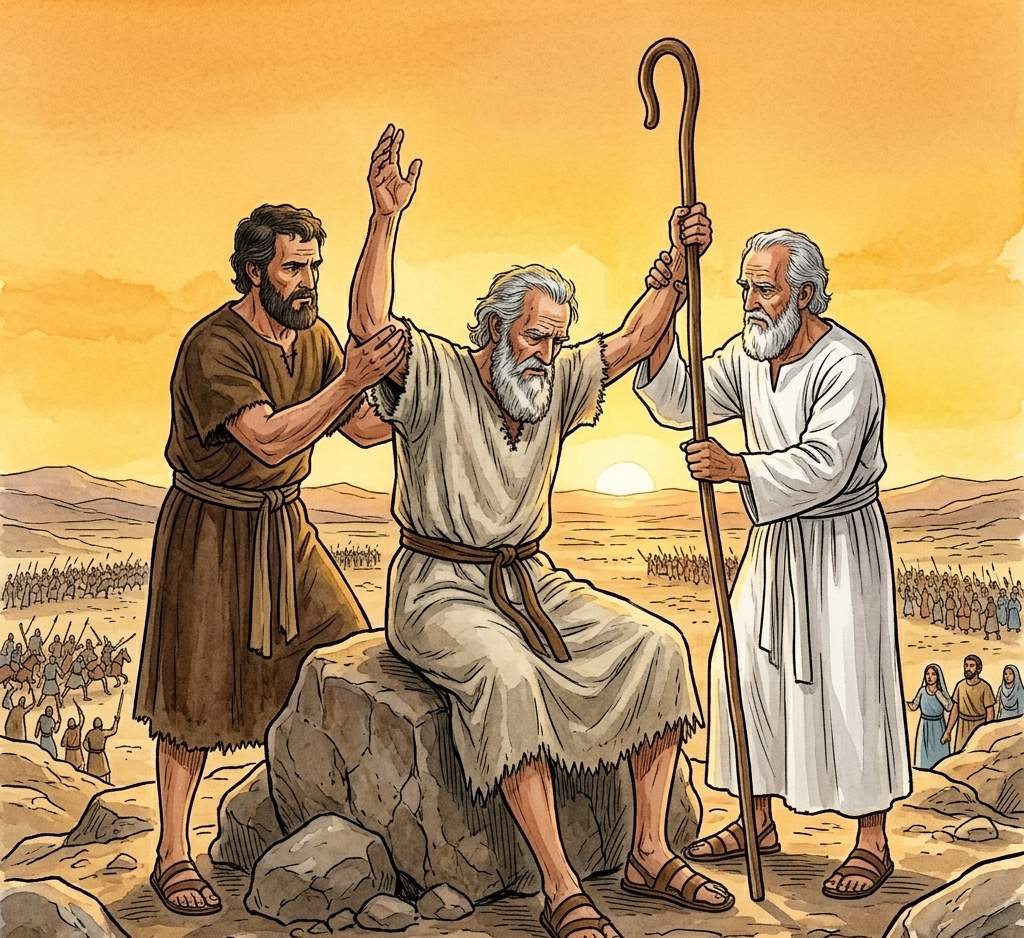
They took a stone and put it under him, and he sat thereon. The two men found a large rock on the summit and rolled it into place. Moses sat down on the stone, his old body finding rest on the hard surface. But the rest was not enough. His arms were still failing. The rod was still too heavy to hold alone.
Aaron and Hur stayed up his hands, the one on the one side, and the other on the other side. The brother and the friend stood beside the prophet of God and lifted his arms toward heaven. Aaron took the right hand. Hur took the left. They held the hands of Moses steady, their own strength supporting his weakness, their own endurance making up for his exhaustion. The rod of God remained lifted above the battlefield, and the men of Israel continued to prevail.
His hands were steady until the going down of the sun. The battle lasted all day, and all day Aaron and Hur held the arms of their leader. They did not let go. They did not grow tired. They did not leave their post. The three men on the hill became one instrument of God’s power, the prophet and his supporters working together to secure the victory.
The Victory and the Altar
Joshua discomfited Amalek and his people with the edge of the sword. The young warrior led the Hebrews to victory over the seasoned fighters of the wilderness. The Amalekites who had attacked the weak and the weary at the rear of the column were driven back and defeated. The first battle of Israel was a victory, and the victory belonged to the Lord.
The Lord spoke to Moses after the battle, and his words were a decree that would echo through the generations. “Write this for a memorial in a book, and rehearse it in the ears of Joshua. For I will utterly put out the remembrance of Amalek from under heaven.”
Moses built an altar and called the name of it Jehovahnissi, which means the Lord is my banner. The altar was a declaration that the victory had not been won by Joshua’s sword or Moses’s rod. It had been won by the Lord, and the Lord would be remembered as the banner under which Israel fought. The hands that had been held up by Aaron and Hur were the hands of a man who depended on God and on the people God had placed beside him. The prophet could not win the battle alone. The warrior could not win the battle alone. The victory came when the servant of God was supported by the people of God, and the rod of God was lifted until the sun went down.