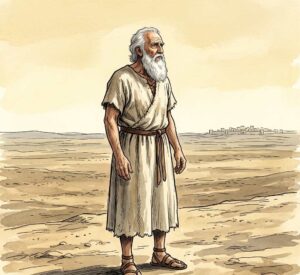

The earth was dry again, and the old man had become a farmer. The ark had emptied out its living cargo onto the slopes of Ararat, and the animals had scattered across the face of the earth, and the eight souls who had ridden out the flood had stepped onto solid ground and smelled the wet soil and felt the sun on their faces for the first time in more than a year. The Lord had made a covenant with them, a promise sealed with a bow in the clouds, a sign that the waters would never again cover the earth to destroy all flesh. And then life began again, the way life always does after a catastrophe, with planting and building and the slow work of starting over.
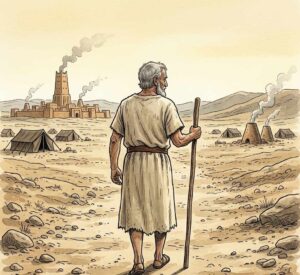
The old man planted a vineyard. He dug into the new soil, the soil that had been washed clean of everything that came before, and he set the vines into the ground and waited. The grapes grew fat and dark on the vine, and when they were ripe, he gathered them and pressed them and made wine. He was a man of the ground, the way his fathers had been, the way Cain and Abel had worked the soil before the blood cried out from it. The ground was different now. It had been baptized by the flood, drowned and reborn, and what grew from it was new.
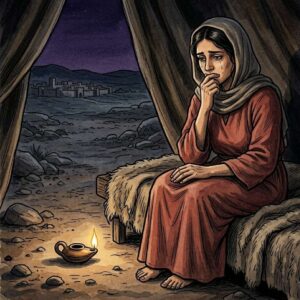
He drank the wine. The Scripture does not say why he drank so much. It does not say whether the wine was stronger than he expected, or whether the weight of everything he had seen pressed down on him until he reached for something to dull the edge of it. It only says that he drank of the wine and was drunken. The old man who had walked with God, who had built the ark, who had watched the world drown and then watched it emerge again, now lay in his tent with his mind fogged by wine and his body exposed to the air.
The Uncovering
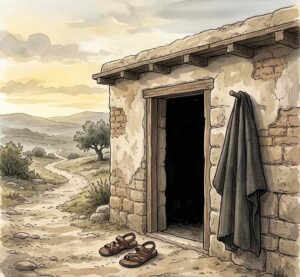
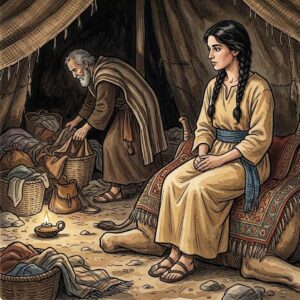
He was uncovered inside his tent. The wine had taken his senses, and he had thrown off his outer garment, and he lay naked in the darkness of the tent with no one to cover him. The man who had been covered by the hand of the Lord inside the ark, the man who had been sheltered from the flood that destroyed the whole world, now lay exposed in his own dwelling, and the shame of his nakedness was the same shame that had fallen on the first man and the first woman in the garden. The eyes that saw it would bring a curse.
Ham, the father of Canaan, saw the nakedness of his father. The Scripture is careful with the words. It does not say that Ham stumbled into the tent by accident. It says he saw. He looked. And then he did something worse. He did not cover his father. He did not back away quietly and pretend he had seen nothing. He went outside and told his two brothers what he had seen.
He told Shem and Japheth. The words must have come with something in them, some mockery in the tone, some pleasure in the telling. Their father, the righteous man, the preacher of righteousness who had warned the old world of judgment, was drunk and naked in his tent. Ham had seen it, and now he wanted his brothers to see it too, or at least to know about it, to share in the exposure of the man who had led them through the flood.
The Covering
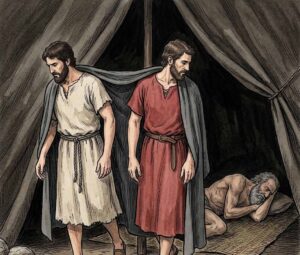
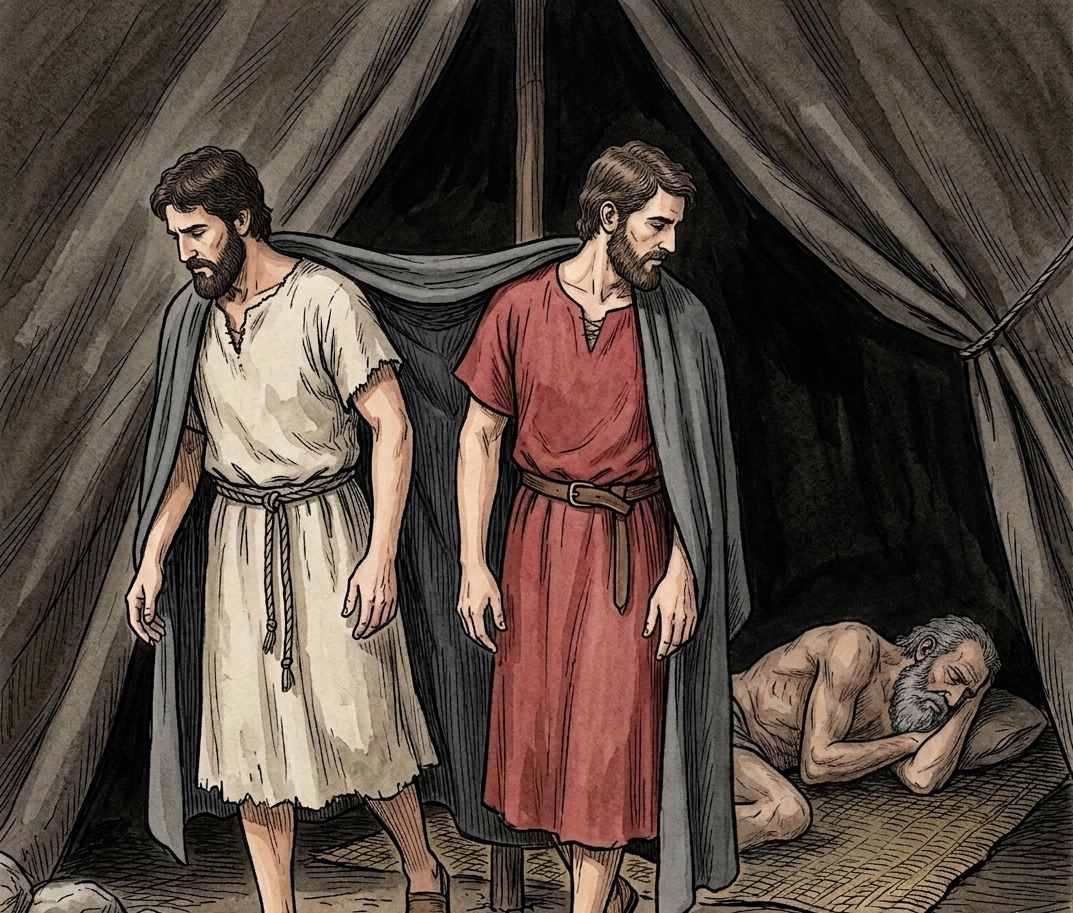
But Shem and Japheth did not want to see. They took a garment, a long outer cloak of wool, and they laid it across both their shoulders. Then they walked backward into the tent, their faces turned away, their eyes fixed on the ground outside. They did not look. They did not glance. They moved carefully through the darkness of the tent until they reached their father, and then they let the garment fall across his naked body.
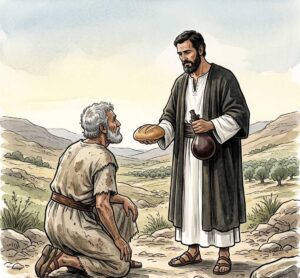
They covered him without seeing him. They honored him without looking at his shame. They walked backward out of the tent the same way they had come, their faces still turned away, and they left their father covered and his dignity restored. The two brothers had done what Ham should have done. They had covered what was uncovered. They had protected what was exposed. They had treated their father the way the Lord had treated Adam and Eve in the garden, when he made them coats of skins to cover their nakedness. Covering shame is the work of mercy. Exposing it is the work of something else.
The Waking
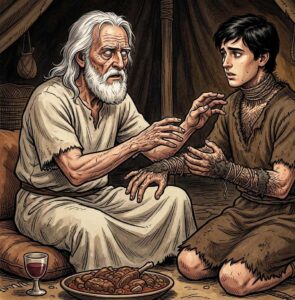
Noah awoke from his wine. His head must have been heavy and his mouth dry. The tent was dim, and the garment lay across his body, a garment he did not remember putting on. He knew that something had happened while he slept. He did not know what, but he knew. The wine had taken his senses, and in that time, someone had seen him. Someone had looked. Someone had told. And now the old man opened his eyes and knew what his youngest son had done to him.
The Scripture does not explain how Noah knew. Perhaps Shem and Japheth told him, not in mockery but in sorrow, the way men report a wound that has been inflicted on the family. Perhaps the Lord told him, the way the Lord had told Cain that the blood of his brother was crying from the ground. However he knew, he knew, and what he did next would echo through the generations for thousands of years.
He spoke, and his words were not a question. They were a curse and a blessing, and they divided his sons in a way that could never be undone.
The Curse and the Blessing
“Cursed be Canaan. A servant of servants shall he be unto his brethren.”
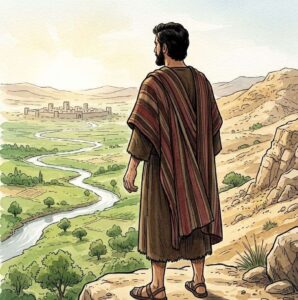
The curse did not fall on Ham. It fell on Ham’s son, Canaan. The grandson would bear the weight of what the father had done. Canaan would be a servant of servants, the lowest of the low, a slave to his own brothers. The words were hard and final, and they planted a seed of sorrow that would grow through all the history that followed, through the conquest of the land that would one day bear the name of Canaan, through the wars and the exiles and the long enmity between the sons of Shem and the sons of Ham.
Then Noah turned to his other sons.
“Blessed be the Lord God of Shem. And Canaan shall be his servant.”
The blessing went to the Lord, not to Shem directly. The God of Shem would be praised. The line of Shem would carry the promise, the seed that would one day crush the head of the serpent, the covenant that would stretch from Abraham to David to the child born in Bethlehem. Shem had covered his father, and his reward was to become the ancestor of the One who would cover the shame of the whole world.
And Japheth.
“God shall enlarge Japheth, and he shall dwell in the tents of Shem. And Canaan shall be his servant.”
Japheth would spread out across the earth. His descendants would fill the coastlands and the distant islands. And they would dwell in the tents of Shem, brought into the blessing that Shem carried, grafted into the covenant like a branch from a wild olive tree. The brother who had walked backward into the tent, carrying the garment with Shem, would share in the promise that Shem received. The covering of shame had bound them together, and the binding would last through all the ages to come.
The Silence After
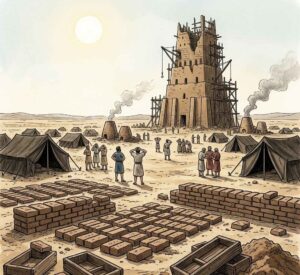
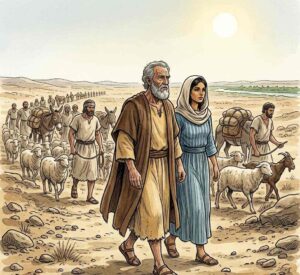
Noah lived three hundred and fifty years after the flood. He watched his sons have sons, and their sons have sons, and the earth began to fill again with people and cities and the noise of human life. He saw the tower rise at Babel and the languages divide and the people scatter across the face of the earth. He carried the memory of the flood inside him, the sound of the rain and the screams outside the door and the feel of the ark lifting off the ground. And he carried the memory of the tent, the shame of his nakedness, the betrayal of one son and the mercy of two others.
He died at nine hundred and fifty years old, the last of the old world patriarchs, the man who had walked with God through the destruction of everything and the beginning of everything else. And the words he spoke over his sons stood. The curse stood. The blessing stood. And the garment that Shem and Japheth had laid across their father’s body became a kind of sign, a picture of something that would one day be fulfilled in a garden outside Jerusalem, where another Son would be stripped naked and exposed to shame so that the shame of all the sons of men could be covered forever.
The tent was quiet now. The old man lay still, covered and at peace. Outside, the sun was setting over the new world, and the bow in the clouds caught the last light and held it, a promise that the waters would never rise again.