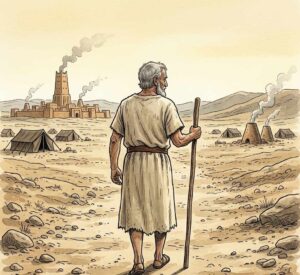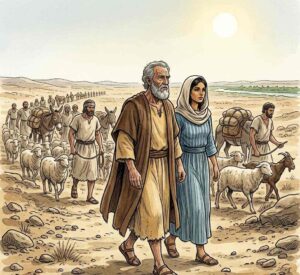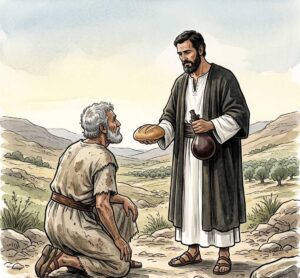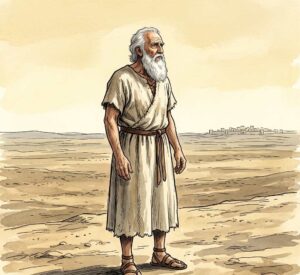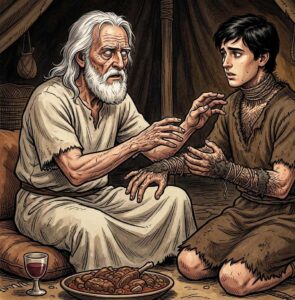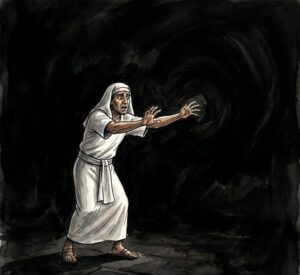

The old man rose early in the morning. The command had come to him in the night, a voice he knew well, a voice that had called him out of Ur and promised him a son and made a covenant with him in blood and fire. Now the same voice was asking for the son back.
“Take now thy son, thine only son Isaac, whom thou lovest, and get thee into the land of Moriah. And offer him there for a burnt offering upon one of the mountains which I will tell thee of.”
The words must have cut through Abraham like a blade. Isaac. His only son. The son of the promise. The child born to Sarah when she was ninety years old, the laughter of their old age, the boy whose name meant joy. The Lord was asking for him back. The Lord who had given the son was now requiring the son, and Abraham did not argue. He did not bargain the way he had bargained for Sodom. He rose early in the morning, saddled his donkey, and took two young men and Isaac his son. He split the wood for the burnt offering and laid it on the donkey. And he set out for the place that God would show him.
The journey took three days. Three days of walking with his son beside him, the wood bouncing on the donkey’s back, the fire and the knife in his own hands. Three days of silence or of words that Scripture does not record. Three days of carrying the weight of what the Lord had asked, turning it over in his mind, choosing again and again to obey.
The Mountain in the Distance
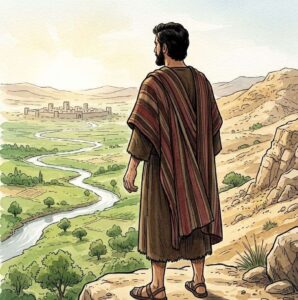
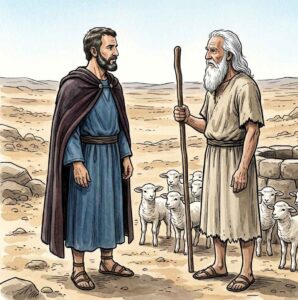
On the third day, Abraham lifted up his eyes and saw the place afar off. The mountain of Moriah rose against the sky, rocky and silent, the place where the Lord had told him to go. He stopped the donkey. He turned to the two young men who had accompanied them.
“Abide ye here with the donkey. And I and the lad will go yonder and worship, and come again to you.”
The words were precise. We will go. We will worship. We will come again. The old man did not say, “I will come again.” He said, “We will come again.” He believed that Isaac would return with him, even though the knife was in his hand and the command was in his ears. The writer of the letter to the Hebrews would later say that Abraham accounted that God was able to raise him up, even from the dead, from whence also he received him in a figure. The old man trusted the promise more than he trusted the evidence of his own eyes. God had promised that through Isaac his seed would be called. God had promised a nation. And God could raise the dead if that was what it took to keep his word.
Then Abraham took the wood of the burnt offering and laid it upon Isaac his son.
The Wood on His Shoulders
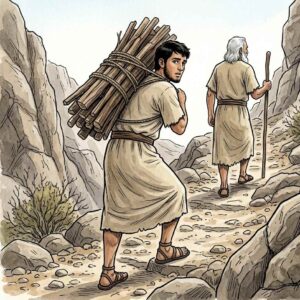
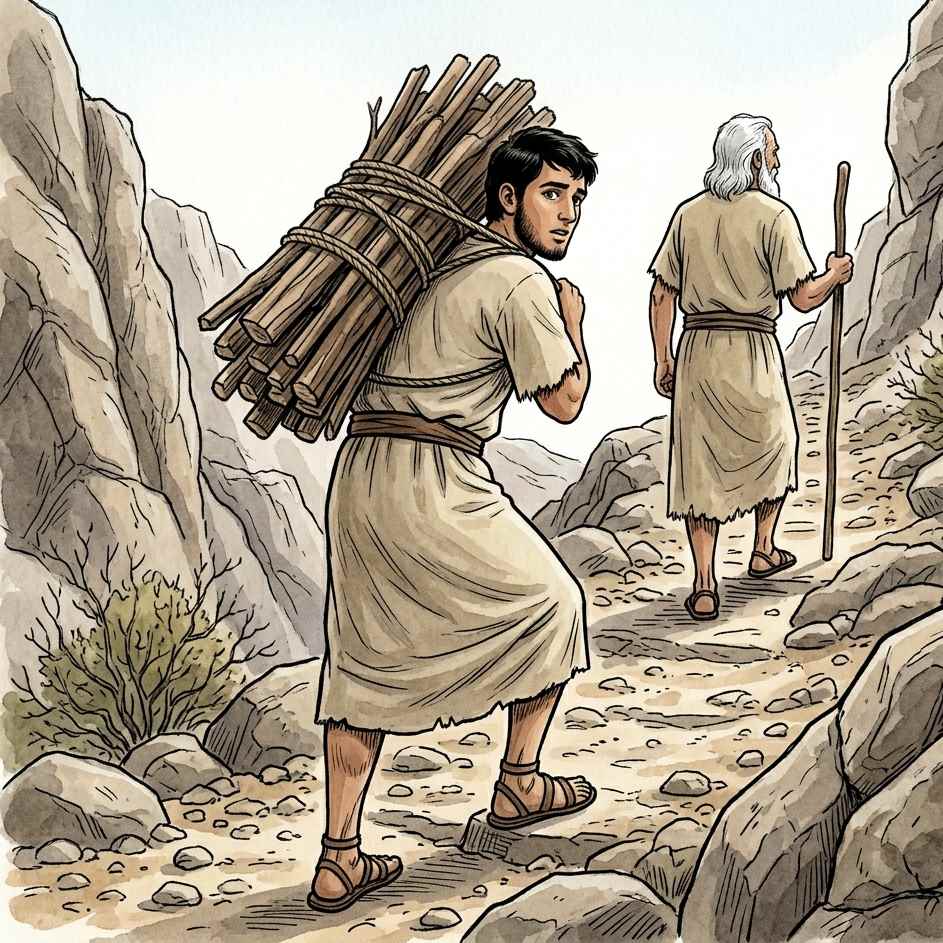
The wood was heavy. It had been split that morning or the night before, the rough logs cut to size for a burnt offering. Isaac was a young man now, strong enough to carry the weight, old enough to understand what a burnt offering required. He had watched his father build altars before. He had seen the animals placed on the wood and consumed by fire. He knew the elements of worship. The wood. The fire. The knife. The sacrifice.
He carried the wood on his shoulders as they began to climb the mountain. The path was steep and rocky. The sun beat down on them. The old man walked ahead, the fire in one hand and the knife in the other. The son followed behind, the wood pressing down on his back. The two of them climbed together, alone on the mountain, the servants left far behind with the donkey.
Isaac broke the silence.
“My father.”
The words were simple, the address of a son who trusted his father. Abraham answered immediately.
“Here am I, my son.”
“Behold the fire and the wood. But where is the lamb for a burnt offering?”
The question hung in the mountain air. The young man had noticed what was missing. The fire was in his father’s hand. The wood was on his own back. The knife was ready. But there was no lamb. No animal was climbing the mountain with them. No bleating could be heard on the path. The elements were all present except the sacrifice itself.
Abraham answered his son, and his voice was steady.
“My son, God will provide himself a lamb for a burnt offering.”
That was all. No explanation. No tears. No hesitation. Just the quiet confidence of a man who had walked with God for more than forty years and had learned that God always keeps his promises. God will provide. The lamb would come. How it would come, Abraham did not know. But he trusted the One who had led him to this mountain, and he kept walking.
The Altar and the Binding
They reached the place that God had told him of. Abraham built an altar there. His old hands gathered the stones and arranged them one by one, the way he had done at Moreh and Bethel and Mamre and Beersheba. The altars of his life marked the path of his pilgrimage, and now he was building another one on the mountain of Moriah.
He laid the wood in order upon the altar. The same wood that Isaac had carried up the mountain now rested on the stones, arranged and ready. Then he bound Isaac his son and laid him on the altar upon the wood.
The Scripture gives no details of the binding. It does not record what Abraham said to his son or what Isaac answered. It does not tell us if Isaac struggled or submitted, if he wept or stood silent, if he understood what was happening or was overcome with confusion. It simply says that Abraham bound him and laid him on the altar. The young man who had carried the wood up the mountain now lay upon it, and his father stretched out his hand and took the knife to slay his son.
The knife caught the sun. The hand of the old man was steady. And the angel of the Lord called to him out of heaven.