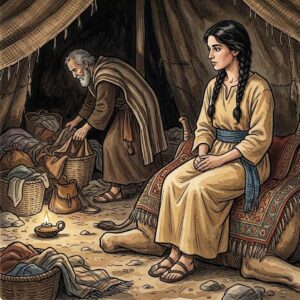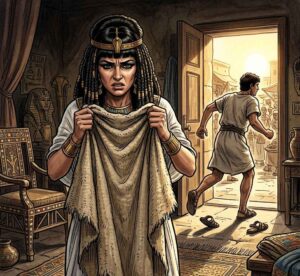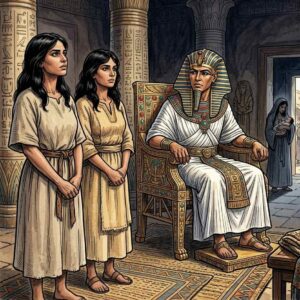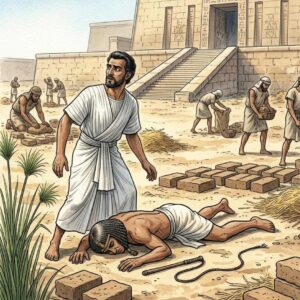

She was the daughter of Leah, the unloved wife who had borne six sons to Jacob. Dinah stood as the only daughter named in the long list of brothers, the girl among the men, the sister among the sons. The household of Jacob had settled outside the city of Shechem, in the land of Canaan, on a parcel of ground bought from the sons of Hamor. They had come back to the land of promise, back to the place where Abraham had first built an altar, back to the hills where the Lord had spoken to their fathers.
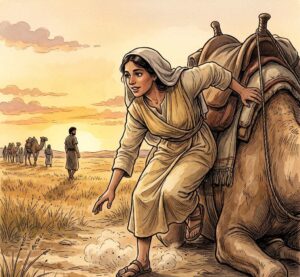
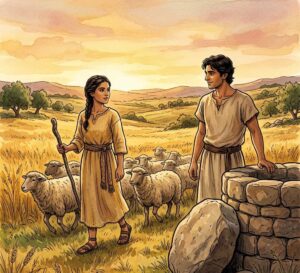
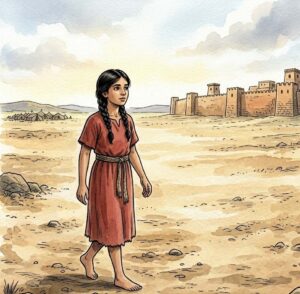
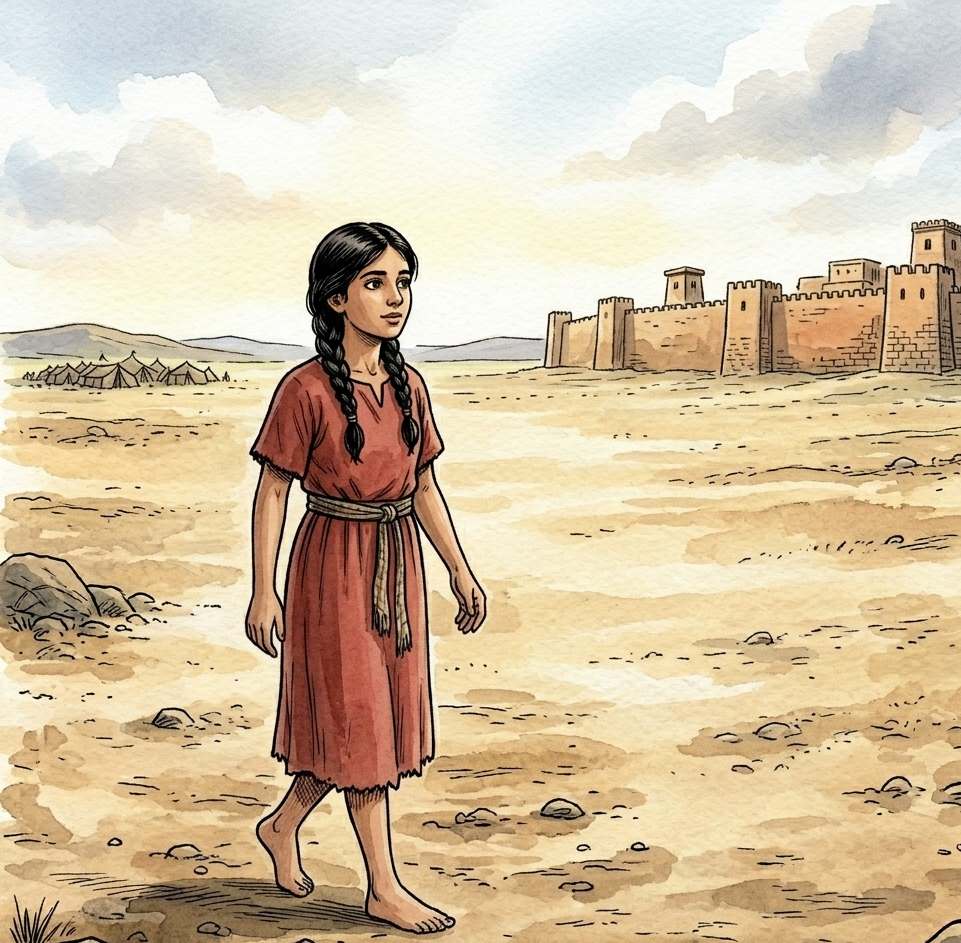
Dinah went out to see the women of the land. The words are simple, the action of a young woman curious about the world beyond her family’s tents. She had grown up among brothers, among shepherds, among the constant movement of flocks and herds. The city of Shechem was nearby, its walls rising against the sky, its streets filled with people outside her kin, women who wore different clothes and spoke different words and lived different lives. She wanted to see them. She wanted to know them. She went out alone, a daughter of Israel walking into a Canaanite city, and no one stopped her.
Scripture remains silent about whether she was wrong to go. The text offers no blame for her curiosity and no condemnation for her wandering beyond the tents. It simply records what happened next, and what happened next would stain the ground of Shechem with blood for generations to come.
The Eyes of the Prince
Shechem the son of Hamor saw her. He was the prince of the city, the heir of the Hivite chief, a young man with power and privilege and the expectation that whatever he wanted he could have. He saw Dinah walking through his streets, the daughter of Jacob, the granddaughter of Isaac, the great-granddaughter of Abraham. He saw her dark hair and her young face. And he took her.
The word is blunt and brutal. He took her and lay with her and defiled her. Courtship was absent. Negotiation with her father remained undone. Respect for her person or her family or her God held no place in his actions. He saw. He wanted. He took. The prince of Shechem treated the daughter of Israel like a thing to be seized, an object to be used, a conquest to be discarded when he was finished.
But something happened that the prince failed to foresee. After he had taken her, after he had defiled her, his soul clave unto Dinah the daughter of Jacob. He loved the damsel and spoke kindly unto her. The lust that had driven him to violence transformed into something he believed was love. He wanted to keep her. He wanted to marry her. He went to his father Hamor and said, “Get me this damsel to wife.”
The Silence of Dinah
The Scripture records nothing of the words of Dinah. She remains voiceless in this story. She utters no cry. She levels no accusation against her attacker. She makes no plea to her father. She offers no testimony before her brothers. The narrator grants her no expression of grief or anger or fear. She is the object of the action, the one to whom things are done, the daughter who is taken and defiled and then bargained over like a piece of property.
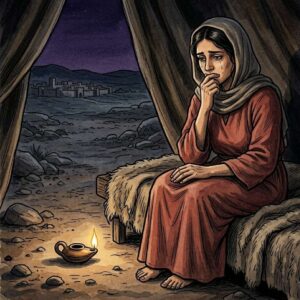
Her silence is loud. In a household of men who will soon speak loudly and act violently, Dinah says nothing. The text leaves her interior world a mystery. Did she love Shechem after he spoke kindly to her? Did she hate him for what he had done? Did she want to stay in the city or return to her father’s tents? The story keeps its secrets. It only tells us what the men did, and what the men did would fill the streets of Shechem with the dead.
Jacob heard that his daughter had been defiled. His sons were in the field with the cattle, so he held his peace until they returned. The father of Dinah waited, and his silence was the silence of a man who knew that his sons would react with rage rather than calm words and measured judgment.
The Bargain of the Hivites
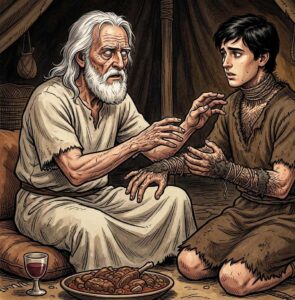
Hamor the father of Shechem came to Jacob to speak. He brought his son with him, the young man who had defiled Dinah, and they stood before the tents of Israel with their proposal. “The soul of my son Shechem longeth for your daughter. I pray you give her him to wife. And make ye marriages with us, and give your daughters unto us, and take our daughters unto you. And ye shall dwell with us, and the land shall be before you. Dwell and trade ye therein, and get you possessions therein.”
Shechem himself spoke next, his voice full of the desperation of a man who had discovered that he wanted something he could not simply take. “Let me find grace in your eyes, and what ye shall say unto me I will give. Ask me never so much dowry and gift, and I will give according as ye shall say unto me. But give me the damsel to wife.”
The offer was generous by the standards of the ancient world. Intermarriage. Trade. Land. Peace between the two peoples. The Hivites of Shechem were offering to absorb the household of Jacob into their city, to make them one people, to erase the boundary between the seed of Abraham and the Canaanites of the land. But the sons of Jacob had no interest in peace. They wanted justice, or what they called justice. And they answered deceitfully.
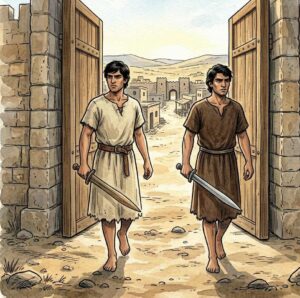
Simeon and Levi, the full brothers of Dinah, the sons of Leah, spoke for the family. Their words were smooth, but their hearts were full of murder. “We cannot do this thing, to give our sister to one that is uncircumcised. For that were a reproach unto us. But in this will we consent unto you: If ye will be as we be, that every male of you be circumcised, then will we give our daughters unto you, and we will take your daughters to us, and we will dwell with you, and we will become one people. But if ye will not hearken unto us, to be circumcised, then will we take our daughter, and we will be gone.”
The demand was a lie wrapped in the language of religion. They used the covenant sign of Abraham, the mark of the promise, as a weapon of deception. The men of Shechem heard the condition and agreed. Hamor and Shechem went to the gate of their city and persuaded the men of the town to undergo the knife. “These men are peaceable with us. Therefore let them dwell in the land, and trade therein. For the land, behold, it is large enough for them. Let us take their daughters to us for wives, and let us give them our daughters. Only herein will the men consent unto us, to dwell with us and be one people, if every male among us be circumcised, as they are circumcised. Shall not their cattle and their substance and every beast of theirs be ours? Only let us consent unto them, and they will dwell with us.”
The men of Shechem were thinking of wealth. The flocks of Jacob. The herds of Jacob. The servants of Jacob. They submitted to the knife because they saw a chance to absorb the wealth of this wealthy stranger into their own city. They remained unaware that the knife they accepted would soon be followed by another knife, a blade that would bring death instead of healing.
And Dinah stayed in the house of Shechem, the prince who had taken her and now claimed to love her, the man who had defiled her and now wanted to marry her. She remained silent. She continued waiting. And her brothers were coming.