
The men of Shechem were still sore from the circumcision. They had submitted to the knife at the gate of their city, persuaded by Hamor and Shechem that the wealth of Jacob would soon be theirs. The covenant had been made. The agreement had been sealed in blood and pain. The Hivites had become as the Hebrews in the cutting of their flesh, and they lay in their houses recovering from the wound, believing that peace had been established between the two peoples.
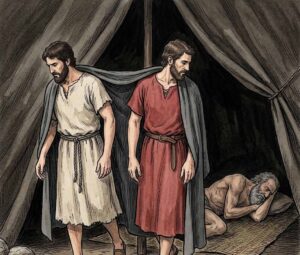
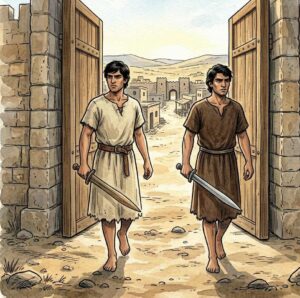
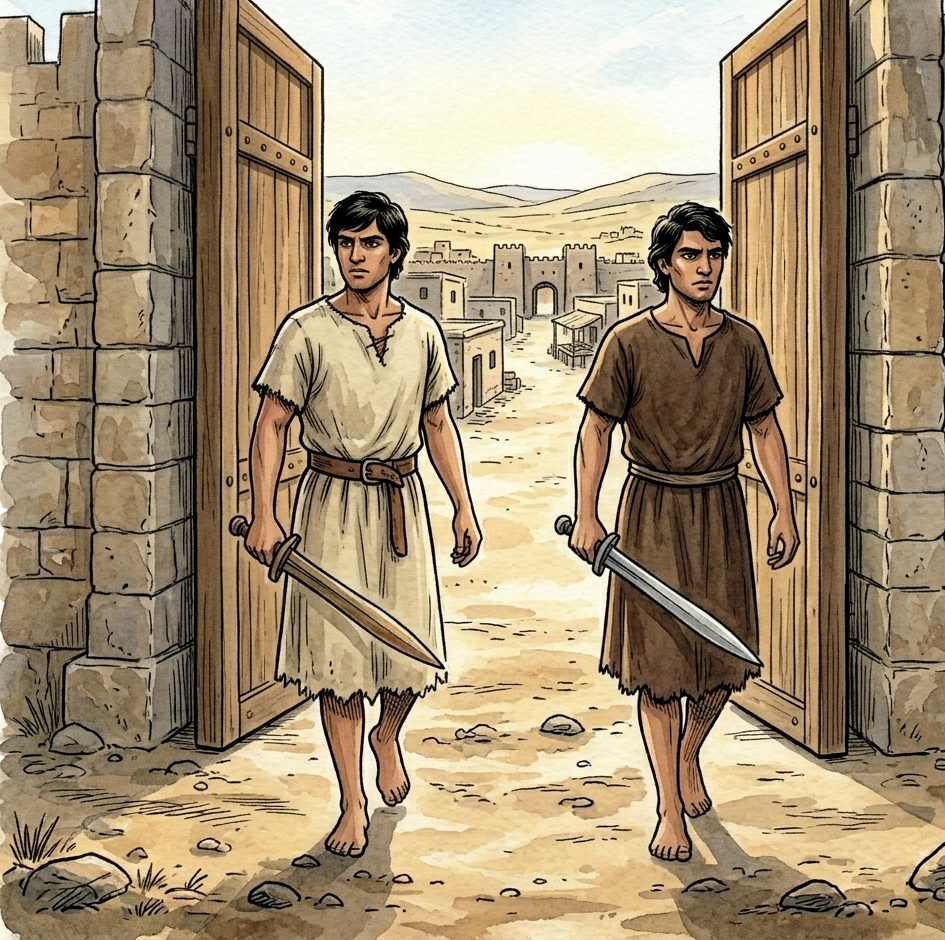
On the third day, when they were sore, Simeon and Levi took their swords.
The two brothers were full sons of Leah, the same mother who had borne Dinah. They had grown up in the same tent, shared the same meals, heard the same stories of the promise given to Abraham and Isaac. The violation of their sister had fallen on them with a weight that the other brothers, the sons of Bilhah and Zilpah, could share but not fully carry. Dinah was their full sister, their own flesh and blood, and the man who had defiled her was recovering in his house, believing he had won a bride.
They did not tell Jacob what they were about to do. The old man had agreed to the covenant. He had given his word, or at least allowed his sons to give theirs. But Simeon and Levi had never intended to keep the agreement. The demand for circumcision had been a trap from the beginning, a way to weaken the men of the city so that they could be slaughtered without resistance. The mark of the covenant had become the mark of death.
The Sword in the City
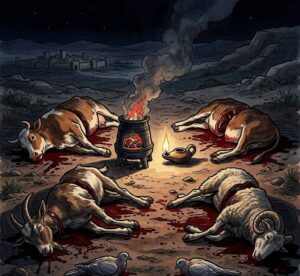
They came upon the city boldly. The gates were open. The men inside were helpless, doubled over with pain, unable to stand, unable to fight. Simeon and Levi walked through the streets with their swords drawn, and they slew all the males. Every man in Shechem fell before their blades. The prince who had defiled Dinah died in his own house. Hamor his father died beside him. The men who had agreed to the circumcision died in their beds, their agreement still fresh on their lips, their trust in the sons of Jacob repaid with cold steel.
The two brothers did not act alone. The other sons of Jacob came upon the slain and spoiled the city. They took the flocks and the herds and the donkeys. They seized the wealth from the houses and the goods from the marketplaces. They captured the women and the children, taking them as spoils of war. The city that had stood for generations in the land of Canaan was emptied in a single afternoon. The streets that had been filled with merchants and craftsmen and families were now filled with the dead.
Dinah was brought out of the house of Shechem. The brothers took her from the place where she had been held, the house of the man who had defiled her and then claimed to love her. She was returned to her father’s tents, but the silence that had surrounded her from the beginning remained unbroken. The text records nothing of her words, nothing of her response to the slaughter, nothing of her feelings about the men who had died for what was done to her.
The Reckoning of the Father
Jacob heard what his sons had done. The news must have reached him like a blow to the chest. The city that had welcomed them, the men who had submitted to the covenant sign, the prince who had sought to make things right by marriage, all of them were dead. And the blame would fall on him. The Canaanites and the Perizzites who lived in the land would hear of this slaughter, and they would gather against the household of Jacob. They would say that the Hebrews were a people who made covenants only to break them, who offered peace only to bring the sword.
He called Simeon and Levi before him. His voice was heavy with anger and fear. “Ye have troubled me to make me to stink among the inhabitants of the land, among the Canaanites and the Perizzites. And I being few in number, they shall gather themselves together against me, and slay me, and I shall be destroyed, I and my house.”
The old man was thinking of survival. He had returned to the land of promise with flocks and herds and eleven sons, but he was still a stranger in a strange country. He had bought his parcel of ground from the sons of Hamor and made an altar to the Lord. He had sought to live in peace with the people of the land. And now his sons had made his name a stench in the nostrils of every Canaanite who heard the story.
Simeon and Levi answered their father, and their answer was unrepentant. “Should he deal with our sister as with an harlot?”
The question was their only defense. They did not apologize. They did not express regret. They did not ask for forgiveness. They had drawn their swords in defense of their sister’s honor, and they believed the slaughter was justified. The man who had defiled Dinah had treated her like a prostitute, like a woman without family or protection, like a thing to be used and discarded. The brothers had shown him, and all his city, that the daughter of Jacob was not unprotected. The price of her violation was the blood of every man in Shechem.
The Judgment Deferred
Jacob said nothing more to them at that moment. The argument was over, but the wound remained. The father who had once deceived his own brother and stolen a blessing now had sons who had deceived a whole city and stolen its life. The pattern of deception and violence that had marked his own life was repeating itself in the next generation, and he could see the fruit of his own character in the bloody hands of his sons.
Years later, when Jacob lay on his deathbed in Egypt, the memory of Shechem was still burning in his heart. He called his sons to his side to bless them and speak over them the words of prophecy. But when he came to Simeon and Levi, the blessing turned to a curse.
“Simeon and Levi are brethren. Instruments of cruelty are in their habitations. O my soul, come not thou into their secret. Unto their assembly, mine honour, be not thou united. For in their anger they slew a man, and in their selfwill they digged down a wall. Cursed be their anger, for it was fierce. And their wrath, for it was cruel. I will divide them in Jacob, and scatter them in Israel.”
The words were the final judgment of a father on the sons who had made his name stink among the Canaanites. The tribe of Simeon would become the smallest of the tribes of Israel, absorbed into the territory of Judah. The tribe of Levi would receive no inheritance in the land, scattered among the other tribes as priests and servants of the tabernacle. The sword they had drawn at Shechem would mark their descendants for generations. Their anger had been fierce. Their wrath had been cruel. And the scattering that Jacob pronounced over them would stand as long as the nation endured.
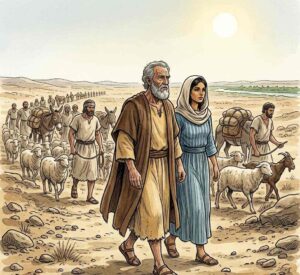
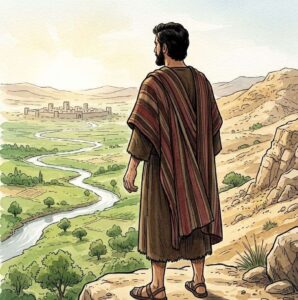
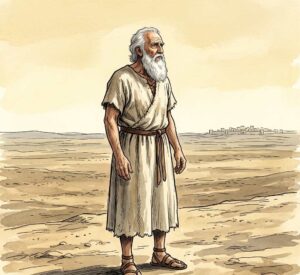
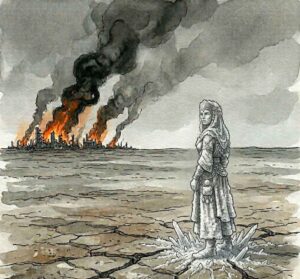
The ruins of Shechem lay silent in the land of Canaan. The walls that had been digged down remained broken. The streets that had been filled with the dead were empty. And the sons of Jacob moved on, driving their flocks and their captives before them, leaving behind a city that had learned the terrible cost of trusting the word of a Hebrew.