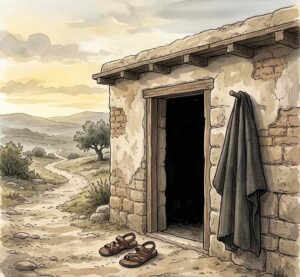

The angels took hold of his hand. The morning had come, and the judgment was upon them, and still Lot lingered. He stood at the door of his house in Sodom while the angels pulled at his arms, their voices urgent, their grip firm. The sun was rising over the plain, and the city was about to burn.
“Arise, take thy wife, and thy two daughters, which are here, lest thou be consumed in the iniquity of the city.”
Lot hesitated. The Scripture says he lingered, and the word is heavy with meaning. He had built his life in this city. He had married his daughters to men of this city. He had sat in the gate of this city as a judge and an elder. The green valley he had chosen so many years ago had become his home, and now he could not tear himself away from it even when angels were dragging him toward safety.
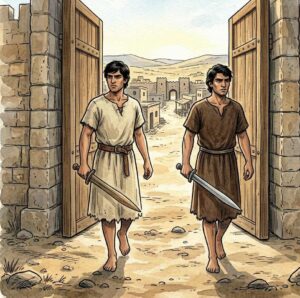
The angels seized him by the hand, and the hand of his wife, and the hands of his two daughters. The Lord was merciful to him. They pulled him out of the house and through the streets and toward the city gate. The people of Sodom were still asleep, or still blind, or still unaware that the last night of their lives had passed and the morning of their destruction had arrived.
The Command Outside the City
They reached the outside of the city, and one of the angels spoke again. His voice was sharp and urgent, the voice of a messenger who knew that death was walking close behind them.
“Escape for thy life. Look not behind thee, neither stay thou in all the plain. Escape to the mountain, lest thou be consumed.”
The command was simple. Run. Run for your life. Do not look back. Do not stop anywhere in the plain. Head for the mountains, where the fire cannot reach you. The angels had done their part. They had warned Lot. They had pulled him from the city. They had given him the words of deliverance. Now Lot and his family had to do the running.
Lot looked at the mountain and his heart failed him. The mountain was far. The mountain was hard to reach. The city of Zoar was closer, a small town on the edge of the plain. He pleaded with the angels to let him flee there instead.
“Oh, not so, my Lord. Behold now, thy servant hath found grace in thy sight, and thou hast magnified thy mercy, which thou hast shewed unto me in saving my life. And I cannot escape to the mountain, lest some evil take me, and I die. Behold now, this city is near to flee unto, and it is a little one. Oh, let me escape thither. Is it not a little one? And my soul shall live.”
The angel granted his request. “See, I have accepted thee concerning this thing also, that I will not overthrow this city, for the which thou hast spoken. Haste thee, escape thither. For I cannot do any thing till thou be come thither.”
The judgment of Sodom was waiting for Lot to reach safety. The fire was held back. The brimstone was suspended in the air. The destruction of the cities on the plain could not begin until this one man and his family were out of reach.
The Flight Across the Plain
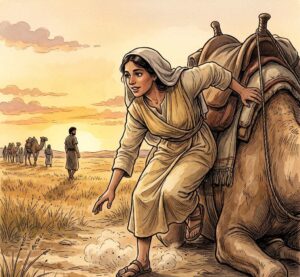
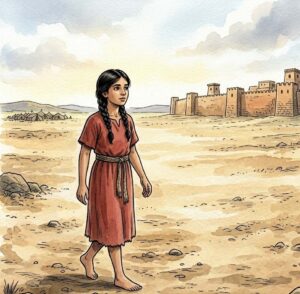
They ran. Lot ran, leading the way toward Zoar. His two daughters ran behind him. And his wife ran last, her sandals slapping against the hard ground, her breath coming in gasps. The sun was risen upon the earth as they fled across the open plain, the little city of refuge still ahead of them, the gates still distant.
Then the Lord rained upon Sodom and upon Gomorrah brimstone and fire from the Lord out of heaven.
The sky above the plain split open. Brimstone fell instead of rain. Burning stone and fire wrapped in rock hurtled down from the heavens. Dry fire consumed those streets and roofs. The cities of the plain had filled up the measure of their wickedness, and the measure was full, and the day of reckoning had arrived.
The fire caught the roofs first. The wooden beams of Sodom blazed against the morning sky. The brick walls cracked and crumbled in the heat. The streets where the men of the city had gathered the night before, pounding on the door of Lot and demanding the angels, were now rivers of flame. The marketplaces where they had bought and sold were consumed. The gates where Lot had sat as a judge collapsed into burning rubble. The houses where his married daughters had slept with their husbands were swallowed by the fire.
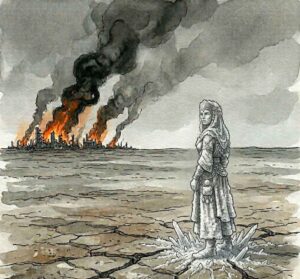
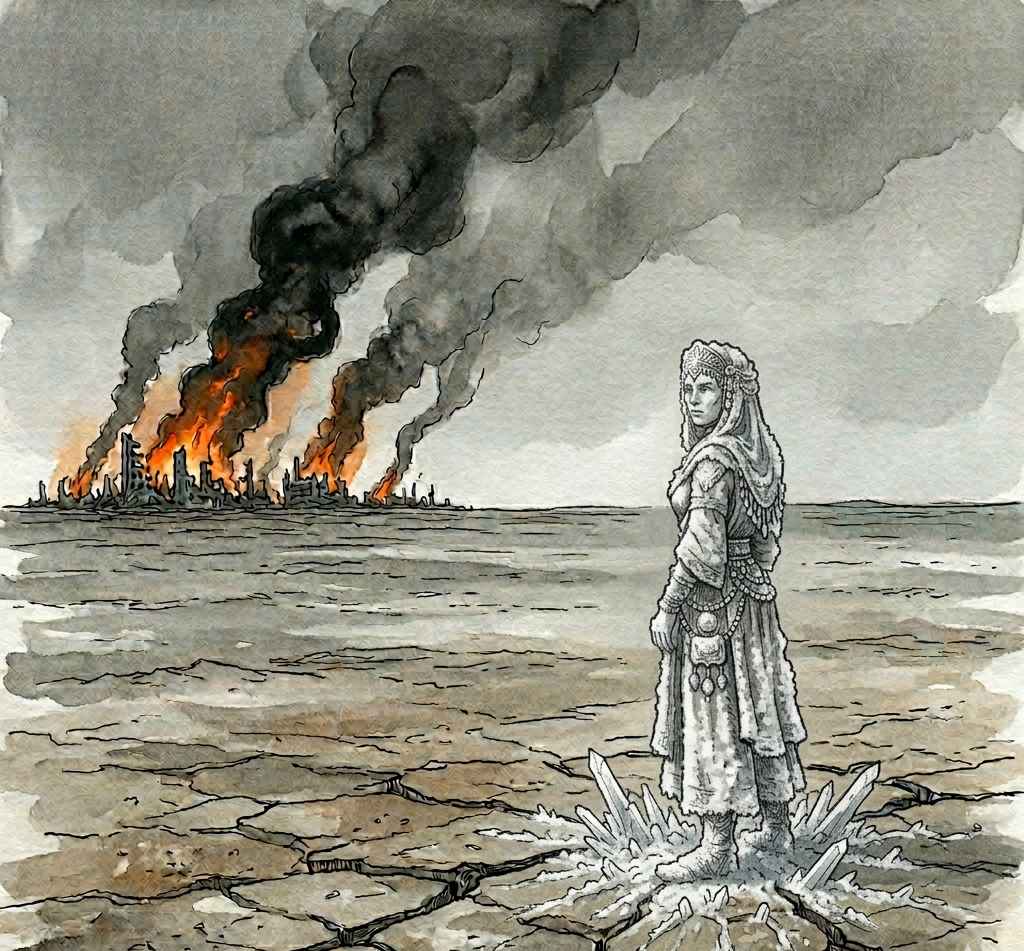
And his wife looked back from behind him, and she became a pillar of salt.
The Turning
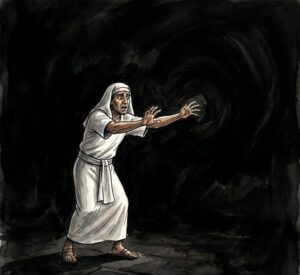
She was running behind her husband, her daughters ahead of her, the city of Zoar still before them. The Scripture says she looked back from behind him, and the phrase tells us she was lagging at the rear, the last in the line of flight. Lot was ahead. The daughters were between them. She was the furthest back, and when the fire began to fall and the sky turned orange with destruction, she slowed. She stopped running. She turned her face toward what she had left behind.
The Scripture gives no reason for her looking. It does not record her thoughts or her words or her feelings. It simply says that she looked back from behind him, and she became a pillar of salt.
She had been commanded, along with the others, to look not behind. The command was clear and specific. But she looked. Her face turned toward the city she had left. Her eyes found the flames and the smoke and the destruction. Perhaps she was searching for her married daughters who had stayed behind with their husbands. Perhaps she was mourning her house and her possessions. Perhaps her heart was still in Sodom even when her feet were on the road to Zoar.
Whatever the reason, she turned. And in the turning, she became what she turned toward. The city was being destroyed with fire and brimstone. She became a pillar of salt. The judgment that fell on Sodom reached out and took her as well, because her heart was still there even when her body was fleeing across the plain.
She stopped. Her body stiffened. The breath left her lungs. And where a woman had been running for her life, a pillar of salt now stood, white and still, facing the burning plain. She never reached Zoar. She never passed through its gates. The city of refuge was before her, but she turned backward, and the backward glance was the last act of her life.
The Silence of the Salt
Lot may have called her name. He may have reached for her hand and found only empty air. But the angels had told him to escape for his life, and he kept running. His daughters ran with him. The sun was risen upon the earth when Lot entered Zoar. The little city opened its gates to the fugitives, and he stumbled inside with his two daughters. Only three of them had made it. His wife was already gone, a pillar of salt standing alone on the plain, her backward glance frozen forever.
The pillar stood on the open ground between Sodom and Zoar, a white monument to a backward glance. For generations afterward, travelers through that desolate region would see it and remember. The story would be told around fires and in tents, the story of a woman whose body escaped the city while her heart remained trapped inside. She had been pulled out by angels. She had been given the command of life. She had run with her husband and her daughters across the plain. But on the open road, with safety still ahead of her, she turned, and the turning was her undoing.
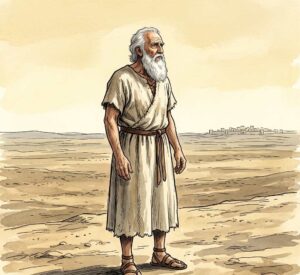
The smoke continued to rise from the cities of the plain. Abraham rose early in the morning and went to the place where he had stood before the Lord. He looked toward Sodom and Gomorrah and toward the entire territory of the plain, and he saw the smoke of the country going up like the smoke of a furnace. The old man who had bargained for the city saw the proof that his bargaining had failed. Ten righteous people had not been found. The cities had been destroyed. And on the plain, between Sodom and Zoar, a pillar of salt stood facing the ruins, a silent testimony to the danger of loving what God has condemned.
The sun climbed higher. The fire burned out. The salt remained.