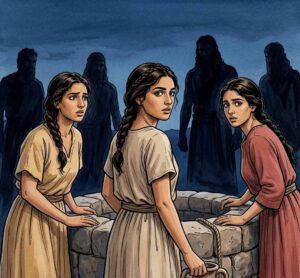

The servant had traveled far. Abraham had made him swear an oath, his hand under the old man’s thigh, that he would go to the land of his kindred and find a wife for Isaac from among his own people. The servant had taken ten camels and loaded them with gifts and set out for Mesopotamia, to the city of Nahor. There he had prayed by a well at evening, the time when women come out to draw water, and he had asked the Lord for a sign.
“Let it come to pass, that the damsel to whom I shall say, Let down thy pitcher, I pray thee, that I may drink, and she shall say, Drink, and I will give thy camels drink also, let the same be she that thou hast appointed for thy servant Isaac.”
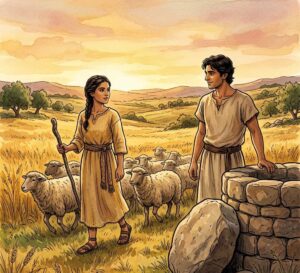
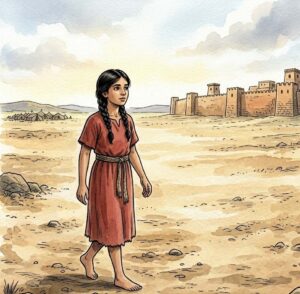
The words were still in his mouth when Rebekah came out with her pitcher on her shoulder. She was the daughter of Bethuel, the son of Milcah, the wife of Nahor, Abraham’s brother. She was fair to look upon, and she went down to the well and filled her pitcher and came up again. The servant ran to meet her and asked for water, and she gave it to him, and then she said the words he had been waiting to hear.
“Drink, my lord. And I will draw water for thy camels also, until they have done drinking.”
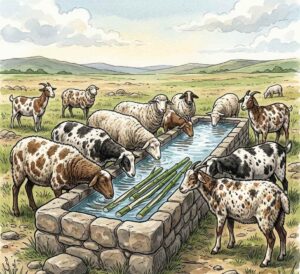
She emptied her pitcher into the trough and ran back to the well to draw more water, and she kept drawing until all ten camels had drunk their fill. The servant watched in silence, his heart pounding, knowing that the Lord had answered his prayer. He gave her a golden earring and two bracelets for her hands, and he asked whose daughter she was. When she told him, he bowed his head and worshiped the Lord.
Now the long journey was over. The servant had secured the consent of her family. Laban her brother and Bethuel her father had said, “The thing proceedeth from the Lord. Behold, Rebekah is before thee. Take her, and go, and let her be thy master’s son’s wife, as the Lord hath spoken.” The servant had brought out jewels of silver and gold and raiment and given them to Rebekah and to her mother and brother. And when the morning came, Rebekah had agreed to go with him, leaving her family and her country, just as Abraham had done so many years before.
Now the camels were approaching the end of their journey. The land of Canaan stretched before them, and somewhere ahead, Isaac was waiting.
The Man in the Field
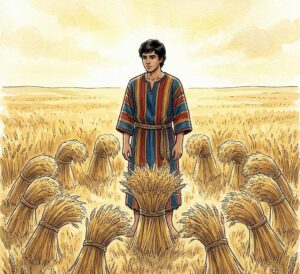
Isaac went out to meditate in the field at the eventide. The sun was sinking low over the plain, and the heat of the day was beginning to fade. He had come from the way of the well Lahairoi, the well where Hagar had met the angel of the Lord so many years ago, the well of the Living One who sees me. He was walking in the field, his mind turned toward the Lord, when he lifted up his eyes and saw the camels coming.
The camels moved across the plain in a long line, their shapes dark against the evening sky. Isaac stopped his walking and watched them approach. He did not know who they were or what they carried. He did not know that one of those camels bore his bride. He only knew that something was coming toward him across the field, and he stood still and waited.
Rebekah saw him from the back of her camel. She had been riding for many days, across rivers and through deserts, leaving behind everything she had ever known. The servant had told her stories about Isaac, about the promise of his birth, about the laughter of Sarah, about the covenant that God had made with Abraham. But she had never seen his face. She had never heard his voice. She was riding toward a man she had agreed to marry before she had ever laid eyes on him.
She lifted her eyes and saw a man walking in the field. He was not old like Abraham. He was not like the men of Mesopotamia she had grown up among. He was walking alone in the evening light, and something in his bearing, something in the way he moved across the field, told her who he was.
“What man is this that walketh in the field to meet us?”
The servant answered, “It is my master.”
The words confirmed what her heart already knew. The man in the field was Isaac. The son of the promise. The one for whom she had left her country and her family. The husband she had never met.
The Sliding Down
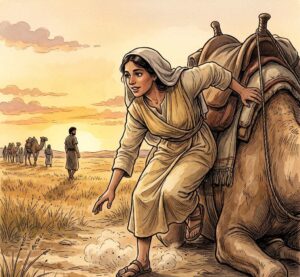
She took a veil and covered herself. The veil was a sign of modesty, a preparation for meeting the man who would be her husband. But before she could compose herself, before she could arrange her garments and prepare a proper greeting, she did something that revealed the eagerness of her heart.
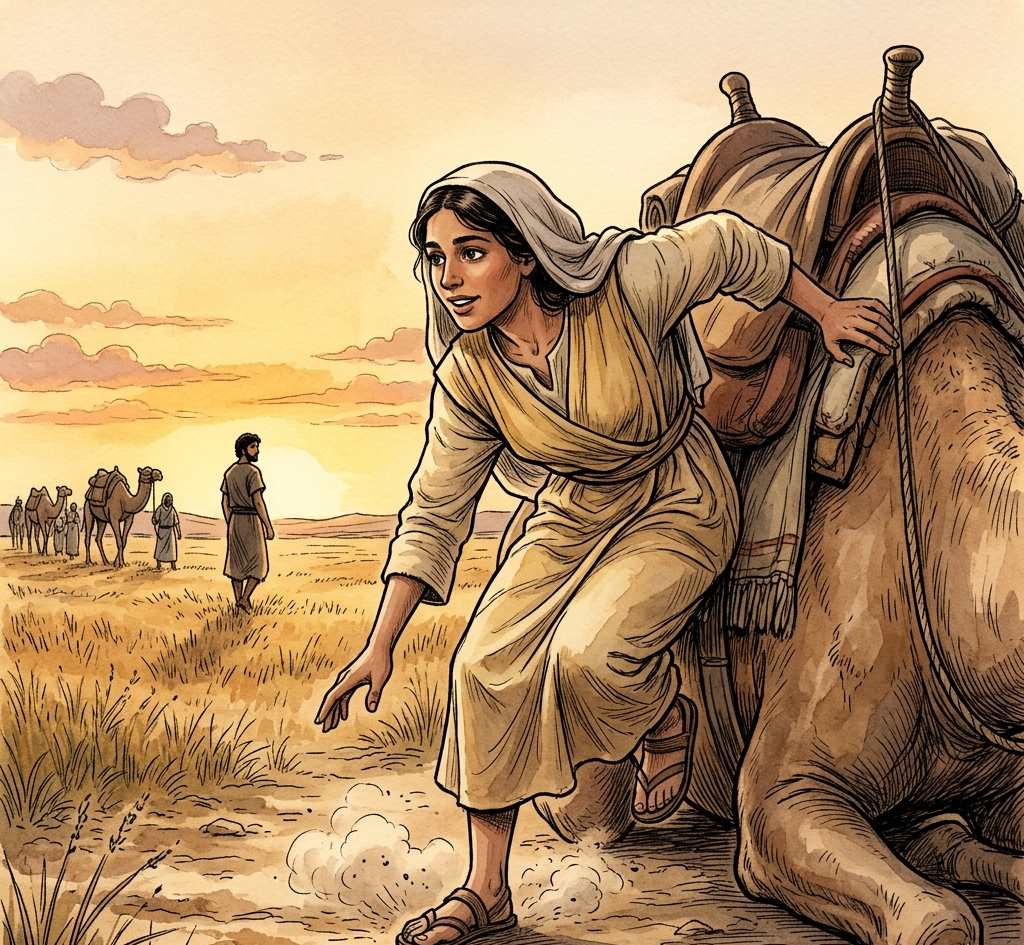
She slid off the camel.
The verb in the original language is quick and decisive. She did not climb down carefully. She did not wait for a servant to help her dismount. She fell from the camel, dropped from its back, came down with a speed that spoke of urgency and desire. The long journey was over. The man she had come to marry was standing before her. And she could not stay on the camel another moment.
Her feet hit the ground. The dust rose around her sandals. The veil covered her face, but her eyes were fixed on the man in the field. She had traveled hundreds of miles on the word of a servant and the promise of a God she was only beginning to know. She had left her mother and her brother and her home. And now she stood on the soil of Canaan, facing the son of Abraham, and she was ready.
The servant told Isaac all the things that he had done. He spoke of the prayer at the well. He spoke of Rebekah’s kindness. He spoke of her willingness to leave her family. He spoke of the journey and the provision of the Lord along the way. Isaac listened, and then he did what any man would do who had been waiting for this moment since his father had promised him a wife from his own people.
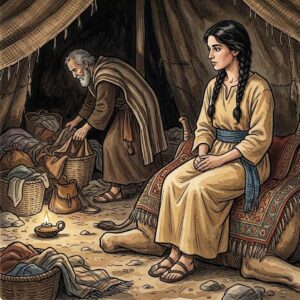
He brought her into his mother Sarah’s tent. The tent that had been empty since the old woman died, the tent where Isaac had been born and raised, the tent where the promise had been nurtured and protected. He brought Rebekah into that tent and took her as his wife. And he loved her. And Isaac was comforted after his mother’s death.
The sun set over the plain. The camels were unloaded. The servants prepared the evening meal. And in the tent of Sarah, a new chapter of the promise began. The son had found his bride. The line of Abraham would continue. And the God who had led the servant to the well had led the bride to the field, where a man walked at evening and a woman slid from her camel into his life.