
The king of Egypt spoke to the Hebrew midwives. His throne was secure, his armies were strong, his monuments rose against the sky, but the children of Israel multiplied like the stars Abraham had counted on that cold night in Canaan. They filled the land. They spilled across the borders of Goshen. Their numbers swelled with each passing year, and Pharaoh looked at them and saw a threat where once he had seen only slaves.
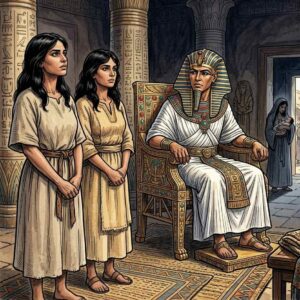
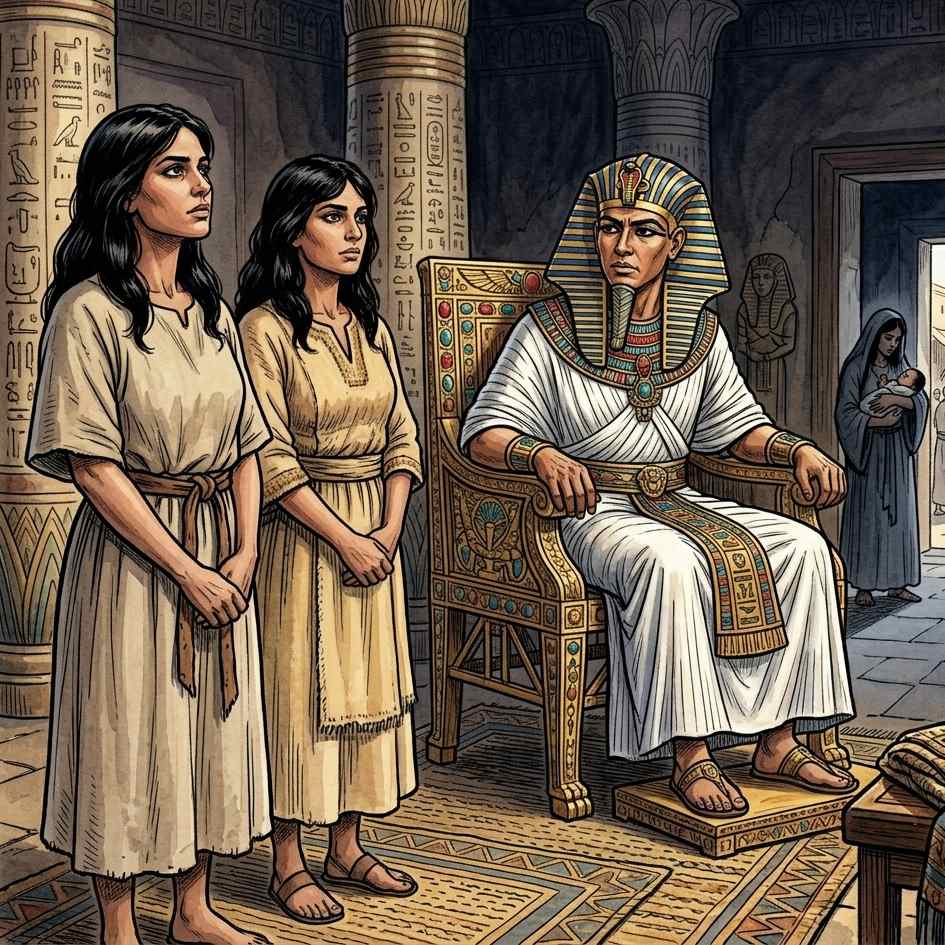
He summoned the two women who attended the births of the Hebrew women. Shiphrah and Puah were their names, and the names are recorded in Scripture while the name of the great king who ruled Egypt fades into anonymity. The midwives stood before the throne, two humble women in the presence of the most powerful man in the world, and they listened to the command that was meant to reduce the people of God.
“When ye do the office of a midwife to the Hebrew women, and see them upon the stools, if it be a son, then ye shall kill him. But if it be a daughter, then she shall live.”
The order was simple and brutal. Kill the boys at the moment of birth. Let the girls live. Weaken the Hebrews by removing their future warriors while keeping their women for the labor camps. It was genocide wrapped in policy, murder dressed in the language of statecraft. And Pharaoh expected obedience. He was a god in the eyes of his people, the living embodiment of Ra, the ruler of the land where the sun never set. Who were two midwives to defy him?
The Fear of God
The midwives feared God. The words are simple and revolutionary. They feared the God of Abraham and Isaac and Jacob more than they feared the king of Egypt. They feared the One who had promised to make a great nation from the seed of the patriarchs. They feared the One who saw what was done in secret, who heard the cries of the oppressed, who would one day send a deliverer to break the yoke of slavery. And because they feared God, they did not do as the king of Egypt commanded them.
They saved the men children alive. They went to the births of the Hebrew women. They saw the babies emerge into the world, the boys as well as the girls. They cut the cords and washed the infants and placed them in the arms of their mothers. They looked at the faces of the newborns, and they saw the image of God, and they refused to snuff out what God had made. The order of Pharaoh was clear. The fear of God was clearer.
The defiance was quiet but absolute. The midwives made a choice in the hidden places, in the birthing rooms where no Egyptian overseer would ever enter. They chose life when death was commanded. They chose obedience to God when obedience to the king would have been easier. They chose courage when fear would have been understandable. And the boys lived.
The Summons to the Throne
The king of Egypt called for the midwives again. He had noticed that the Hebrew boys were still alive. The census of the slave camps showed no decline in the male population. The order he had given was being ignored, and the god-king demanded an explanation. Shiphrah and Puah stood before him a second time, and the question was simple. Why have you done this thing? Why have you saved the men children alive?
The midwives answered the king, and their answer was a lie that God blessed.
“Because the Hebrew women are not as the Egyptian women. For they are lively, and are delivered ere the midwives come in unto them.”
The words were clever. The Hebrew women, they said, gave birth too quickly. By the time the midwife arrived, the baby was already born and hidden away. The midwives claimed they could not kill the boys because the boys were already in their mothers’ arms before the midwives reached the birthing stool. The explanation appealed to the ignorance of Pharaoh about the ways of slave women. It painted the Hebrews as so vigorous that even their childbirth was beyond the reach of Egyptian control.
The lie protected the midwives from punishment. It covered their disobedience with a story that Pharaoh could accept without losing face. And it allowed the boys to keep living. The midwives had defied the king, deceived the king, and saved the children of the covenant. And God was watching.
The Reward of the Faithful
God dealt well with the midwives. The Scripture records that because they feared God, he made them houses. The word means more than dwellings. It means households, families, lineages. The women who saved the children of Israel were given children of their own. The ones who preserved the households of the Hebrews were blessed with households that would carry their names into the future. Shiphrah and Puah are remembered while Pharaoh is forgotten. Their names are written in the book of Exodus while the name of the king who commanded genocide has been lost to history.
The people multiplied and waxed very mighty. The defiance of the midwives was only the beginning. Pharaoh would try again. He would command all his people to cast every Hebrew son into the river. He would build a system of oppression that crushed the spirit of the slaves. But the midwives had drawn a line in the sand. They had feared God rather than man. They had chosen life when death was commanded. And the God who saw their courage was preparing a deliverer who would one day stand before a later Pharaoh and demand the release of the entire nation.
In the birthing rooms of Goshen, the cries of newborn Hebrew boys continued to rise. The hands of Shiphrah and Puah caught them as they entered the world, washed them, and placed them safely in the arms of their mothers. The order of the king had been defied. The fear of God had prevailed. And the children of Israel kept multiplying, kept growing, kept filling the land with the sound of life that no decree of Pharaoh could silence.