
A man of the house of Levi took a wife from the same tribe, and she conceived and bore a son. The child came into the world under a death sentence, every Hebrew boy marked for the river by the decree of Pharaoh. The mother looked at her baby and saw that he was goodly, beautiful, a child who deserved to live. The midwives had defied the king to save such children. Now a mother would do the same.
She hid him for three months. The weeks passed in fear and secrecy, the infant kept quiet while the Egyptian patrols walked the streets of the slave quarters. A baby’s cry could bring death to the door. A neighbor’s betrayal could end everything. The mother nursed him in silence, pressed her hand over his mouth when the soldiers passed, prayed to the God of Abraham that her son would survive the hour and the day and the night.
The time came when she could hide him no longer. The child was growing, his voice getting stronger, his presence harder to conceal. She had to make a choice. Give him to the river as Pharaoh commanded, or give him to the river in a way that might save his life. She chose the second path, the path of desperate hope, the path that placed her son in the hands of the God who had promised to deliver Israel.
The Ark of Bulrushes
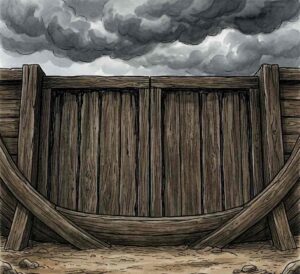
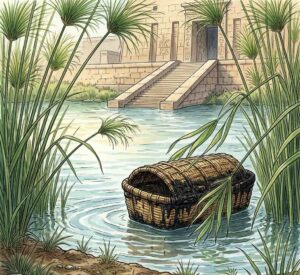
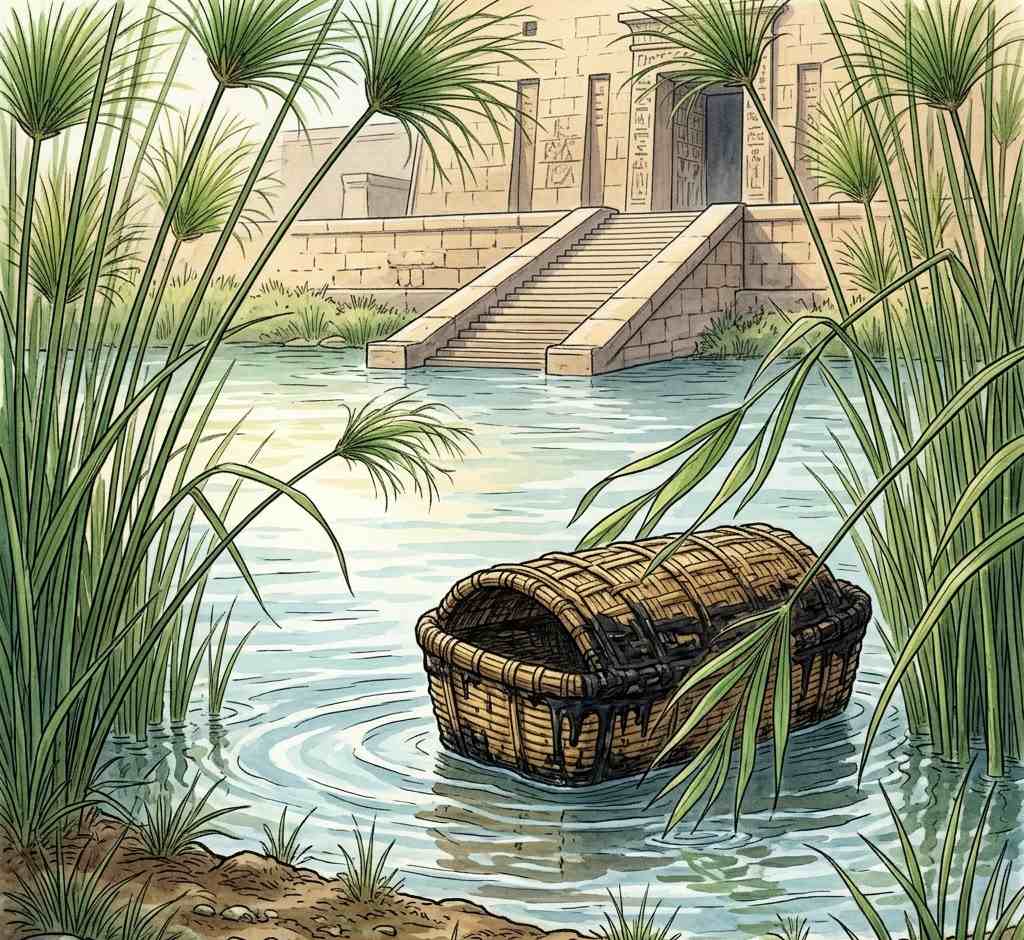
She took an ark of bulrushes, a small basket woven from the papyrus reeds that grew along the banks of the Nile. Her hands worked with the skill of a woman who had made such vessels before, braiding the stalks tightly together, shaping the basket to hold a precious cargo. She daubed it with slime and with pitch, the black tar that would keep the water out, the same pitch that had sealed the door of the ark in the days of Noah. The word for ark is the same. The vessel that saved humanity from the flood and the vessel that would save the deliverer of Israel share a name, share a purpose, share the hand of God moving through water.
She put the child in the basket. The mother laid her son into the tiny ark, her hands trembling, her heart breaking. She looked at his face for what might have been the last time, the dark eyes, the soft skin, the small fingers curled against his chest. Then she closed the lid and carried the basket to the river.
She placed the ark among the flags at the edge of the Nile. The reeds grew thick there, their tall stalks bending over the water, creating a hidden place where the current was gentle and the basket might rest undisturbed. She set her son adrift among the bulrushes, not in the open river where the crocodiles hunted, but in the quiet backwater where the flags swayed in the breeze and the water lapped softly against the bank.
The Sister Who Watched
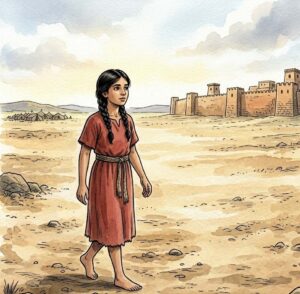
His sister stood afar off, to know what would be done to him. Miriam was her name, a young girl with sharp eyes and quick feet, and she had been given the task of watching. She hid among the reeds further down the bank, her dark hair blending with the shadows, her eyes fixed on the basket that held her baby brother. She watched the flags sway. She watched the water ripple. She watched and waited, and the fate of the child rested on what she would see and what she would say.
The current held the basket in place. The pitch kept the water out. The reeds shielded the tiny ark from view. But the baby was still in danger. The river was a place of death as well as life. Crocodiles basked on the sandbanks. Hippopotami churned the water. The sun beat down without mercy. And the decree of Pharaoh hung over every Hebrew child like a sword. If the basket was discovered by an Egyptian, the child would be thrown into the deep water to drown.
Then the daughter of Pharaoh came down to wash herself at the river. Her maidens walked along the bank, their linen garments bright against the green of the reeds. The princess descended the steps to the water’s edge, and her eyes caught something among the flags. A basket. A small ark of bulrushes, daubed with pitch, resting in the shallows like a gift left by the river itself.
She sent her maid to fetch it. The woman waded into the water and brought the basket to the princess. When she opened it, the child was crying. The baby’s voice rose from the little ark, and the daughter of Pharaoh looked at him and knew what he was. A Hebrew child. A baby who should have been dead by her father’s decree. A tiny life that had been hidden among the reeds in a desperate hope that someone would find him and have compassion.
“This is one of the Hebrews’ children.”
The words acknowledged the truth. She knew the decree. She knew her father’s command. She knew that this child was condemned by the law of Egypt. But she looked at the crying baby, and her heart was moved. The daughter of the oppressor felt compassion for the child of the oppressed. The princess of Egypt would become the protector of the deliverer of Israel.
The Mother Called
Miriam emerged from her hiding place. The sister of the baby had watched everything. She had seen the princess find the basket. She had heard the princess acknowledge the child’s identity. And now she stepped forward with a question that would change history.
“Shall I go and call to thee a nurse of the Hebrew women, that she may nurse the child for thee?”
The words were perfect. She did not reveal that the nurse was the child’s mother. She did not betray the secret that the woman who would feed this baby was the same woman who had placed him in the river. She simply offered a practical solution to a practical problem. The princess had found a baby. The baby needed a nurse. Miriam knew where to find one.
“Go.”
The single word was enough. Miriam ran. Her feet carried her along the riverbank, back to the house where her mother waited, back to the woman who had placed her son in the ark and sent him into the unknown. She burst through the door with the news. The princess had found the basket. The princess had taken pity. The princess needed a nurse. And the mother who had given up her son would now be paid to feed him.
The mother came to the daughter of Pharaoh. She stood before the princess of Egypt, her heart pounding, her face carefully composed. The princess looked at her and gave her the child. “Take this child away, and nurse it for me, and I will give thee thy wages.”
She took her son back into her arms. The baby who had been condemned to die was returned to the woman who had given him life. The mother would nurse him and raise him and teach him who he was. And when he was old enough, she would bring him to the palace, and he would become the son of Pharaoh’s daughter, and she would call his name Moses, because she drew him out of the water.
The basket had floated among the reeds of the Nile, and the daughter of the king had found it, and the sister had spoken the right words, and the mother had received her child back from the dead. The deliverer of Israel had been saved from the river, and the river that was meant to be his grave had become the door to his destiny.