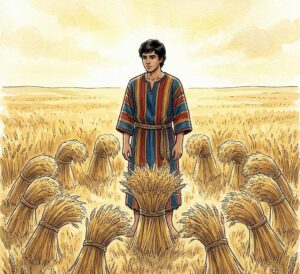

The Ishmaelites had sold him to Potiphar, an officer of Pharaoh and captain of the guard. Joseph had arrived in Egypt as a slave, his hands bound, his coat of many colours torn from his shoulders and soaked in goat blood, his future reduced to the will of a master he had never chosen. The dreamer who had seen sheaves bowing and stars making obeisance now served in the house of an Egyptian, far from the tents of his father and the hills of Canaan.
But the Lord was with Joseph. The words appear like a light in the darkness of his circumstances. The Lord was with him, and he was a prosperous man. Everything he touched succeeded. The work of his hands brought blessing to the house of Potiphar, and the Egyptian saw that the Lord was with him. Potiphar made Joseph overseer over his house, and all that he had he put into his hand. The slave had become the steward. The prisoner of circumstance had become the manager of an empire within an empire.
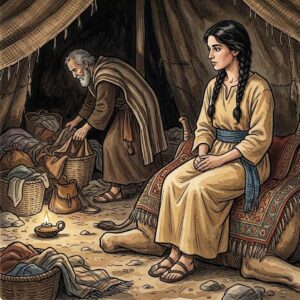
Joseph was a goodly person and well favoured. The years had shaped him into a man of striking appearance, his face handsome, his bearing confident. The wife of Potiphar noticed. She cast her eyes upon Joseph, and what she saw stirred something in her that should have remained dormant. She approached him with a directness that left no room for misunderstanding.
“Lie with me.”
The Refusal
Joseph refused. His answer was swift and firm, rooted in loyalty to his master and fear of his God. “Behold, my master wotteth not what is with me in the house, and he hath committed all that he hath to my hand. There is none greater in this house than I, neither hath he kept back any thing from me but thee, because thou art his wife. How then can I do this great wickedness, and sin against God?”
The words reveal the character that had been forged in the years of slavery. Joseph could have rationalized the invitation. He could have told himself that his master would never know, that the woman had initiated it, that a slave had no choice but to obey. Instead, he named the act for what it was. A great wickedness. A sin against God. The young man who had once boasted of his dreams had become a man who feared the Lord more than he feared the consequences of refusal.
The wife of Potiphar did not accept his answer. She spoke to Joseph day by day, pressing her case, wearing down his resistance with the steady drip of temptation. Each day she approached him. Each day she made her desires known. Each day Joseph refused. He would not hearken to her, to lie by her, or to be with her. The verbs pile up in the text, building a wall of resistance against the flood of her advances.
The Day of the Cloak
Then came the day when Joseph went into the house to do his business. The timing was deliberate. The wife of Potiphar had waited for a moment when none of the other men of the house were inside. The rooms were empty. The servants were elsewhere. The opportunity was perfect, and she seized it.
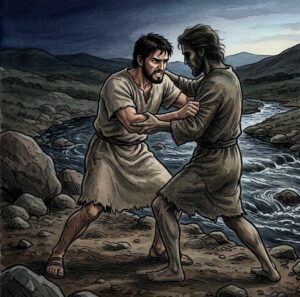
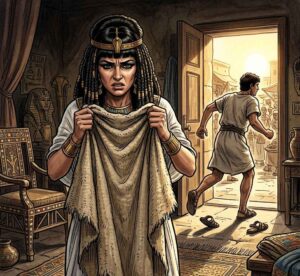
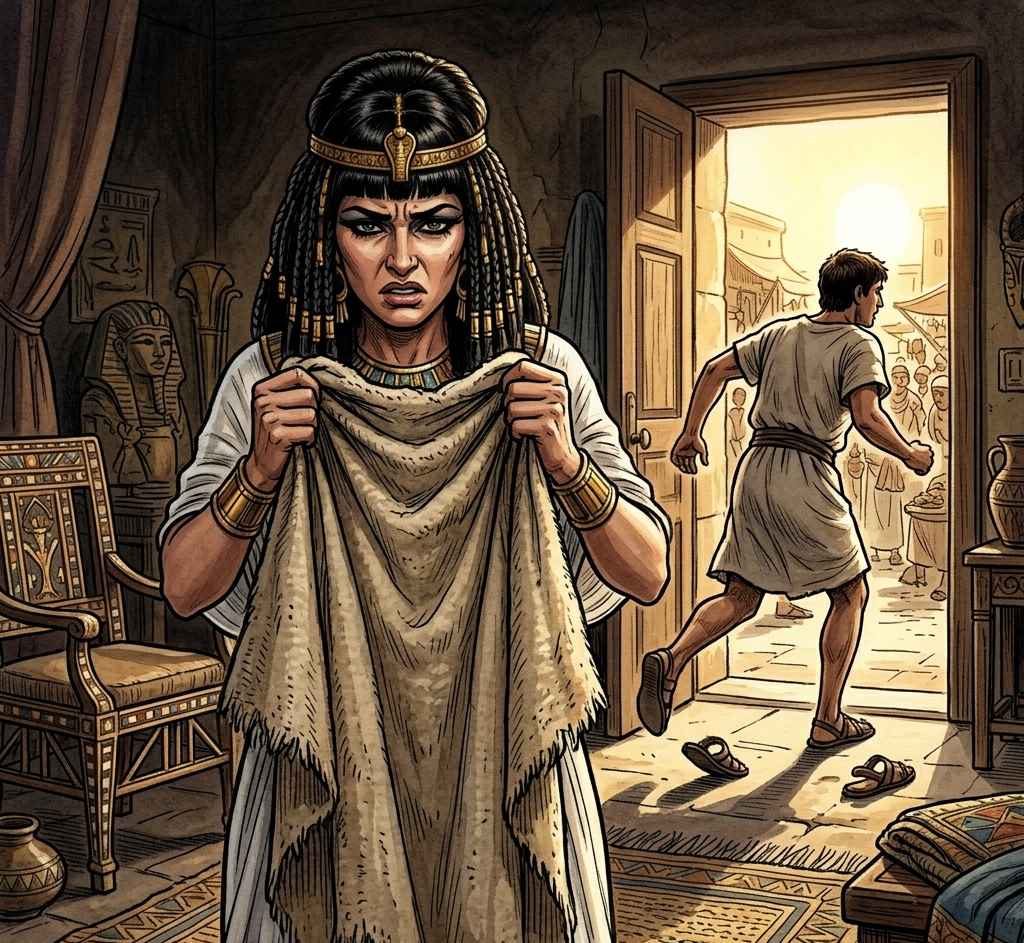
She caught him by his garment. Her fingers closed on the fabric of his cloak, the loose outer garment that covered his body. The grip was desperate, the final attempt of a woman who had been refused too many times. “Lie with me.” The words were the same, but now they were backed by physical force. She held him by the cloak, pulling him toward her, demanding what he had refused to give.
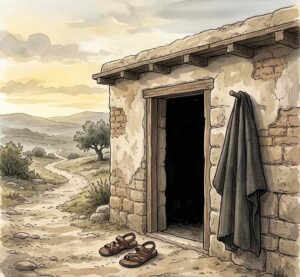
Joseph did not hesitate. He left his garment in her hand and fled. The cloak slipped from his shoulders, and he ran from the house, leaving the woman clutching the empty fabric. He did not pause to retrieve it. He did not worry about what she would do with it. He fled from temptation with the same urgency that Lot should have fled from Sodom. He ran, and he got himself out.
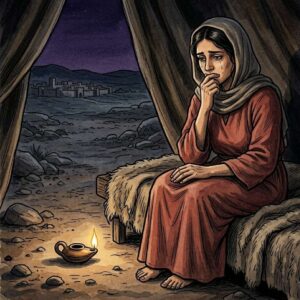
The cloak remained in her hand. The fabric that had covered the body of the slave was now evidence of a crime he had not committed. The wife of Potiphar looked at the garment in her grip, and her rejected desire curdled into something dark. She would use the cloak to destroy the man who had refused her. The proof of his resistance would become the proof of his guilt.
The False Accusation
She called to the men of her house. Her voice rang through the rooms, summoning the servants who had been absent during the attack. When they arrived, she held up the cloak for all to see and told them a lie wrapped around a kernel of truth.
“See, he hath brought in an Hebrew unto us to mock us. He came in unto me to lie with me, and I cried with a loud voice. And it came to pass, when he heard that I lifted up my voice and cried, that he left his garment with me, and fled, and got him out.”
The story was carefully crafted. She blamed her husband for bringing a Hebrew into the household. She claimed she had cried out, the proper response of a woman under assault. She used the cloak as evidence, the garment that Joseph had left behind in his desperate flight. The truth was that she had grabbed him and he had fled. The lie was that he had attacked her and she had resisted. The cloak was the only witness, and it could not speak.
She kept the garment by her until his lord came home. She held the cloak in her hands, waiting for Potiphar to return, rehearsing her words. When he entered the house, she spoke to him the same words she had spoken to the servants. “The Hebrew servant, which thou hast brought unto us, came in unto me to mock me. And it came to pass, as I lifted up my voice and cried, that he left his garment with me, and fled out.”
The accusation was precise and devastating. The cloak was produced. The evidence was presented. The word of a wife against the word of a slave. Potiphar heard the story and his wrath was kindled. The text does not record what he believed or what he questioned. It only records that his anger burned, and he took Joseph and put him into the prison, the place where the king’s prisoners were bound.
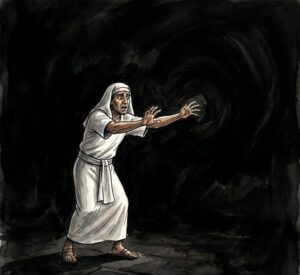
The dreamer was in a dungeon. The man who had been overseer of the house was now a prisoner in the darkness. The cloak that had been left in the hand of the wife of Potiphar had done its work. But the Lord was still with Joseph. The Lord had been with him in the house of Potiphar, and the Lord would be with him in the prison. The sheaves were still waiting to bow. The stars were still waiting to make obeisance. And the man who had fled from temptation would one day rise from the dungeon to stand before Pharaoh.