
The seven days of blood had passed. The Nile still stank with the memory of death, and the people of Egypt were digging in the earth for water that did not taste of rotting fish. Pharaoh remained in his palace, his heart hard, his refusal settled like a stone in his chest. The Lord spoke to Moses again, and the word was simple. Go to Pharaoh. Stretch out the rod. And if the king refused again, the river that had run with blood would bring forth something worse.
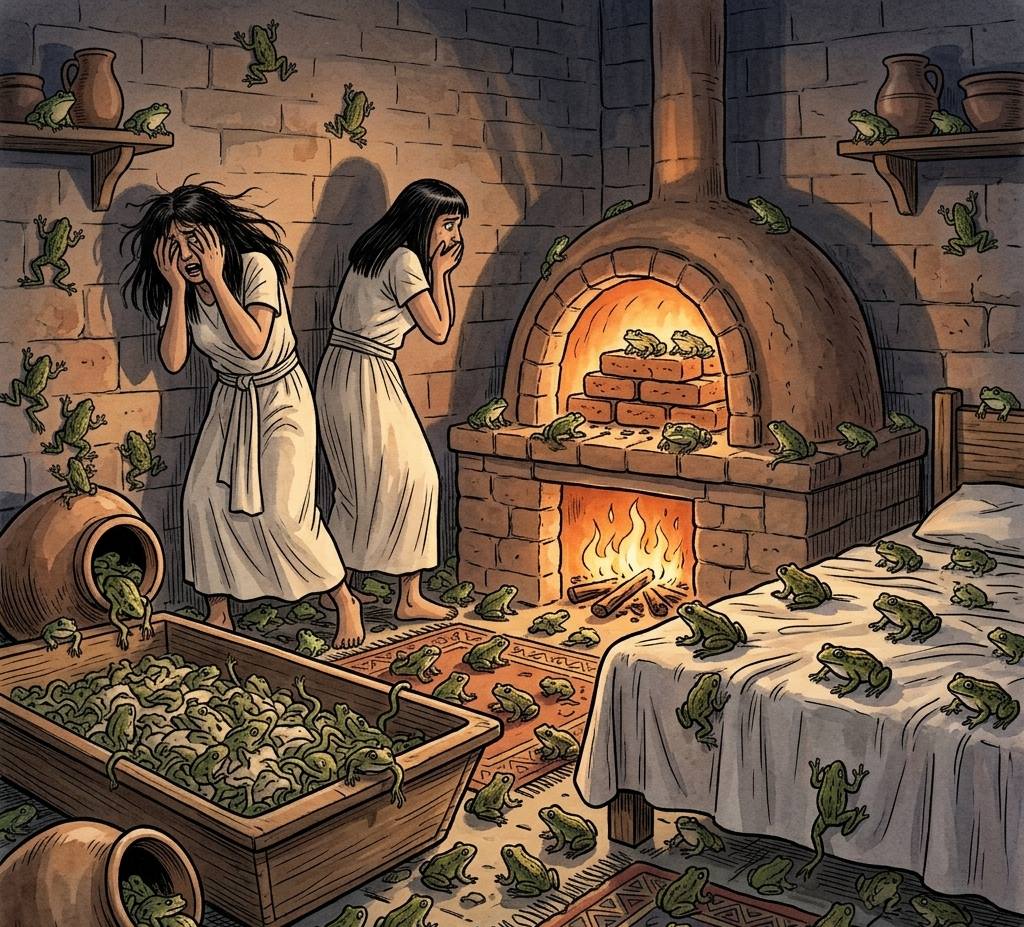
Moses stood before Pharaoh with the demand unchanged. “Thus saith the Lord, Let my people go, that they may serve me.” The warning that followed was precise and terrible. “If thou refuse to let them go, behold, I will smite all thy borders with frogs. And the river shall bring forth frogs abundantly, which shall go up and come into thine house, and into thy bedchamber, and upon thy bed, and into the house of thy servants, and upon thy people, and into thine ovens, and into thy kneadingtroughs.”
Pharaoh refused. The word of the Lord had been spoken. And Aaron stretched out his hand with the rod over the waters of Egypt.
The River Brings Forth Life
The frogs came up from the river. They did not come in dozens or hundreds. They came in numbers beyond counting, a living tide that rose from the waters and spread across the land. The Nile that had been a source of death during the plague of blood now became a source of torment. The frogs crawled from the streams and the canals and the ponds. They pushed through the reeds and over the banks. They moved with a sound like a soft rustling carpet, millions of wet bodies sliding over the dry ground.
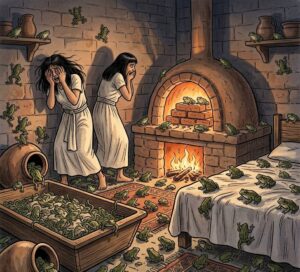
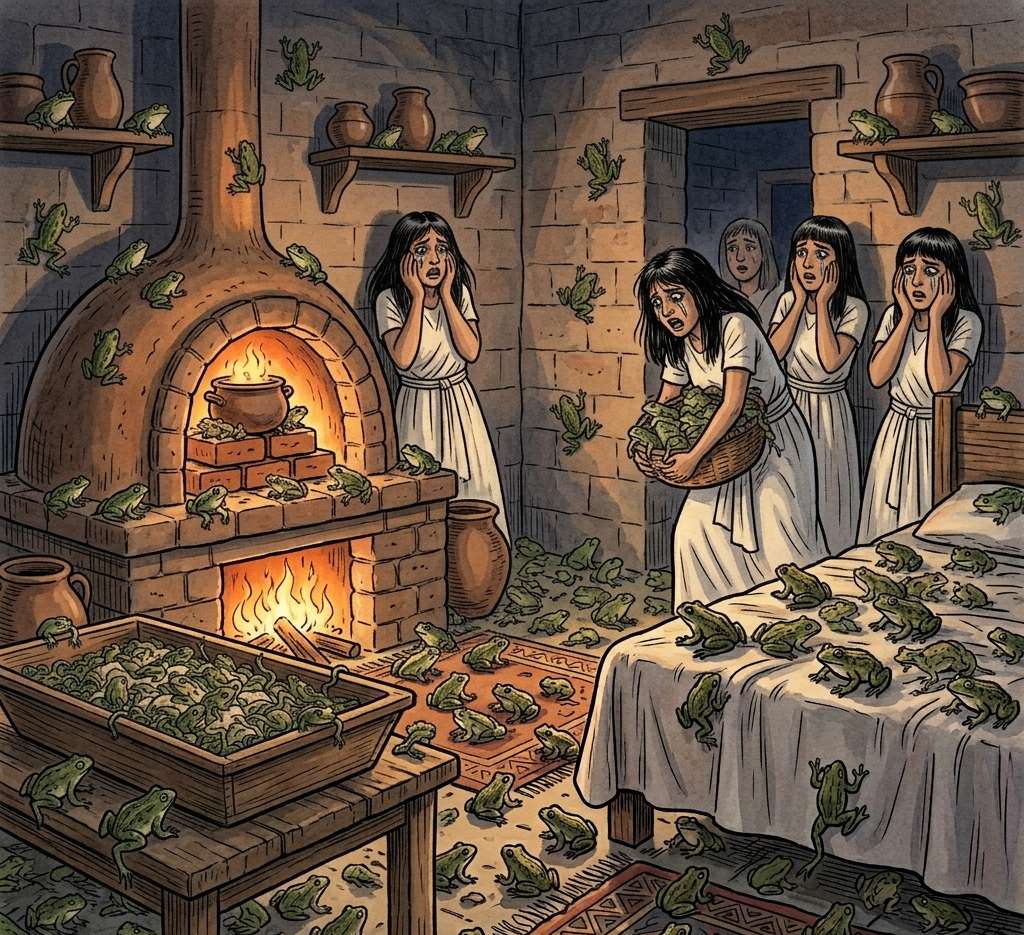 The frogs went into the houses. They found every opening, every crack, every space beneath a door. They climbed the walls and filled the courtyards. They gathered in the sleeping chambers and covered the beds where the Egyptians lay down at night. The people pulled back their covers and found frogs waiting for them. They turned over their pillows and frogs leapt from beneath. The soft croaking that had once been a pleasant sound of the riverbank became a maddening chorus that never stopped.
The frogs went into the ovens. The women of Egypt opened the clay ovens to bake their daily bread, and frogs hopped out of the fire chambers. The creatures had invaded the places where the dough was prepared and the meals were cooked. The kneadingtroughs where the flour was mixed with water were filled with frogs. The bread that came from the ovens carried the taste and the stench of the plague. The Egyptians could not eat without encountering the judgment of the Lord. They could not sleep. They could not cook. They could not walk across their own floors without crushing the creatures underfoot.
The Magicians Imitate
The magicians of Egypt did the same with their enchantments. The wise men and the sorcerers gathered in the sight of Pharaoh and performed their secret arts. They brought up frogs upon the land of Egypt, adding to the plague rather than removing it. The king had called for his magicians to match the power of the Hebrew God, and they had succeeded in making the situation worse. The land was already drowning in frogs, and the sorcerers had added more.
Their failure was complete and damning. The magicians could replicate the plague. They could add frogs to frogs. They could make the judgment heavier and the torment greater. But they could not remove a single frog from the land. They could not clear the beds or the ovens or the kneadingtroughs. The power of the false gods of Egypt was enough to bring suffering but not enough to bring relief. The servants of the idols could only deepen the wounds of their nation.
Pharaoh called for Moses and Aaron. The king who had hardened his heart against the blood of the Nile now found his resolve weakening under the weight of the frogs. His palace was filled with the creatures. His bed was crawling with them. His food was tainted by their presence. The god-king of Egypt was living in a swamp, and he could not bear it any longer.
“Intreat the Lord, that he may take away the frogs from me, and from my people. And I will let the people go, that they may do sacrifice unto the Lord.”
The words were a surrender, the first crack in the wall of Pharaoh’s defiance. The king who had said he did not know the Lord was now asking the servants of the Lord to pray for him. The ruler who had refused to let Israel go was now promising to release them. The frogs had done what the blood could not do. The torment of sleepless nights and contaminated food had broken through where the death of the river had failed.
The Cry for Relief
Moses looked at Pharaoh and saw an opportunity to demonstrate the power of the Lord in a way that even the king could not deny. “Glory over me. When shall I intreat for thee, and for thy servants, and for thy people, to destroy the frogs from thee and thy houses, that they may remain in the river only?”
Pharaoh answered, “Tomorrow.”
The word was strange. The king was suffering. His people were suffering. The frogs were in his bed and his oven and his food. And yet he asked for relief to come tomorrow rather than immediately. Perhaps he hoped the plague would lift on its own. Perhaps he wanted to see if the Hebrew God could control the timing of the judgment as precisely as Moses claimed. Perhaps he was simply too proud to admit the urgency of his need.
Moses gave him what he asked. “Be it according to thy word, that thou mayest know that there is none like unto the Lord our God. And the frogs shall depart from thee, and from thy houses, and from thy servants, and from thy people. They shall remain in the river only.”
Moses and Aaron went out from Pharaoh. Moses cried unto the Lord concerning the frogs which he had brought against Pharaoh. The prayer rose from the land of Egypt, and the Lord did according to the word of Moses.
The frogs died. They died in the houses and in the villages and in the fields. They died in the beds where they had tormented the sleepers. They died in the ovens where they had contaminated the bread. They died in the courtyards and the streets and the pathways. And when they were dead, the people gathered them together in heaps. The land stank with the smell of decaying frogs. The plague had ended, but the evidence of the plague remained, piled high in the sun, a stench that would linger in the nostrils of Egypt long after the last frog had been gathered up.
But when Pharaoh saw that there was respite, he hardened his heart and refused to let the people go, just as the Lord had said. The king who had begged for relief forgot his promise the moment relief arrived. The frogs were dead. The land was clearing. And the next plague was already being prepared.