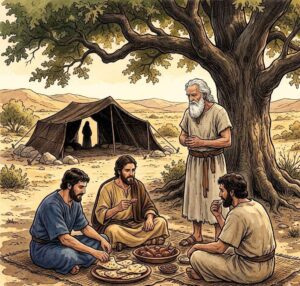

The stranger under the oak had just asked about her by name. Sarah was inside the tent, the flap open just enough for her to hear the conversation. She had not been introduced. Her husband had not spoken her name. Yet the man under the tree knew her, and now he was speaking again.
“I will certainly return unto thee according to the time of life. And lo, Sarah thy wife shall have a son.”
The words hung in the hot air. Sarah heard them through the tent flap, and she laughed.
It was the laughter of a woman who had given up hope so long ago that hope itself had become a kind of pain. She was ninety years old. Her body was worn out. The way of women had ceased with her long ago. Her husband was even older than she was. The idea of bearing a child at her age was beyond reason, a thing that lay outside the realm of what could happen.
She laughed within herself, and her laughter was bitter and doubting and full of the gathered grief of decades of barrenness. “After I am waxed old shall I have pleasure, my lord being old also?”
She kept the words silent. She thought them in the privacy of her own mind, behind the tent flap, where human ears could never hear.
The Voice That Heard the Heart
But the stranger under the oak heard anyway.
“Wherefore did Sarah laugh, saying, Shall I of a surety bear a child, which am old?”
The voice was calm, but the words struck Sarah to the bone. He had heard her thoughts. He had heard the silent laughter inside the tent. He had heard the bitter words she had spoken only to herself. He was speaking them back to her now, through the tent flap, in the presence of her husband.
Abraham turned toward the tent. He had heard the stranger’s words, and he knew his wife was listening. The silence that followed was heavy with fear.
“Is any thing too hard for the Lord? At the time appointed I will return unto thee, according to the time of life, and Sarah shall have a son.”
The question stood in the air like a mountain. Is anything too hard for the Lord? The womb of a ninety-year-old woman. The laughter of doubt. The decades of waiting. The promise that had been made and repeated and delayed until it seemed like a cruel joke. Was any of this beyond the reach of the One who had called Abraham out of Ur and named the stars?
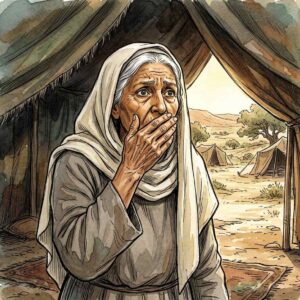
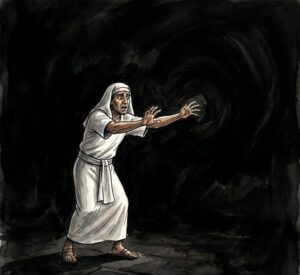
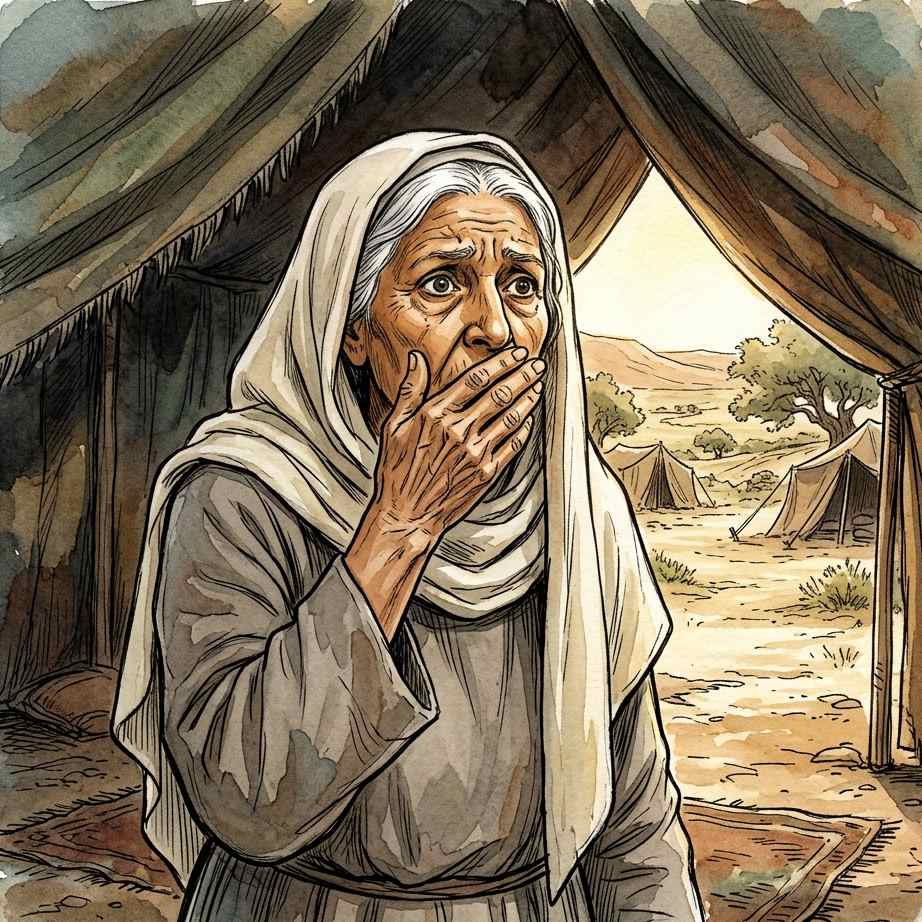
Sarah pushed through the tent flap and stood before the stranger. Fear had driven the laughter from her throat. Her old face was pale. Her hands were trembling.
“I laughed not.”
The Gentle Truth
The words came out quickly, the denial of a woman caught in a moment she could not explain. She was afraid because she knew that this was more than a man. No man could hear the silent thoughts of a woman inside a tent. No man could speak with such calm authority about things that lay beyond the laws of nature. She was afraid because she was standing before the Lord, and the Lord had heard her laugh at his promise.
But the stranger offered no rebuke. He pronounced no judgment. He simply spoke the truth, and the truth was gentle.
“Nay, but thou didst laugh.”
That was all. No condemnation. No withdrawal of the promise. A quiet statement of fact. You laughed. I heard you. And the promise still stands.
Sarah stood in the heat of the day, her denial answered with gentleness, her fear met with mercy. She had laughed at the promise of God, and God had heard her laugh. But the promise remained. The son would come. The laughter that had been bitter would become the name of the child. Isaac. He laughs. And every time she spoke that name, every time she called her son in from the fields or sang him to sleep or watched him play in the shade of the oaks, she would remember this moment. She had laughed in doubt, and God had turned her laughter into joy.
The stranger said nothing more to her. The matter was settled. The promise was spoken. The laughter had been heard and answered.
The Return to the Tent
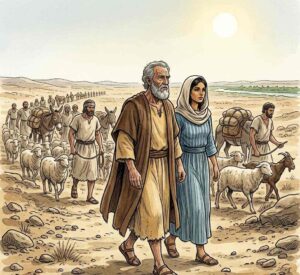
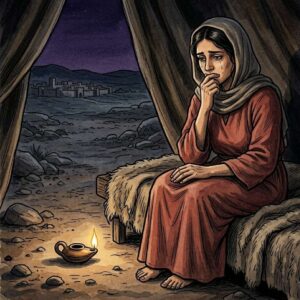
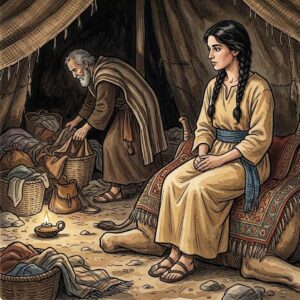
Sarah stepped back inside the tent. The flap fell closed behind her, and the dimness wrapped around her like a familiar garment. She had lived in tents all her married life, following her husband from Ur to Haran to Canaan to Egypt and back again. The tent was her home, the place where she kneaded dough and spun wool and waited for a child that never came.
But now something had shifted. The words of the stranger still echoed in her ears. Sarah thy wife shall have a son. The promise was no longer a distant hope spoken to her husband in the night. It was a word spoken to her, about her, in the presence of her husband and three witnesses. She had been named. She had been seen. She had been included in the promise in a way she had never been before.
She sat down on the cushions and pressed her hands against her old face. The fear was still there, but something else was growing alongside it. A small thing. A fragile thing. Something that felt almost like hope. She was ninety years old. Her body was worn out. But the stranger had asked a question that she could not shake from her mind. Is any thing too hard for the Lord?
Outside the tent, the three men rose from under the oak. The meal was finished. The promise was spoken. They looked toward Sodom, and Abraham walked with them to bring them on their way. The dust rose around their feet as they moved across the plain.
And inside the tent, Sarah sat alone with the promise, her laughter still ringing in her ears, waiting to be transformed.