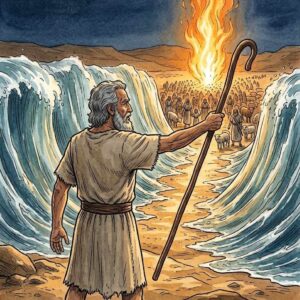

The waters had returned to their place. The Red Sea was still again, its surface smooth and untroubled, hiding the chariots and the horses and the men who had pursued the children of Israel into the deep. The bodies of the Egyptians lay on the shore, cast up by the waves, silent testimony to the power of the Lord. The nation that had marched through the sea on dry ground stood on the far bank and looked back at what had been their prison for four hundred years.
Moses opened his mouth and sang. The song rose from the far shore like a flame, the first recorded song of the Hebrew people, the song that would echo through the generations as the great declaration of deliverance. “I will sing unto the Lord, for he hath triumphed gloriously. The horse and his rider hath he thrown into the sea. The Lord is my strength and song, and he is become my salvation. He is my God, and I will prepare him an habitation. My father’s God, and I will exalt him.”
The men of Israel lifted their voices with their leader. The song continued, verse after verse, proclaiming the destruction of the Egyptians and the greatness of the Lord. The wind that had blown all night to divide the waters was still now, and the only sound was the voice of a freed people singing to the God who had broken their chains.
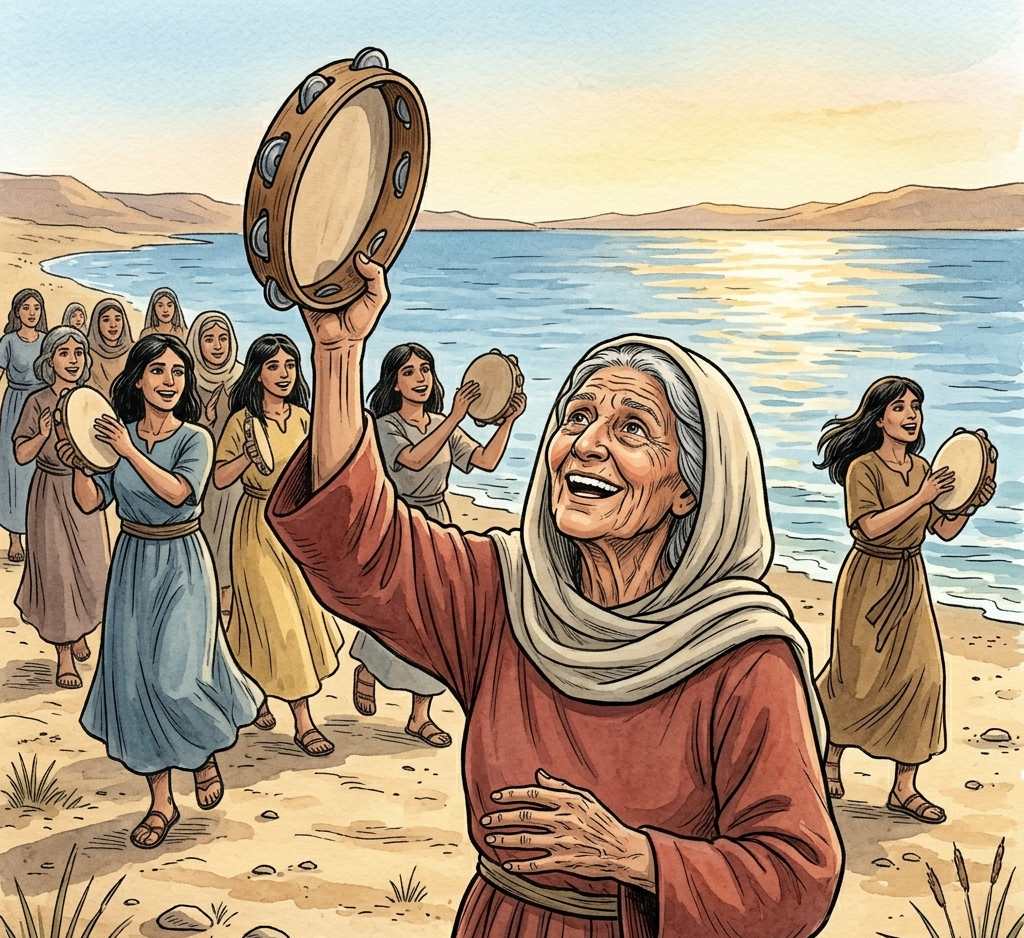
Then Miriam the prophetess, the sister of Aaron, took a tambourine in her hand.
The Woman Who Watched at the Nile
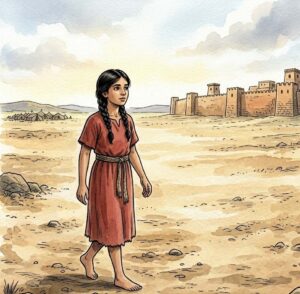
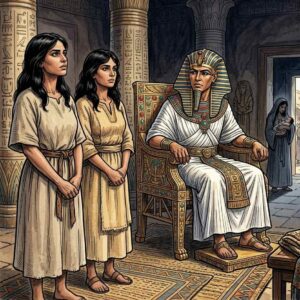
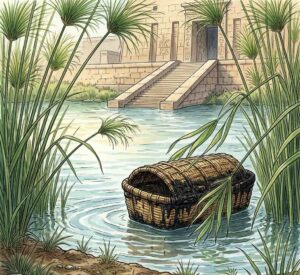
She was the same woman who had stood among the reeds of the Nile more than eighty years before. The young girl who had watched her baby brother float in an ark of bulrushes, who had stepped forward to speak to the daughter of Pharaoh, who had brought her own mother to nurse the child who would become the deliverer of Israel, was now an old woman. Her hair was grey. Her face was lined. But her eyes were bright with the same sharp intelligence that had saved her brother’s life so many years ago.
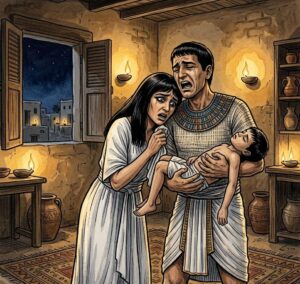
She had watched the plagues fall on Egypt. She had painted the blood on the doorposts and eaten the Passover lamb with her sandals on her feet. She had walked through the sea on dry ground with the rest of the nation. And now she stood on the far shore, the tambourine in her hand, ready to lead the women of Israel in the dance of deliverance.
The tambourine was a simple instrument, a wooden frame stretched with animal skin, small cymbals attached to the sides that jingled with each movement. The women had brought these instruments with them from Egypt, packed among their belongings, carried on their shoulders along with the kneading troughs and the bundles of clothing. They had brought them in faith, believing that the Lord would give them a reason to dance. And now the reason had come.
The Dance on the Shore
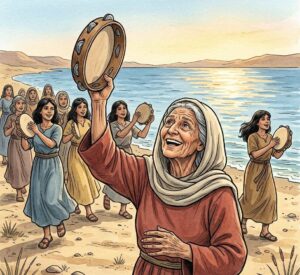
Miriam lifted the tambourine and struck it against her hand. The sound rang out across the shore, a sharp clear note that cut through the singing of the men. She began to move, her feet stepping in the ancient rhythm of celebration, her body swaying to the song that Moses was singing. And all the women went out after her with tambourines and with dances.
The women of Israel followed their prophetess. They took up their own tambourines, the instruments they had carried through the sea, and they formed a procession on the shore. Their feet stamped the sand. Their hands struck the drums. Their voices lifted in the chorus that Miriam sang to them, the words that would become the anthem of the redeemed.
“Sing ye to the Lord, for he hath triumphed gloriously. The horse and his rider hath he thrown into the sea.”
The words were the same as the opening of the song of Moses, but they were now on the lips of the women, the daughters of Sarah and Rebekah and Leah and Rachel. The women who had groaned in the labor of the brick pits were dancing on the shore of the sea. The mothers who had hidden their sons from the decree of Pharaoh were singing of the horse and rider thrown into the deep. The midwives who had defied the king were leading the celebration of the nation’s freedom.
The Song of the Redeemed
The tambourine of Miriam was more than an instrument of music. It was a declaration of faith. The women had brought these tambourines out of Egypt believing that the Lord would deliver them. They had packed them among their belongings when they left Goshen, trusting that there would be a day of celebration on the other side of the sea. The tambourines were a prophecy in their hands, a promise that sorrow would be turned to dancing and mourning would be turned to joy.
The dance of Miriam would echo through the history of Israel. The prophetess who led the women on the far shore would be remembered as the first to take up the song of deliverance. Her tambourine would be the first instrument of worship for a nation that had just been born. And the pattern she established, the pattern of women dancing and singing in response to the mighty acts of God, would continue through the time of the judges and the kings and the prophets.
On the far shore of the Red Sea, the children of Israel were no longer slaves. They were a nation, free and delivered, their enemies dead at their feet. The song of Moses filled the air with the deep voice of the men. The tambourine of Miriam rang out with the bright sound of the women. The waters of the sea lapped gently against the shore, hiding the bones of the army that had pursued them. And the Lord looked down on his people, dancing and singing in the morning light, and he was pleased.