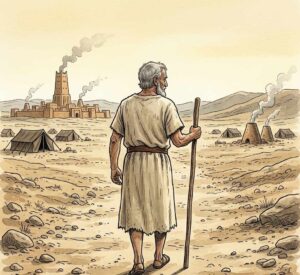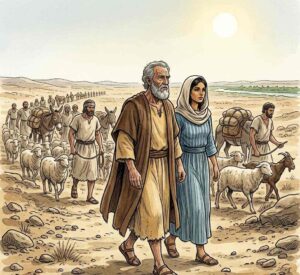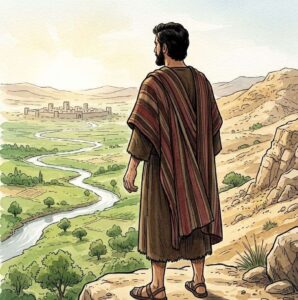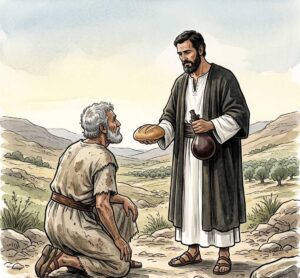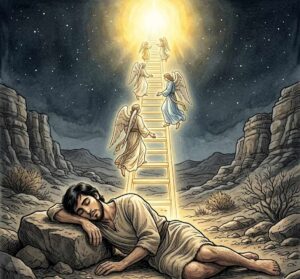

Jacob lifted up his feet and went on his journey. The vision at Bethel was behind him, the stone pillar standing alone on the stony ground, the oil drying on its rough surface. He had made a vow to the Lord, and now he walked eastward toward the land of the people of the east, toward Haran, toward the house of his uncle Laban.
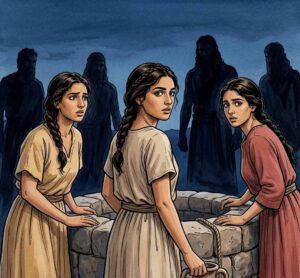
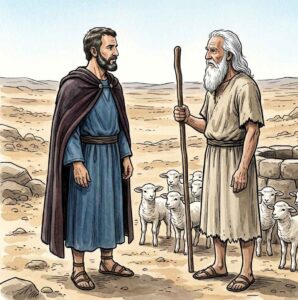
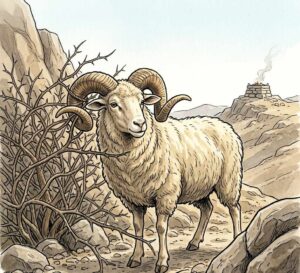
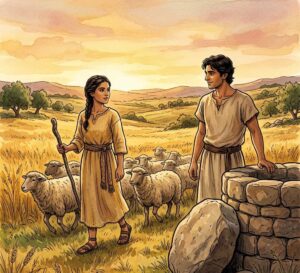
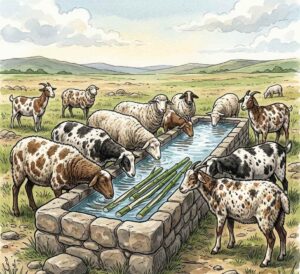
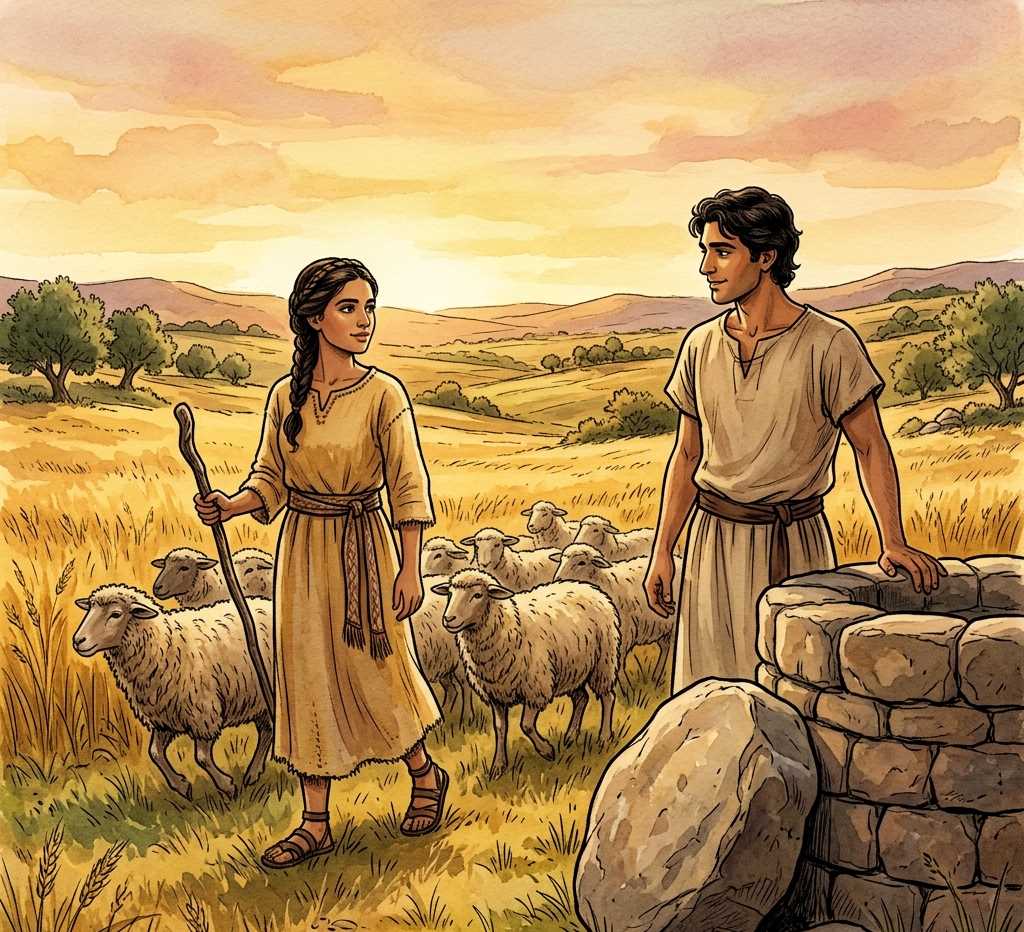
He came to a well in the field. Three flocks of sheep lay beside it, waiting, their wool dusty from the road. A great stone covered the mouth of the well, a stone too heavy for one man to move alone. The shepherds of the region gathered there with their flocks, waiting until all the herds had arrived before they rolled the stone away and watered the sheep.
Jacob approached the shepherds. His voice was friendly, the voice of a man who knew flocks and herds and the ways of those who tend them. “My brethren, whence be ye?”
“Of Haran are we.”
The name of the city struck him like a bell. Haran. The place his grandfather Abraham had left so many years ago. The place his mother Rebekah had spoken of when she sent him away. The place he had been walking toward for all these days and nights.
“Know ye Laban the son of Nahor?”
“We know him.”
“Is he well?”
“He is well. And behold, Rachel his daughter cometh with the sheep.”
The Shepherdess
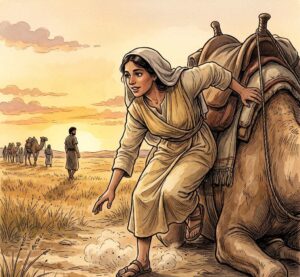
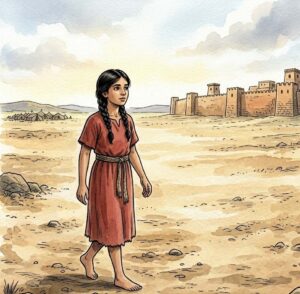
She was coming across the field, and the sheep were with her. Rachel was a shepherdess, the daughter of Laban, and she kept her father’s sheep. She walked behind them, guiding them toward the well, her figure growing larger against the afternoon sky.
The Scripture says she was beautiful. Beautiful of form and beautiful of face, the kind of beauty that stops a man in his tracks and makes him forget what he was about to say. Jacob saw her coming with the sheep, and something in him shifted. The fugitive who had fled from his brother’s anger, the deceiver who had stolen a blessing, the man who had seen angels on a ladder, was now standing at a well watching a woman bring her flock to water.
He did not wait for the other shepherds. He did not wait for the stone to be rolled away according to the custom of the place. He saw Rachel coming, and he went to the well and rolled the stone from the mouth of it by himself. The stone that usually took several men to move, Jacob moved alone. His strength was sudden and surprising, the strength of a man who had found something worth impressing.
He watered the flock of Laban his mother’s brother. The sheep drank, and Jacob stood beside the well, his chest heaving from the effort, his eyes fixed on the woman who had come with them.
The Kiss at the Well
Then Jacob kissed Rachel.
The kiss was not romantic in the way we think of romance. It was a kiss of kinship, a greeting between relatives who had never met. Jacob was the son of Rebekah, the brother of Laban. Rachel was the daughter of Laban. They were cousins, bound by blood and family, and the kiss was the natural greeting of people who shared the same lineage.
But it was more than that. Jacob had traveled hundreds of miles to find his mother’s family. He had slept on stones and crossed rivers and walked through deserts. He had come to Haran to find a wife from among his own people, just as his father Isaac had done through the servant who found Rebekah at a well. And now he was standing at another well, and another woman was coming with sheep, and the story was repeating itself with a new generation.
He lifted up his voice and wept.
The tears came suddenly, the release of weeks of tension and fear and loneliness. He had left his home as a fugitive. He had crossed the wilderness alone. He had seen angels and heard the voice of God. And now he was standing before his own flesh and blood, before a woman who belonged to the family he had been sent to find. The tears were tears of relief, tears of gratitude, tears of a man who had reached the end of a long road and found what he was looking for.
Rachel looked at him. She saw a man weeping at the well, a stranger who had moved the stone by himself and watered her sheep and kissed her in greeting. She did not know yet that this man would work seven years for her hand. She did not know that their love would become one of the great stories of the Hebrew people. She only knew that a relative had arrived from Canaan, and his tears were falling on the dust beside the well.
The Running of Rachel
She ran. She left Jacob at the well and ran to tell her father. The Scripture says she ran, and the word is full of energy and youth and eagerness. She ran to the house of Laban with the news that a kinsman had come, a son of Rebekah, a man from the land of Canaan where their family had once lived.
Laban heard the name of his sister’s son, and he ran too. He ran to meet Jacob at the well, his arms open, his voice full of welcome. “Surely thou art my bone and my flesh.” He embraced him and kissed him and brought him into his house. And Jacob told Laban all that had happened, all the things that had brought him to Haran, the story of the blessing and the anger of Esau and the long road through the wilderness.
Jacob stayed with Laban for a month. He worked among the flocks. He proved his worth. And Laban said to him, “Because thou art my brother, shouldest thou therefore serve me for nought? Tell me, what shall thy wages be?”
The question hung in the air, and Jacob knew his answer before the words were spoken. He had seen Rachel coming with the sheep. He had kissed her at the well. He had wept in her presence. And now her father was asking what he wanted.
Laban had two daughters. The name of the elder was Leah, and she was tender eyed. The name of the younger was Rachel, and she was beautiful of form and beautiful of face. Jacob loved Rachel.
“I will serve thee seven years for Rachel thy younger daughter.”
The words were spoken. The bargain was made. Seven years of labor for the hand of the woman he loved. And Jacob served seven years for Rachel, and they seemed unto him but a few days, for the love he had to her.
The well where they met remained. The stone that he had rolled away was rolled back into place by the other shepherds. But the memory of that first meeting stayed with them, the day when a fugitive came to a well and saw a shepherdess coming with her sheep, and kissed her, and wept, and began the long labor of love.