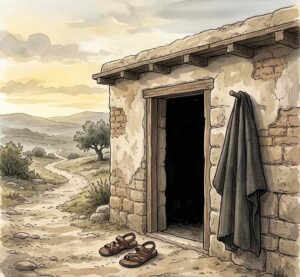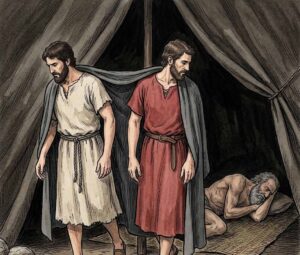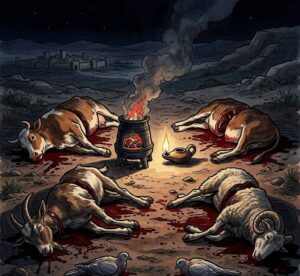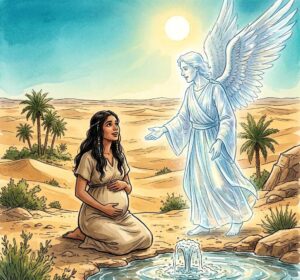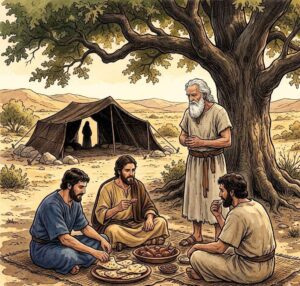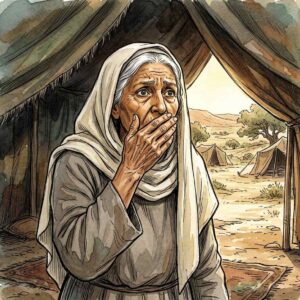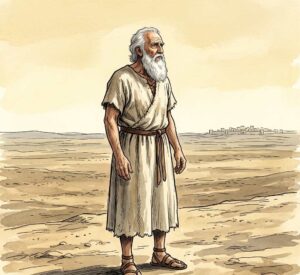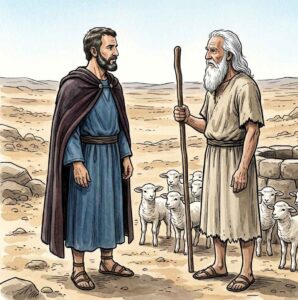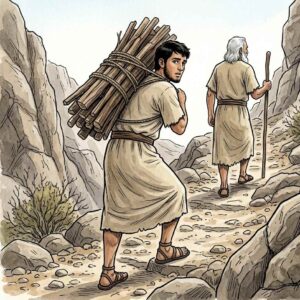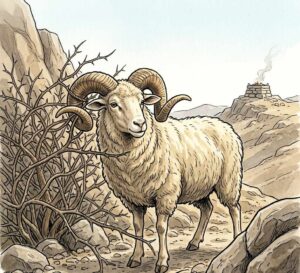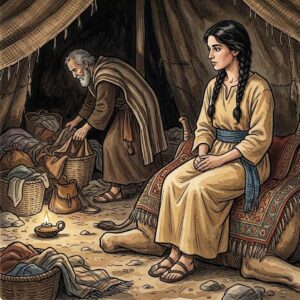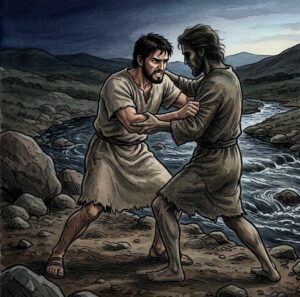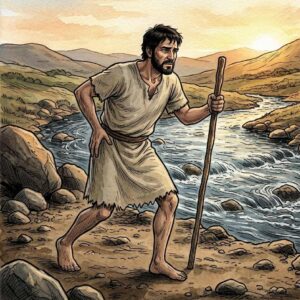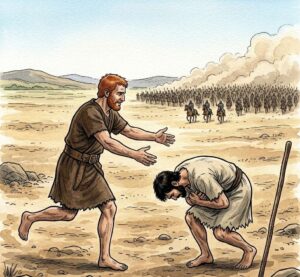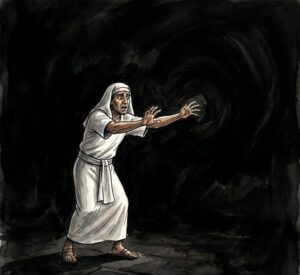
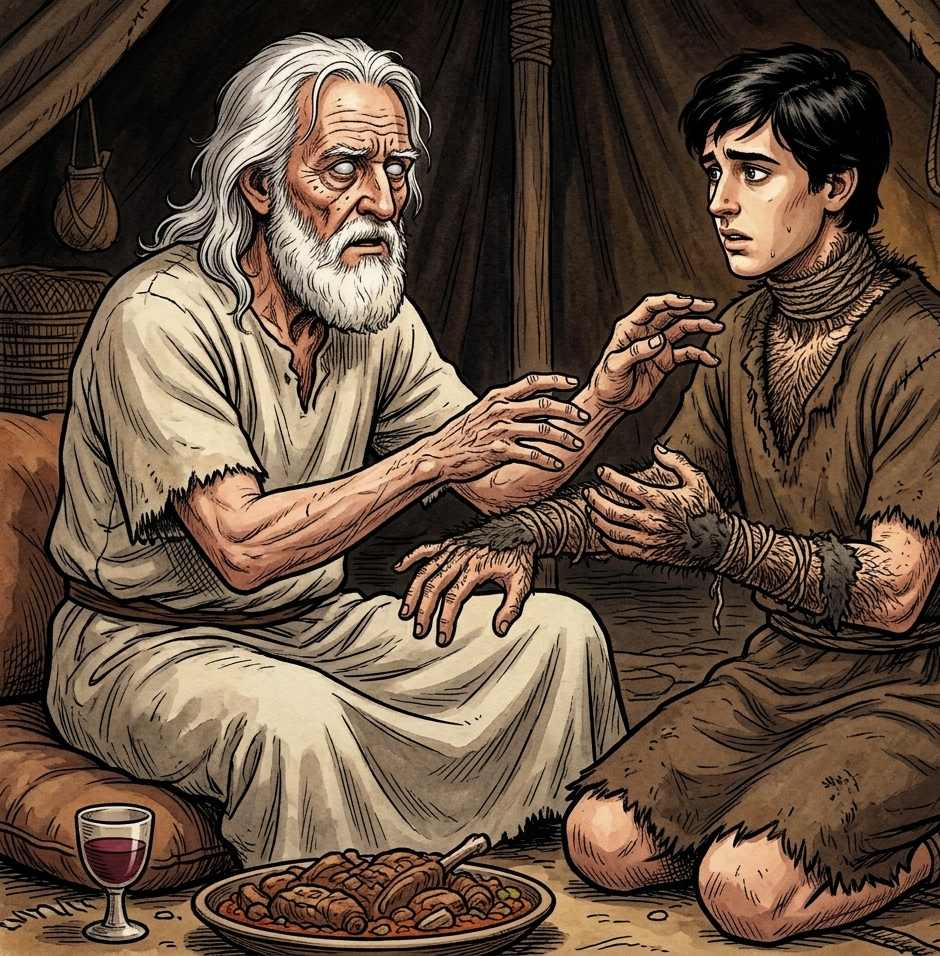

The old man was blind. His eyes, which had seen the ram caught in the thicket and the smoke rising from Sodom and the stars scattered across the night sky like sand, could no longer tell light from darkness. Isaac sat in his tent, his body heavy with years, his hands groping for the walls, his voice the only instrument he had left to navigate the world.
He called for Esau, his eldest son, the hunter whose venison he loved. Esau came to him, and the old man spoke words that were heavy with finality.
“Behold now, I am old, I know not the day of my death. Now therefore take, I pray thee, thy weapons, thy quiver and thy bow, and go out to the field, and take me some venison. And make me savoury meat, such as I love, and bring it to me, that I may eat, that my soul may bless thee before I die.”
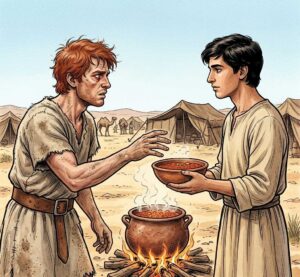
The blessing. The patriarchal blessing. It was more than words. It was the passing of the covenant, the transfer of the promise, the inheritance of the birthright that belonged to the firstborn. Esau had already sold his birthright to Jacob for a bowl of red stew, but he had told his father nothing of that transaction. He took his bow and his quiver and went out to the field, ready to hunt and cook and receive the blessing that he had already traded away.
But someone else was listening.
The Plan of the Mother
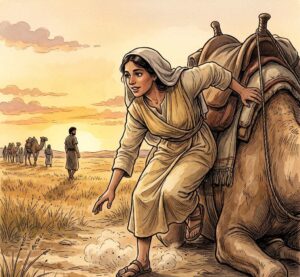
Rebekah had heard every word. She stood at the door of the tent, her ear pressed to the fabric, and she heard her husband tell Esau to prepare the meal that would seal the blessing. She had carried these two sons in her womb. She had felt them struggle. She had heard the Lord say that the elder would serve the younger. And now she saw the moment slipping away, the blessing about to fall on the wrong son, the promise about to be passed to the hunter who had despised his birthright.
She acted quickly. She found Jacob and told him everything. “Now therefore, my son, obey my voice according to that which I command thee. Go now to the flock, and fetch me from thence two good kids of the goats. And I will make them savoury meat for thy father, such as he loveth. And thou shalt bring it to thy father, that he may eat, and that he may bless thee before his death.”
Jacob hesitated. His voice trembled with fear. “Behold, Esau my brother is a hairy man, and I am a smooth man. My father peradventure will feel me, and I shall seem to him as a deceiver. And I shall bring a curse upon me, and not a blessing.”
His mother’s answer was swift. “Upon me be thy curse, my son. Only obey my voice, and go fetch me them.”
Jacob went. He brought the two kids from the flock, and Rebekah took them and prepared the savoury meat the way Isaac loved it. The smell of roasting goat filled the tent. The spices were measured with care. The old man’s favourite dish was being prepared by the hands of his wife, and he did not know it.
Then she took the skins of the goats and put them on the hands of Jacob and on the smooth part of his neck. She dressed him in the clothing of Esau, the raiment that smelled of the field and the hunt. And she put the savoury meat and the bread into the hands of her son and sent him into the tent of his father.
The Blind Man’s Hands
Jacob came into the tent. His heart was pounding. The goat skins were rough on his hands. The clothes of his brother were strange against his body. He stood before his blind father and spoke the first lie of the evening.
“My father.”
“Here am I. Who art thou, my son?”
“I am Esau thy firstborn. I have done according as thou badest me. Arise, I pray thee, sit and eat of my venison, that thy soul may bless me.”
The old man was suspicious. The voice was the voice of Jacob. The words came too quickly. The hunter should still be in the field, tracking game through the hills. “How is it that thou hast found it so quickly, my son?”
“Because the Lord thy God brought it to me.”
The lie was brazen now, pulling the name of the Lord into the deception. Jacob was invoking God to cover his fraud, claiming divine help for a kill that had never happened. The old man’s suspicion did not ease.
“Come near, I pray thee, that I may feel thee, my son, whether thou be my very son Esau or not.”
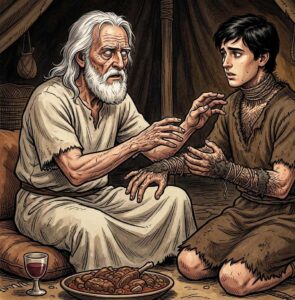
Jacob went near. He stepped close to his father, close enough for the old man to reach out and touch him. And Isaac put his hands upon his son.
The Touch That Deceived
The hands of the blind man moved over the hands of his son. The goat skins were rough and hairy under his fingers, the texture of a hunter who spent his days in the field. The old man felt the hair and was confused. “The voice is Jacob’s voice, but the hands are the hands of Esau.”
The voice said one thing. The hands said another. The voice was smooth like Jacob. The hands were rough like Esau. The old man trusted his hands. He had spent his life feeling the world he could no longer see, and now his blindness made his hands the final authority. He could not see the goat skins. He could not see the deception. He could only feel, and what he felt told him that this was Esau.
He asked one more time. “Art thou my very son Esau?”
“I am.”
The lie was complete. Jacob had stolen his brother’s identity with goat skins and borrowed clothes and a voice that trembled even as it deceived. The old man asked for the savoury meat, and Jacob brought it to him. He ate. He drank wine. And then he called his son near once more.
“Come near now, and kiss me, my son.”
Jacob came near and kissed his father. The old man smelled the smell of Esau, the scent of the field, the fragrance of the open country that clung to the borrowed garments. And he believed. He was fully convinced. The hands were the hands of Esau. The clothes smelled like Esau. The kiss must be the kiss of Esau. And so the old man opened his mouth and blessed Jacob, thinking he was blessing Esau.
“See, the smell of my son is as the smell of a field which the Lord hath blessed. Therefore God give thee of the dew of heaven, and the fatness of the earth, and plenty of corn and wine. Let people serve thee, and nations bow down to thee. Be lord over thy brethren, and let thy mother’s sons bow down to thee. Cursed be every one that curseth thee, and blessed be he that blesseth thee.”
The blessing was spoken. The covenant was passed. The promise of Abraham now rested on Jacob, the younger son, the supplanter, the man in goat skins kneeling before his blind father. The words could not be called back. The blessing could not be undone. And Jacob slipped out of the tent, his heart still pounding, the goat skins still tied to his hands, knowing that he had received what the Lord had promised but had taken it by deceit.
He had scarcely left his father’s presence when his brother Esau came in from the field, his hunting successful, his venison ready, his voice calling out to the blind old man who had already given everything away.