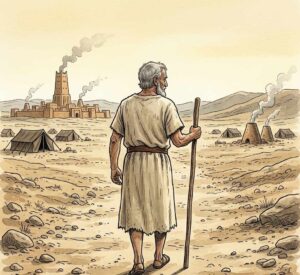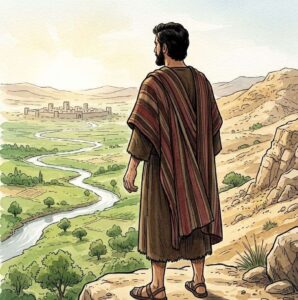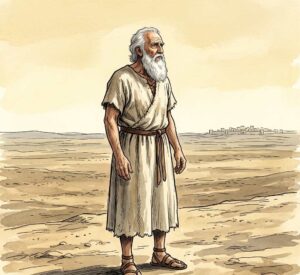

Abram stood at the edge of his camp and looked out over the land that the Lord had promised him, and the land was dry. The grass had turned brown and brittle. The flocks were growing thin. The water in the wadis had shrunk to mud, and the mud was cracking in the sun. A long season without rain had passed, and a longer one stretched ahead.
He had come from Ur of the Chaldees, a city of walls and canals and gods made of stone. The Lord had spoken to him there, and he had left everything. His father’s house. His kin. His country. He had walked across the great rivers and through the wide plains, following a voice that promised him a land and a seed and a blessing that would reach all the families of the earth. And now the land was starving him.
The Decision to Go Down
Abram looked at his wife. Sarai was beautiful. Even now, after all the years of travel and tents and dust, her face was the kind of face that men noticed. He looked at his flocks, the sheep and the goats and the cattle that had grown in number since they left Haran. He looked at the servants who had come with them, who depended on him for food and water and life. And he made a choice.
He would go down to Egypt.
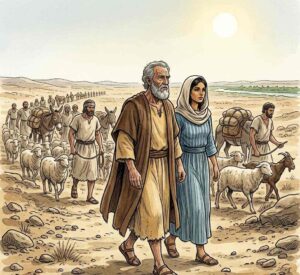
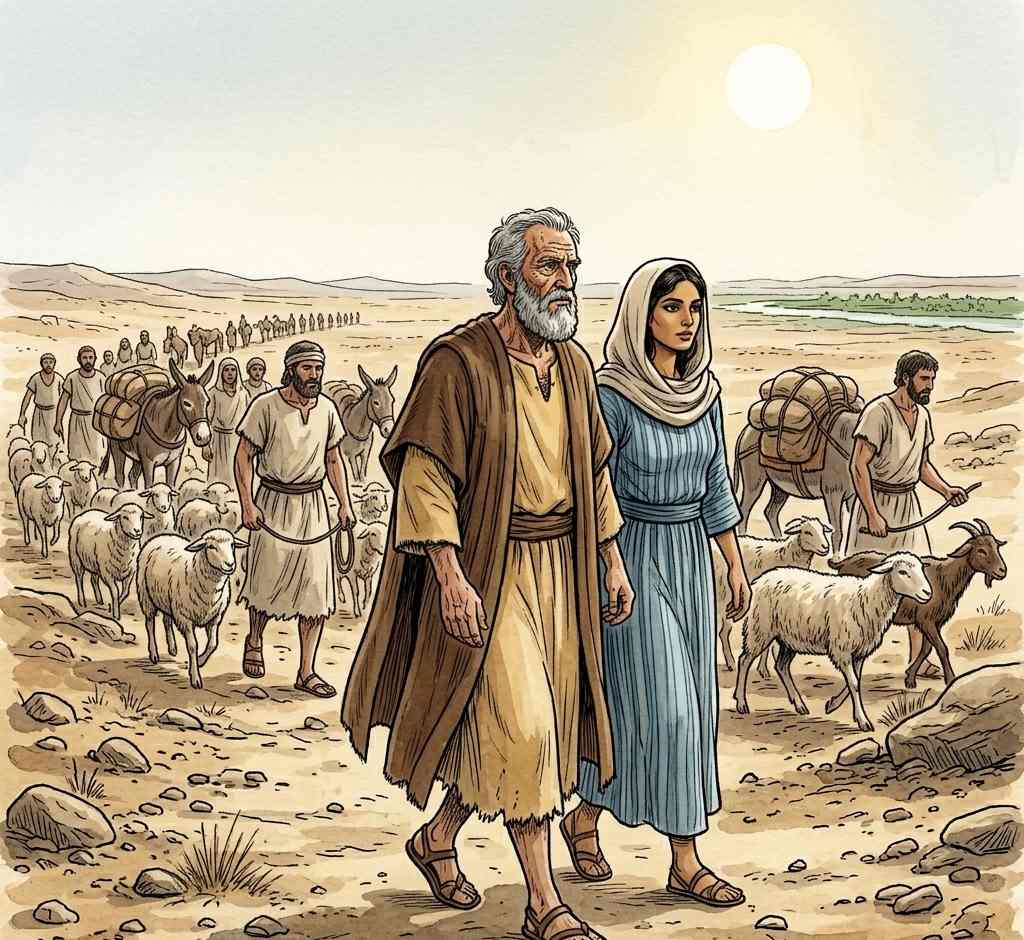
The famine was sore in the land. That is what the text says. A hunger that gripped the whole land of Canaan and squeezed it until nothing was left. But Egypt had the Nile. Egypt had grain stored in cities. Egypt had food enough for strangers. So Abram gathered his tents and his flocks and his wife and his servants, and he went down to Egypt to sojourn there.
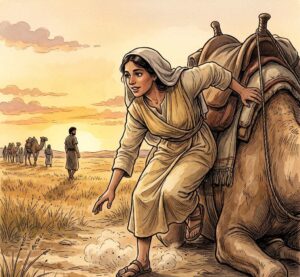
The road south was long. The land grew drier as they went, the hills of Canaan giving way to the hard desert that guarded the border of Egypt. The flocks stumbled on the rocks. The servants shielded their eyes from the sun. And Abram walked with something heavier than the heat on his shoulders. He was leaving the land the Lord had given him. He was walking away from the promise.
The Fear That Took Hold
As they came near to Egypt, the old man spoke to his wife, and his voice was tight with fear.
“Behold now, I know that thou art a fair woman to look upon. Therefore it shall come to pass, when the Egyptians shall see thee, that they shall say, This is his wife: and they will kill me, but they will save thee alive. Say, I pray thee, thou art my sister: that it may be well with me for thy sake, and my soul shall live because of thee.”
He knew what men did to husbands of beautiful women. He had seen it, or he had heard of it, or he had imagined it clearly enough that the fear had taken root in his chest and would not let go. The Egyptians would want her. They would kill him to get her. And so he asked her to lie. Tell them you are my sister. The statement held a sliver of truth. She was his half-sister, the daughter of his father but not of his mother. But half a truth remains a whole lie when it hides the thing that matters most.
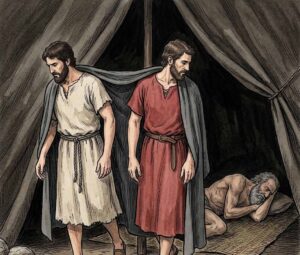
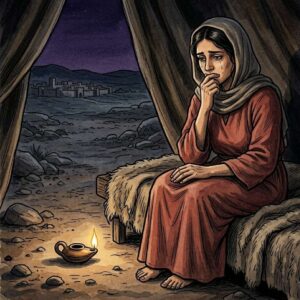
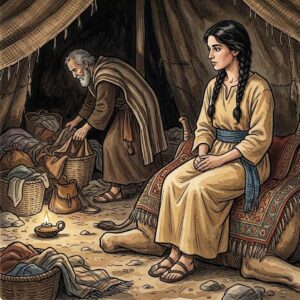
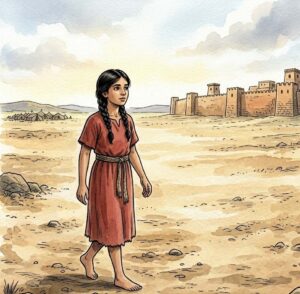
Sarai did not argue. The text records no word from her lips. She listened to her husband ask her to give her body to protect his life, and she said nothing. She walked beside him down the road into Egypt, and she carried his fear on her back along with everything else.
The House of Pharaoh
The Egyptians saw her. Just as Abram had feared, they saw her, and they noticed. The text says they beheld the woman, that she was very fair. The word traveled fast. Servants whispered to overseers, and overseers whispered to officials, and officials brought the news to the house of Pharaoh. A woman had come into Egypt with a man who said she was his sister. Her beauty surpassed anything they had seen among the wandering tribes of Canaan.
Pharaoh sent for her.
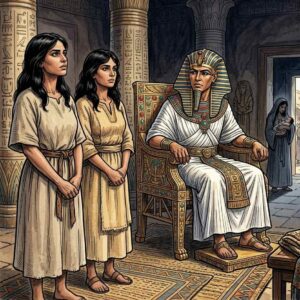
The princes of Egypt commended her to him, and she was taken into the house of Pharaoh. She was taken. The word is passive because she went against her will. They led her from her tent, from her husband, from everything she knew. They brought her through the gates of a palace she had never seen, into a house full of gods she did not worship, and they gave her to a man who was not her husband. The text says nothing of her tears or her prayers or the way her hands shook when the Egyptian women dressed her in foreign clothes. It only says she was taken.
And Abram let her go.
He watched his wife walk into the house of Pharaoh, and he did nothing. He had asked her to say she was his sister, and she had said it, and now Pharaoh had her. And Pharaoh treated Abram well for her sake. He gave him sheep and oxen and donkeys and camels and menservants and maidservants. The old man grew rich on the lie. His flocks multiplied. His herds grew fat. He sat in his tent and counted his new wealth, and his wife slept in the bed of the king of Egypt.
The Hand of the Lord
But the Lord saw.
The Lord had made a promise to Abram. He had told him that his seed would inherit the land of Canaan, that his descendants would be as numerous as the dust of the earth. And the promise required Sarai. She was the one through whom the seed would come. She was the mother of the promise, the vessel of a covenant that would reach down through all the generations. And now she was in the house of Pharaoh, and Pharaoh was touching what belonged to the Lord.
So the Lord plagued Pharaoh and his house with great plagues because of Sarai, the wife of Abram.
The text says nothing of the kind of plagues. It describes no sores on the skin of Pharaoh or sickness in his household or servants falling ill one by one. It only says great plagues, and great means they demanded attention. Something was wrong in the palace. Something was wrong in the bed of Pharaoh. And Pharaoh knew it. He must have called for his priests and his magicians and his healers. He must have offered sacrifices to the gods of Egypt. But nothing worked. The plagues kept coming. And somehow, in the midst of the suffering, Pharaoh learned the truth.
The woman was a wife. The man who claimed her as a sister had lied.
The Confrontation
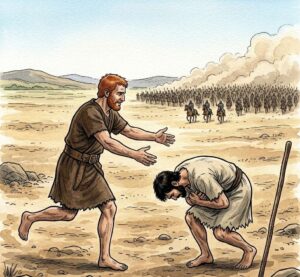
Pharaoh called Abram before him. The old man stood in the court of the king of Egypt, surrounded by princes and guards and the gods of a nation that did not know the Lord. And Pharaoh spoke, his voice sharp with anger and fear and the confusion of a man watching his house fall apart for reasons he could not understand.
“What is this that thou hast done unto me? Why didst thou not tell me that she was thy wife? Why saidst thou, She is my sister? So I might have taken her to me to wife. Now therefore behold thy wife, take her, and go thy way.”
The king of Egypt rebuked the father of the faithful. The man who ruled the greatest empire in the world looked at the wandering shepherd and demanded to know why he had been lied to. Pharaoh had touched Sarai in ignorance, taking her as a sister rather than a wife. But the plagues had come anyway, and now he understood why.
Abram said nothing. The text records no defense, no apology, no explanation. The man who had spoken the promise of the Lord to his servants and his flocks and the altars he built in Canaan now stood silent before a pagan king. He had been afraid. He had lied. He had given away his wife to save his own life. And now the Lord had rescued her, through the judgment of Pharaoh rather than the faith of Abram.
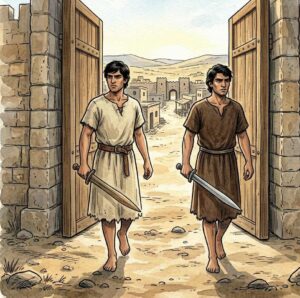
Pharaoh let him live. He commanded his men to escort Abram and Sarai and all that they had out of Egypt. And they went. The old man, his wife, his flocks, his herds, the servants he had brought with him, and the servants Pharaoh had given him. All of it went back up the road toward Canaan.
The Road Back
Abram went up out of Egypt, he and his wife and all that he had, and Lot went with him. The caravan moved north through the desert, and this time the flocks were heavier and the herds were larger. The old man was very rich in cattle, in silver, and in gold. The famine that had driven him to Egypt had ended. The land of Canaan was waiting for him, the same land the Lord had promised, the land he had left when the rains stopped and the grass turned brown.
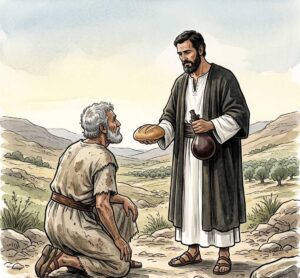
He went back to the place where his tent had been at the beginning, between Bethel and Hai, to the place of the altar that he had made there at the first. He had built that altar in the early days, when he first entered the land and the Lord appeared to him and said, Unto thy seed will I give this land. Now he came back to it. He stood before the altar, and he called on the name of the Lord.
The words of that prayer remain unrecorded. Maybe he gave thanks. Maybe he asked forgiveness. Maybe he wept. The man who walked out of Egypt with his wife and his wealth and his life was different from the man who had walked in. He had gone down in fear, and he had come back in shame, and the only thing that had saved him was the faithfulness of a God who kept His promises even when His people lied.
The sun set over the hills of Canaan. The flocks settled in their folds. Sarai was in her tent, the wife of Abram once more, no longer the sister who was not a sister. The altar stood where it had always stood, and the old man knelt before it, and the name of the Lord rose into the evening air. The famine was over. The sojourn in Egypt was behind him. But the memory of what he had done would walk with him for the rest of his days, a shadow that even the promise could not erase.