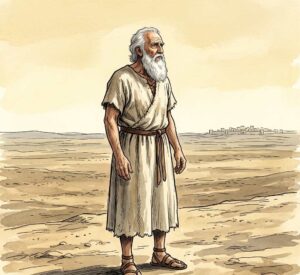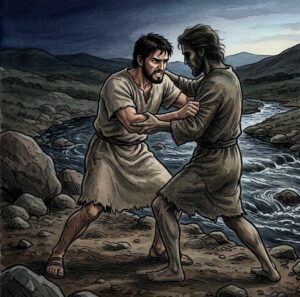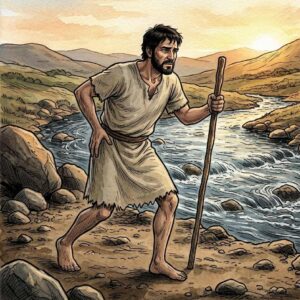
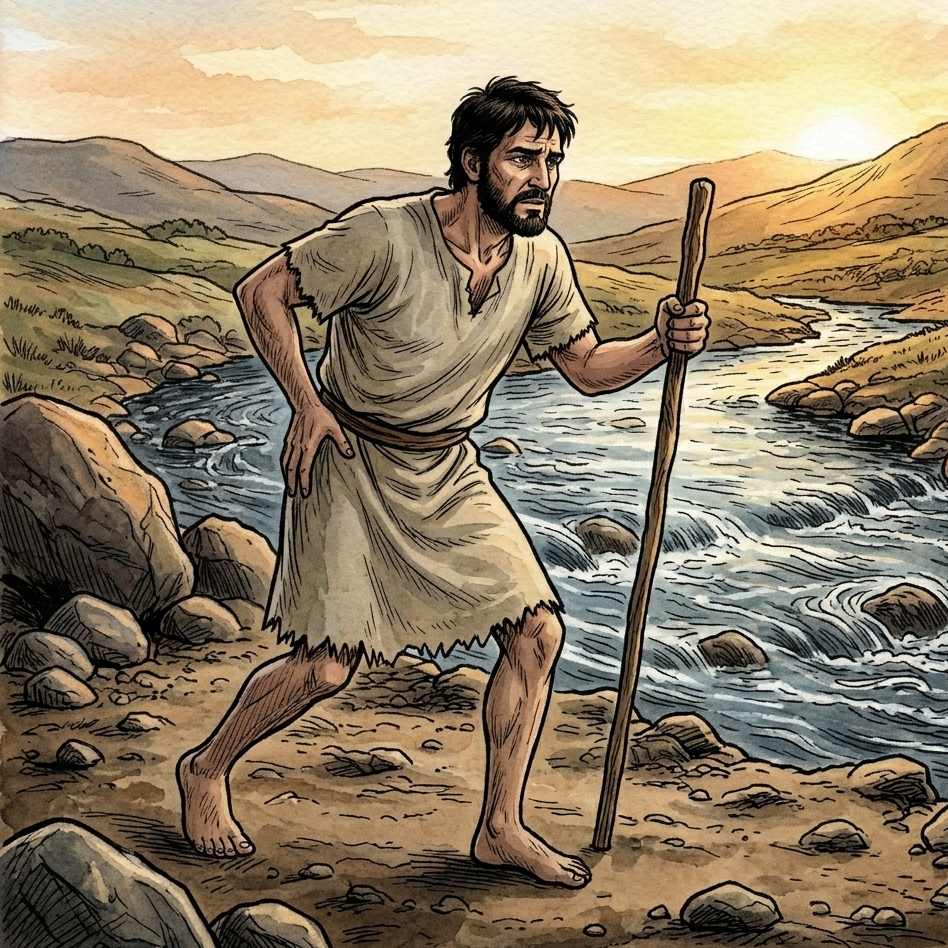

The sun rose over Peniel, and Jacob crossed the ford of the Jabbok. The water was cold against his legs, the current pulling at his feet, but he hardly noticed. The pain in his hip was a fire that drowned out everything else. The man had touched him in the hollow of his thigh, just a touch, just the lightest pressure on the socket of the hip, and the joint had slipped out of place. The muscle was torn. The bone was wrenched from its home. And Jacob walked with a limp that would never leave him.
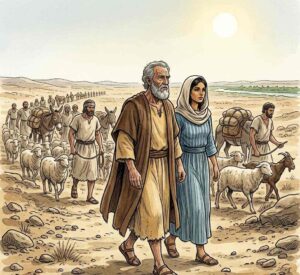
He came up out of the water on the far side of the river, and his family was waiting for him. His wives stood with their handmaids and their children, the eleven sons who would become the fathers of a nation. They saw him limping toward them in the grey morning light, his leg dragging, his hand pressed against his side. They saw the sweat on his face and the exhaustion in his eyes. And they must have asked him what had happened. They must have gathered around him and wanted to know why he had stayed behind and who had touched him and how he had been injured in the night.
He told them the truth. He had seen God face to face, and his life was preserved. He had wrestled with a man who was more than a man, and he had held on until he received the blessing. He had been given a new name, Israel, the prince of God, the one who struggles with God and prevails. And as proof of the encounter, he carried a wound that would mark him for the rest of his life.
The Mark of the Touch
The limp was not a punishment. The Scripture never presents it that way. The touch on his thigh was not an act of judgment but an act of transformation. The man could have killed Jacob. He could have thrown him to the ground and broken his body and left him dead on the bank of the Jabbok. Instead, he touched him just enough to change him. Just enough to remind him that all his strength, all his cunning, all his desperate grasping for blessing, was nothing compared to the power of the One who held him.
The limp was a gift. It was a mark of the encounter, a physical reminder that he had met God and lived. Every step he took for the rest of his life would be a step of dependence. He could no longer run from his brother. He could no longer flee from danger. He could no longer trust in his own speed or his own cleverness to save him. He could only walk, slowly and painfully, leaning on the staff that had been his companion since Bethel.
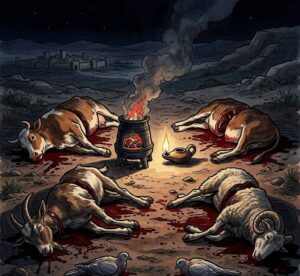
The children of Israel would remember this moment for generations. They would not eat of the sinew which shrank, which is upon the hollow of the thigh, because the man had touched the hollow of Jacob’s thigh in the sinew that shrank. The dietary law was a memorial, a way of remembering that their father had wrestled with God and been marked by the encounter. Every time they refrained from eating that portion of the animal, they remembered the limp. Every meal was a reminder that the founder of their nation was a man who had been broken and blessed in the same moment.
The Staff in His Hand
The writer of the letter to the Hebrews would later say that by faith Jacob, when he was a dying, blessed both the sons of Joseph, and worshiped, leaning upon the top of his staff. The staff that had been his companion in the wilderness, the staff he had carried when he fled from Esau, the staff he had leaned on when he limped across the Jabbok, was still in his hand when he was an old man in Egypt. The limp had lasted all those years. The wound had never healed. The touch of the divine had left a mark that time could not erase.
And that was the point. The limp was the blessing. The weakness was the strength. The broken hip was the sign that Jacob had finally stopped wrestling and started trusting. He had spent his whole life grabbing for what belonged to others. But at the Jabbok, he had learned to hold on to God and ask for the blessing he could not steal. And God had given it to him, along with a wound that would remind him every day of who he was and whose he was.