
He was running for his life. The blessing had been stolen, the birthright had been taken, and his brother Esau was waiting for the days of mourning for their father to end so he could kill him. Rebekah had heard the threats and sent Jacob away to her brother Laban in Haran, far to the north, far from the reach of a hunter’s bow.
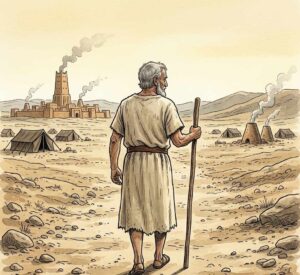
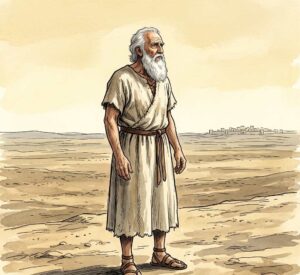
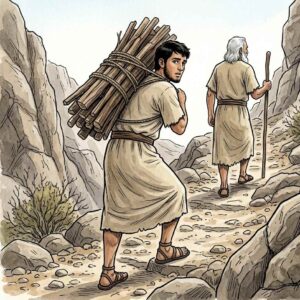
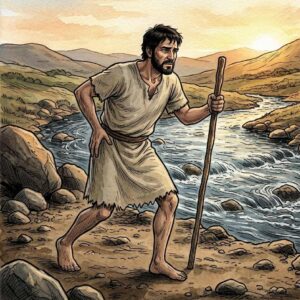
Jacob left Beersheba with nothing but the clothes on his back and the staff in his hand. He was the heir of the promise now, the carrier of the blessing that had passed from Abraham to Isaac to him. But he was also a fugitive, a deceiver, a man who had lied to his blind father and stolen what belonged to his brother. He walked alone into the wilderness, the night coming on, the stars beginning to appear in the darkening sky.
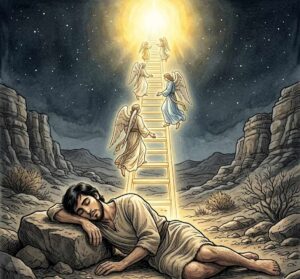
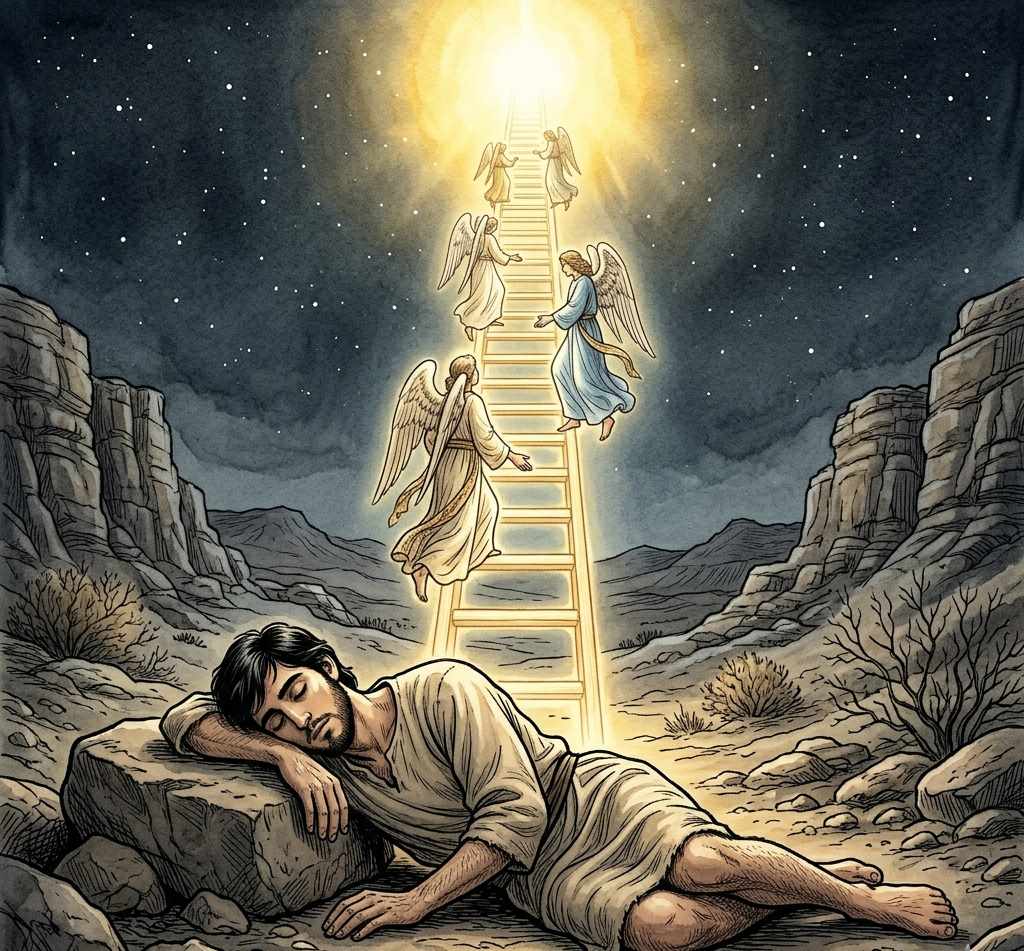
He came to a certain place and stayed there all night, because the sun was set. The place had no name. It was just a patch of stony ground on the road to Haran, unremarkable in every way. There was no altar there. No well. No oak tree. Just the rocks and the dust and the cold desert wind. He took one of the stones of that place and put it under his head for a pillow, and he lay down to sleep.
The stone was hard against his skull. The ground was rough beneath his body. He was alone for the first time in his life, away from his mother’s tent, away from the cooking fires, away from the familiar sounds of the household. He was a man who had gained everything and lost everything in the span of a single day. And somewhere in the darkness, as he closed his eyes, the Lord began to speak.
The Dream in the Night
He dreamed, and in his dream he saw a ladder set up on the earth, and the top of it reached to heaven. The ladder was planted on the ground where he lay, its feet touching the dust beside his head, its summit lost in the brightness above. It was a bridge between two worlds, a stairway connecting the realm of men to the realm of God.
And behold, the angels of God were ascending and descending on it.
They were moving up and down the ladder in a steady procession, their bright forms passing between heaven and earth. They were not coming to deliver a message. They were not coming to announce a judgment. They were simply moving, going up and coming down, as if this place, this unnamed patch of ground in the wilderness, was a place where heaven and earth were in constant communication. The angels were messengers, and the ladder was their highway, and Jacob was lying at the foot of it with a stone for a pillow, watching the traffic of the divine.
Then the Lord stood above it and spoke.
“I am the Lord God of Abraham thy father, and the God of Isaac. The land whereon thou liest, to thee will I give it, and to thy seed. And thy seed shall be as the dust of the earth, and thou shalt spread abroad to the west, and to the east, and to the north, and to the south. And in thee and in thy seed shall all the families of the earth be blessed. And behold, I am with thee, and will keep thee in all places whither thou goest, and will bring thee again into this land. For I will not leave thee, until I have done that which I have spoken to thee of.”
The promise was being given directly to Jacob. The same promise that had been spoken to Abraham in Ur and to Isaac on the mountain of Moriah was now falling on the fugitive with the stone pillow. The land. The seed. The blessing for all nations. It was his now, not because he had earned it, but because God had chosen him. The deceiver who had lied to his father was being confirmed as the heir of the covenant.
The Awakening
Jacob woke out of his sleep. The dream was over. The ladder was gone. The angels were gone. The voice was silent. He was alone on the stony ground with the cold desert wind and the first grey light of dawn. But something had changed. The place that had been unremarkable the night before was now heavy with meaning.
“Surely the Lord is in this place, and I knew it not.”
The words were a confession and a discovery. God had been in this place before Jacob arrived. God had been waiting for him on this patch of ground, ready to speak, ready to promise, ready to give the blessing that the deceiver had tried to steal by his own cunning. The ladder had been there all along, invisible but real, a connection between heaven and earth that did not depend on Jacob’s awareness. He had stumbled onto holy ground in the middle of nowhere, and he had not known it until he opened his eyes.
He was afraid. The awe of the Lord fell on him, and he said, “How dreadful is this place! This is none other but the house of God, and this is the gate of heaven.”
The stone he had used for a pillow became a pillar. He set it up on its end, a rough monument in the wilderness, a marker that said something happened here. He poured oil on the top of it, anointing the stone as a witness to the promise. The oil ran down the sides and soaked into the ground, consecrating the place where God had spoken.
And he called the name of that place Bethel, which means the house of God. The city had been called Luz before, an ordinary Canaanite town with an ordinary name. But now it was Bethel, the house of God, the gate of heaven, the place where a fugitive with a stone pillow saw angels and heard the voice of the Lord.
The Vow of the Fugitive
Then Jacob made a vow. It was the first time he had spoken directly to God, the first time his voice rose from his own lips to the One who had spoken to him in the dream.
“If God will be with me, and will keep me in this way that I go, and will give me bread to eat, and raiment to put on, so that I come again to my father’s house in peace, then shall the Lord be my God. And this stone, which I have set for a pillar, shall be God’s house. And of all that thou shalt give me I will surely give the tenth unto thee.”
The vow was careful, almost cautious. If God would do what he had promised, if he would protect and provide and bring Jacob back to his father’s house, then Jacob would serve him. The man who had deceived his father was bargaining with God the way he had bargained with his brother, offering something in return for what he received. But the Lord had not asked for a bargain. The Lord had simply promised. The promise was unconditional, and Jacob would learn, in the years ahead, that God’s promises do not depend on human vows.
The sun rose over Bethel. The pillar stood alone on the stony ground, the oil drying on its rough surface. Jacob lifted his staff and continued his journey toward Haran, toward Laban, toward the years of labor and love and deception that awaited him. Behind him, the ladder was invisible again. The angels had returned to their unseen traffic. But the gate of heaven had been opened, and the fugitive had seen it, and he would never be the same.