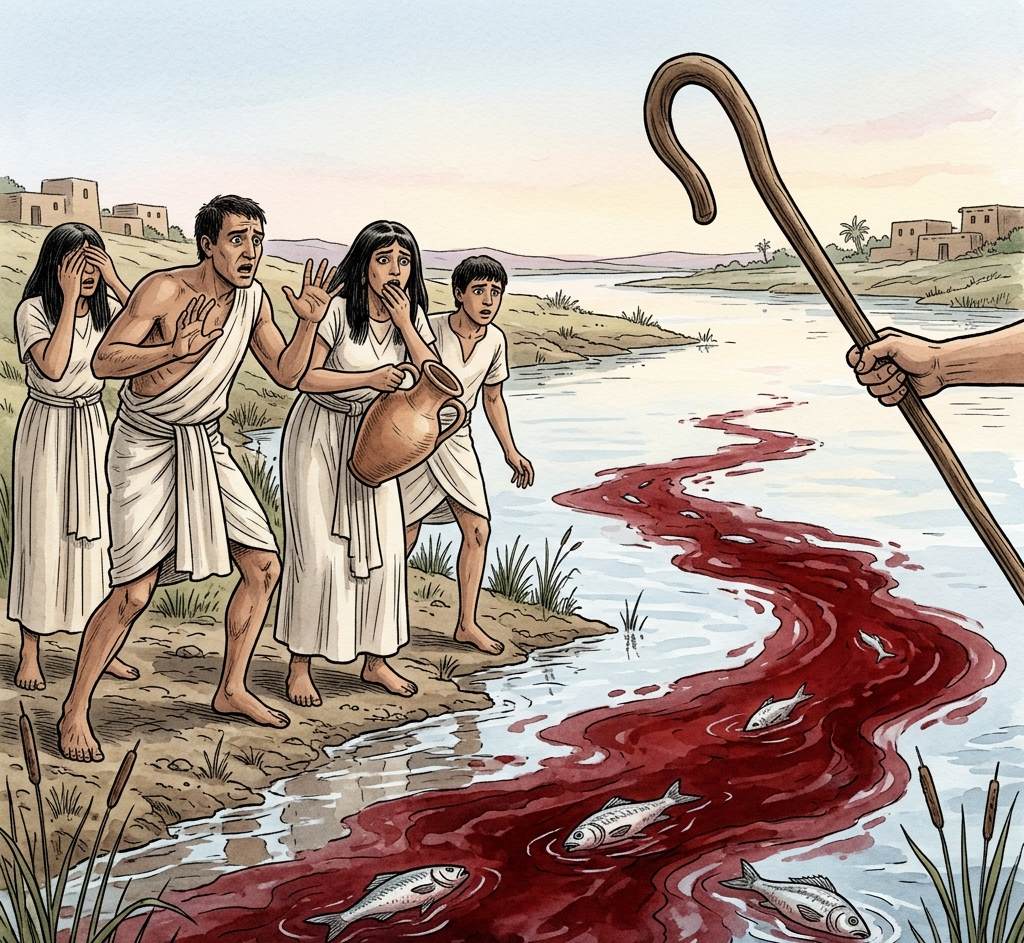

The Lord spoke to Moses in the morning. The sun had risen over Egypt, and the Nile was waking to the daily rhythm of a nation that depended on its waters. Fishermen were casting their nets. Women were filling their pitchers at the bank. The priests were preparing their morning rituals at the temples that lined the river’s edge. No one knew that the day of reckoning had arrived.
“Pharaoh’s heart is hardened, he refuseth to let the people go. Get thee unto Pharaoh in the morning. Lo, he goeth out unto the water. And thou shalt stand by the river’s brink against he come. And the rod which was turned to a serpent shalt thou take in thine hand. And thou shalt say unto him, The Lord God of the Hebrews hath sent me unto thee, saying, Let my people go, that they may serve me in the wilderness. And behold, hitherto thou wouldest not hear. Thus saith the Lord, In this thou shalt know that I am the Lord. Behold, I will smite with the rod that is in mine hand upon the waters which are in the river, and they shall be turned to blood.”
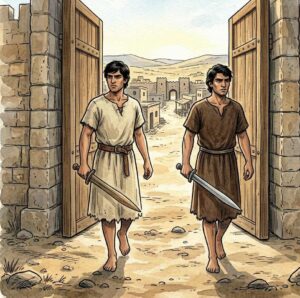
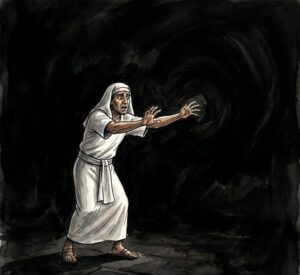
Moses took Aaron with him to the riverbank. The two brothers walked through the streets of the Egyptian capital, past the temples and the markets and the houses of the nobles. They carried the shepherd’s staff that had become a serpent before Pharaoh. They carried the word of the Lord that would now become a plague.
The Meeting at the River
Pharaoh came to the Nile in the morning. The river was the source of life for his kingdom, the artery that carried water to the fields and food to the cities and wealth to the treasury. Each year the Nile flooded its banks and left behind the black silt that made Egypt the breadbasket of the ancient world. The river was worshiped as a god, and Pharaoh was the guardian of the river. His morning visit was both practical and religious, a ritual acknowledgment that the power of Egypt flowed from the waters of the Nile.
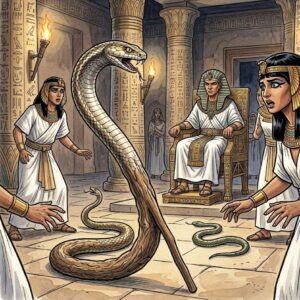
Moses and Aaron stood at the river’s brink, waiting for him. The king saw them and his face hardened. These Hebrews had embarrassed him in his own throne room, their serpent swallowing the serpents of his magicians. Now they had come to the river, the sacred heart of his kingdom, and he knew they had not come with peace.
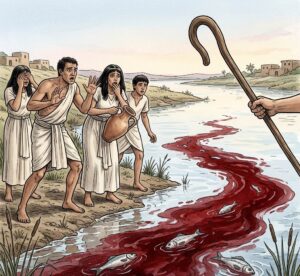
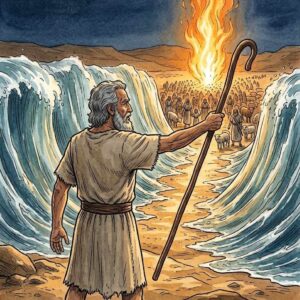
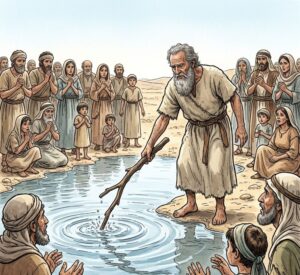
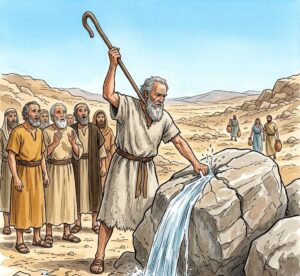
Aaron lifted the rod. The same staff that had become a serpent before the throne now stretched over the waters of the Nile. He spoke the words that Moses had received from the Lord, and then he smote the waters that were in the river.
The rod touched the surface of the Nile, and the river turned to blood.
The Waters Changed
The transformation was immediate and terrible. The clear water that had flowed from the heart of Africa turned dark and thick. The blue-green surface became a deep, ugly red. The smell of fresh water was replaced by the stench of blood, a heavy iron smell that filled the air and clung to the nostrils of everyone who stood on the bank.
The fish that were in the river died. Their silver bodies floated to the surface, bellies up, scales dull in the morning light. The river that had teemed with life now carried only death. The fishermen who had cast their nets that morning pulled up nothing but blood and dead fish. The women who had come to fill their pitchers found the water undrinkable, the liquid that had sustained their families now a horror that stained their hands red.
The river stank. The smell of rotting fish and coagulating blood rose from the water and spread across the land. The Egyptians could not drink of the water of the river. The Nile that had given them life was now giving them death. The god they had worshiped was bleeding before their eyes, and the true God was showing them that the idols of Egypt had no power to save.
And there was blood throughout all the land of Egypt. The plague extended beyond the main channel of the Nile. The streams and the rivers and the ponds and the pools of water, every gathering of water in the land, turned to blood. The canals that irrigated the fields ran red. The reservoirs that stored water for the dry season filled with the stench of death. Even the water in vessels of wood and stone, the water that had been drawn before the plague began, turned to blood.
The Magicians Respond
Pharaoh turned to his magicians. The wise men and the sorcerers of Egypt had been humiliated once, their serpents swallowed before the throne. But they had arts and secrets, and they were determined to show that the power of Egypt was equal to the power of the Hebrew God. They did so with their enchantments. They turned water to blood by their dark arts, finding some source that had escaped the plague, performing their tricks in the sight of the king.
The magicians proved they could replicate the sign. They turned some small portion of water red, demonstrating that the arts of Egypt could mimic the judgment of the Lord. But they proved something else as well, something that should have terrified the king more than the plague itself. They proved they could make the judgment worse, but they proved they could not undo it. They could add blood to blood, but they could not make the blood return to water. They could not heal the river. They could not save the fish. They could not give the Egyptians clean water to drink. The servants of the false gods could only imitate destruction. The power of the true God was absolute.
Pharaoh hardened his heart and turned and went into his house. The king walked away from the stinking river and the dead fish and the blood that filled the canals of his kingdom. He refused to set his heart upon the miracle that had struck at the very source of Egypt’s life. He went back to his palace, and his servants brought him water from the ground, water they dug for, water that had escaped the plague. He drank what his servants found, and he pretended that the Lord of the Hebrews had not spoken.
Seven days passed. The blood remained. The river stank. The fish rotted on the banks. The people dug for water and cursed the name of the king who would not let the slaves go. And Moses and Aaron waited for the word of the Lord, knowing that the first plague had fallen and the second was already on its way.