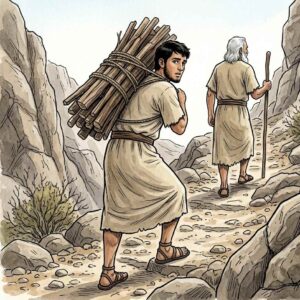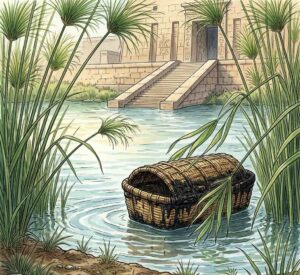

The child of the bulrushes had grown to manhood in the palace of Pharaoh. Moses was learned in all the wisdom of the Egyptians, trained in the sciences of the ancient world, skilled in the arts of leadership and war. He wore the fine linen of the court. He ate at the table of the king. He walked the marble halls of the greatest empire on earth as a prince, the adopted son of the daughter of Pharaoh. But he knew who he was. The nurse who had fed him at his own mother’s breast had told him the truth. He was a Hebrew. His people were the slaves who made bricks in the mud pits of Goshen. His blood was the blood of Levi, the son of Jacob, the grandson of Isaac, the heir of the promise given to Abraham.
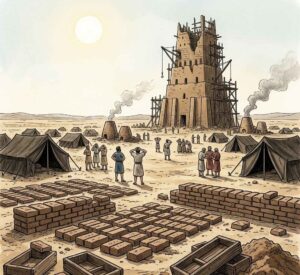
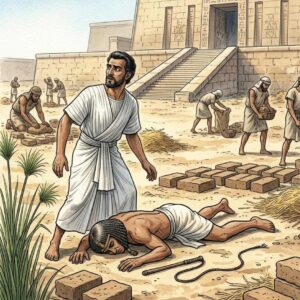
When he was full forty years old, it came into his heart to visit his brethren the children of Israel. He left the palace and went out to the brickfields where his people labored under the Egyptian sun. He saw their burdens. He watched an Egyptian taskmaster beating a Hebrew, one of his brethren, the whip rising and falling, the slave cowering in the dust. The sight stirred something in Moses that the wisdom of Egypt had never taught him. A righteous anger. A fury against the injustice of the oppressor. A certainty that the suffering of his people would be answered.
The Blow in Secret
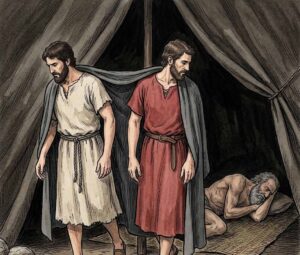
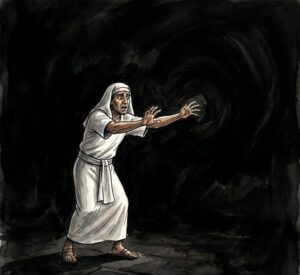
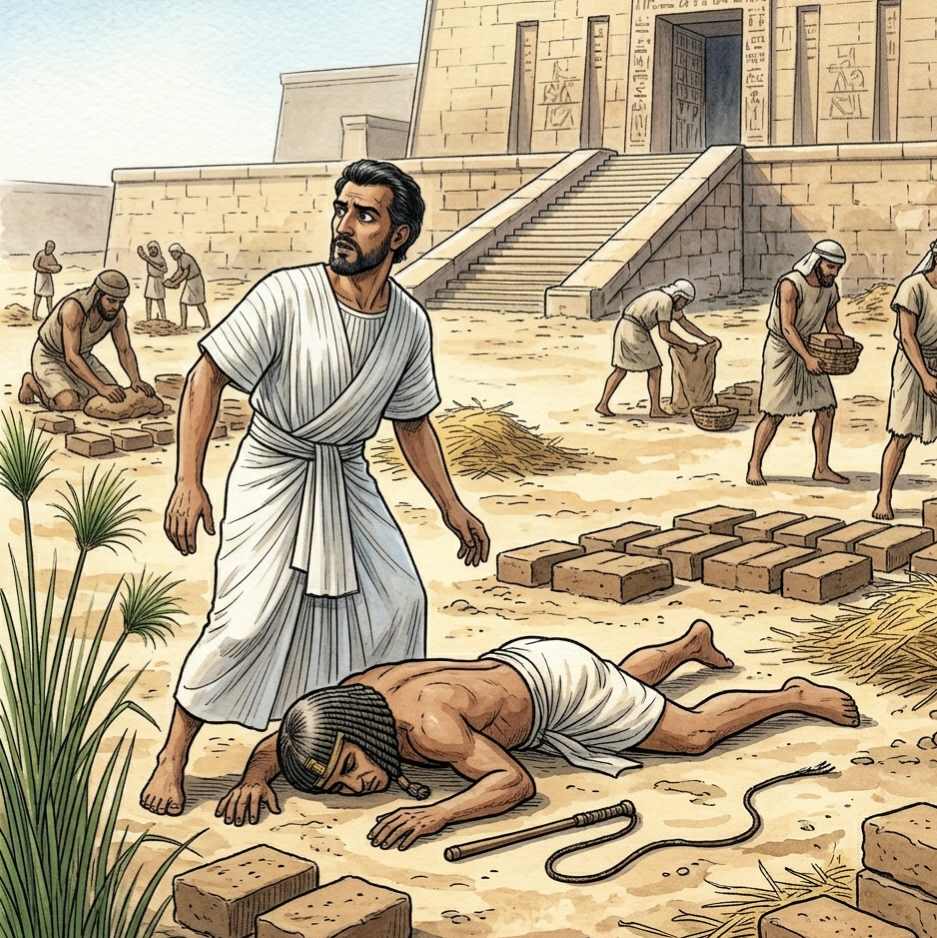
He looked this way and that way. The words are careful and damning. Moses scanned the horizon. He turned his head to the left and to the right. He checked every direction to make certain that no one was watching. The prince of Egypt was about to commit murder, and he wanted no witnesses. The man who had been saved from the river to deliver his people was taking justice into his own hands, and he did not want to be seen.
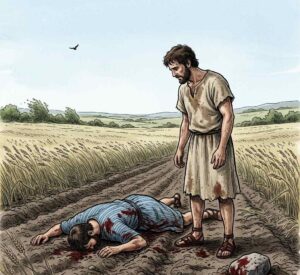
When he saw that there was no man, he slew the Egyptian and hid him in the sand.
The act was swift and violent. Moses struck the taskmaster with enough force to kill him, his hands delivering the death blow that ended the beating of his Hebrew brother. Then he dug a shallow grave in the sand and buried the body, covering the evidence with the same dust that coated the bodies of the slaves. The Egyptian disappeared beneath the ground he had walked upon as an overseer. The whip was silent. The blood was hidden. And Moses believed the secret was safe.
He supposed his brethren would have understood how that God by his hand would deliver them. The writer of the letter to the Hebrews would later reveal the thought that lay behind the blow. Moses believed he was beginning the deliverance. He thought the Hebrews would recognize him as their champion, the prince who had chosen them over the palace, the deliverer who would lead them out of bondage. He had struck the oppressor. He had proven where his loyalties lay. Surely his people would rally to him now.
The Second Day
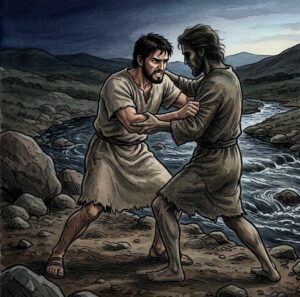
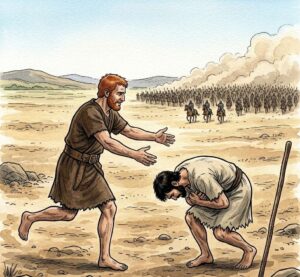
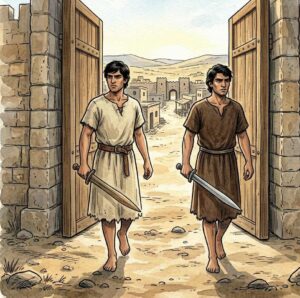
The next day he went out again. The body of the Egyptian was hidden beneath the sand. The secret was buried. But the deliverance had not begun. Moses walked among the Hebrews once more, and this time he saw two of his brethren striving together. Two Hebrew men locked in conflict, their voices raised in anger, their fists clenched. The oppressor was gone, but the oppressed were fighting each other. The unity that Moses had hoped to inspire had not materialized.
He approached the one who was in the wrong and spoke to him. “Wherefore smitest thou thy fellow?”
The question was reasonable. A peacemaker’s attempt to settle a dispute between brothers. But the answer that came back struck Moses with the force of a physical blow.
“Who made thee a prince and a judge over us? Intendest thou to kill me, as thou killedst the Egyptian?”
The words shattered the illusion. The secret was not a secret. The hidden body was known. The murder was public knowledge among the very people Moses had hoped to lead. The Hebrew man who had been in the wrong threw the truth in the face of the prince, and the truth was this: they did not accept him as their deliverer. They did not see him as their champion. They saw him as a murderer who had taken the law into his own hands, and they were afraid of what he might do next.
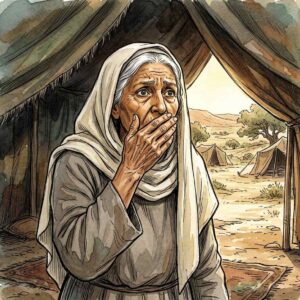
Moses feared. The word is sudden and sharp. The prince who had looked both ways before killing the Egyptian was now looking over his shoulder in terror. The confidence of the previous day evaporated. The plan for deliverance collapsed. “Surely this thing is known.” The thought must have raced through his mind. If a Hebrew slave knew what he had done, the Egyptian court would know soon enough. And Pharaoh would not spare the adopted son of his daughter when he learned that the prince had murdered an Egyptian to defend a slave.
The Flight to Midian
When Pharaoh heard this thing, he sought to slay Moses. The news reached the throne exactly as Moses had feared. The king of Egypt would not tolerate a Hebrew prince who killed Egyptians. The man who had been drawn from the water as a baby was now a fugitive, running from the same royal house that had raised him.
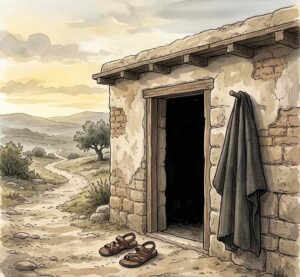
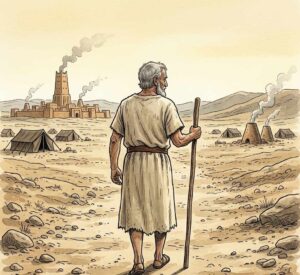
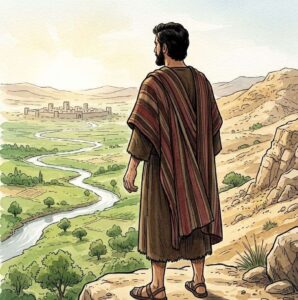
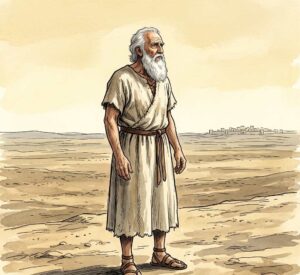
Moses fled from the face of Pharaoh. He left the palace behind. He left the brickfields and the slaves and the buried body in the sand. He ran east, across the Sinai peninsula, toward the land of Midian. The prince became a wanderer. The deliverer became an exile. The man who had tried to begin the work of God in his own strength and his own time was now sitting by a well in a foreign land, his hands stained with blood, his future uncertain.
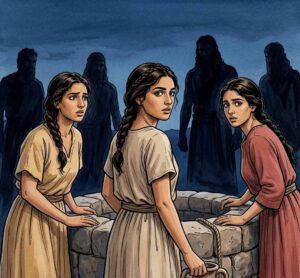
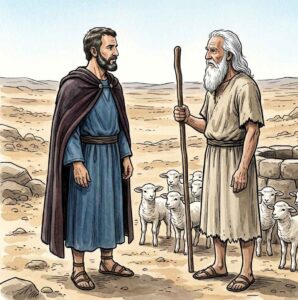
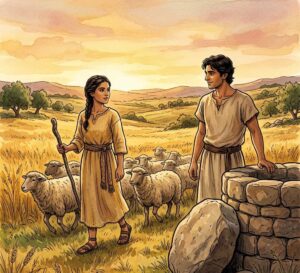
He sat down by a well in the land of Midian. The words echo the stories of the patriarchs, the wells where Abraham’s servant found Rebekah, the well where Jacob first saw Rachel. Moses had come full circle, from the palace of the king to the desert of the nomads, from the wisdom of Egypt to the silence of the wilderness. The forty years of his education were over. The forty years of his exile were about to begin. And the God who had saved him from the river would meet him in the desert and teach him what no palace could ever teach.
He looked this way and that way before he struck the Egyptian, but he had not looked up. He had not sought the will of God. He had not waited for the command of the Lord. He had acted in righteous anger but in human timing. The deliverance of Israel would not come by the hand of a prince striking down oppressors one by one. It would come by the power of God working through a shepherd who had learned humility in the wilderness. And the man who had looked both ways before his crime would one day stand before Pharaoh again, not as a fugitive, but as the messenger of the Lord.