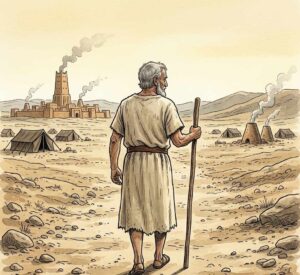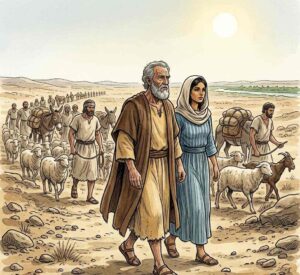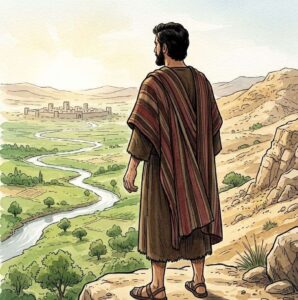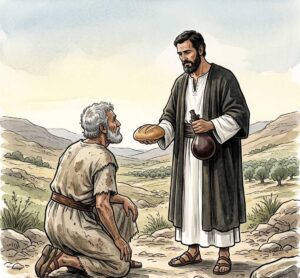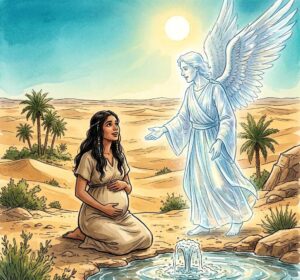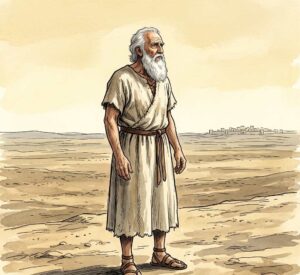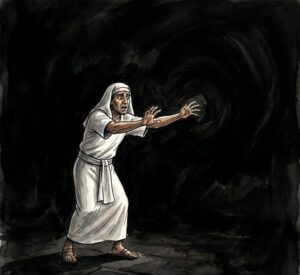

The old man had been a sojourner in the land for many years now, moving from place to place, digging wells and pitching tents and building altars to the Lord. His wife Sarah had died at Hebron, a hundred and twenty-seven years old, and he had buried her in the cave of Machpelah, the only piece of the promised land he ever owned. Now he was living in the south country, between Kadesh and Shur, the same wilderness where Hagar had fled so many years ago.
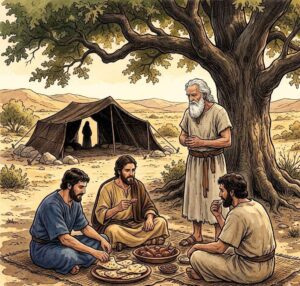
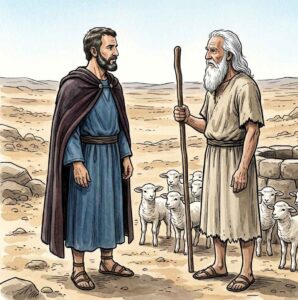
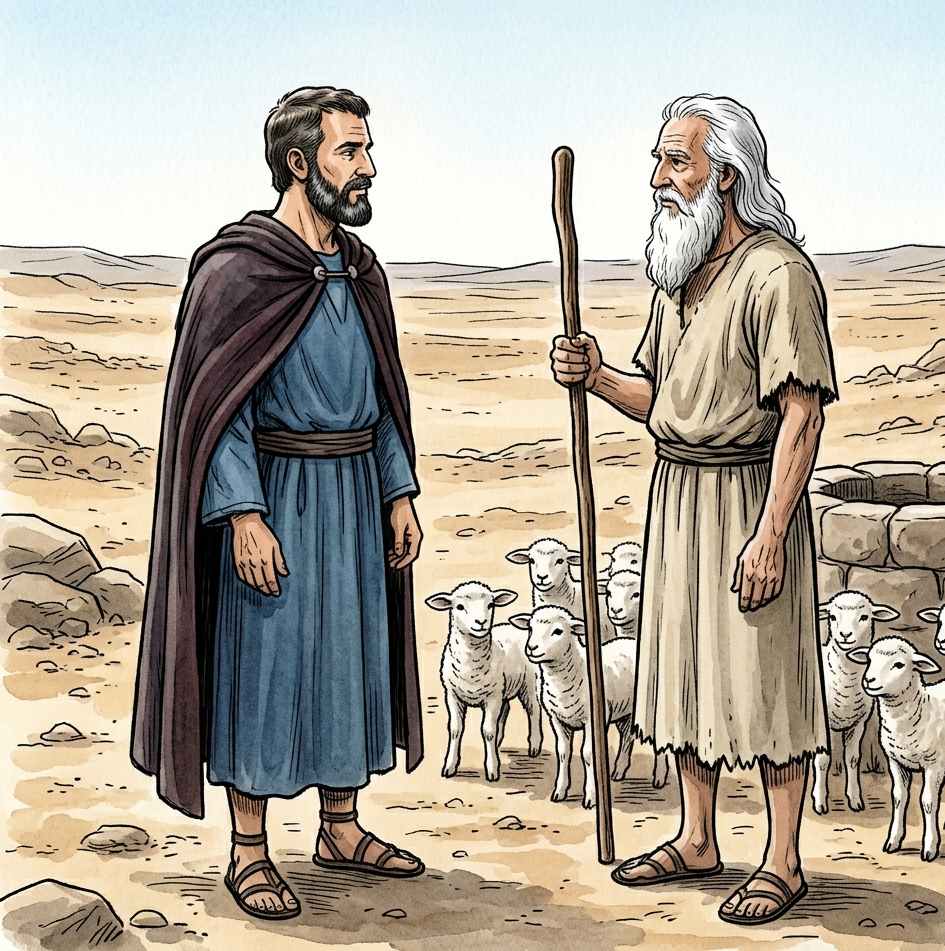
A king came to see him. His name was Abimelech, the king of Gerar, and he did not come alone. Phichol, the chief captain of his army, rode beside him. Two powerful men of the Philistines traveling to the tent of a wandering shepherd. The visit was unexpected, and Abraham must have wondered what they wanted. The last time he had dealt with Abimelech, the king had taken Sarah into his household, believing her to be Abraham’s sister, and the Lord had closed the wombs of all the women of Gerar because of it.
But Abimelech came in peace.
“God is with thee in all that thou doest.”
The words of the king were a confession. He had seen something in the life of Abraham that he could not explain. The old man’s flocks multiplied. His wells produced water where others found only dust. His household grew strong while others struggled. The blessing of the Lord was upon him, and Abimelech had eyes to see it.
The Request for an Oath
“Now therefore swear unto me here by God that thou wilt not deal falsely with me, nor with my son, nor with my son’s son. But according to the kindness that I have done unto thee, thou shalt do unto me, and to the land wherein thou hast sojourned.”
The king wanted an oath. He wanted a covenant, a binding promise that Abraham would deal honestly with him and with his descendants. The old man had deceived him once before, saying Sarah was his sister and putting the king’s household at risk. Abimelech wanted assurance that no such deception would happen again. He wanted peace between his house and the house of Abraham, a peace that would extend to their children and their children’s children.
Abraham did not hesitate. “I will swear.”
The words were simple and binding. The old man who had bargained with the Lord for Sodom now swore an oath before the Lord with a Philistine king. The promise was made. The covenant was sealed. But Abraham had something to say before the meeting was over.
The Dispute Over the Well
“And Abraham reproved Abimelech because of a well of water, which Abimelech’s servants had violently taken away.”
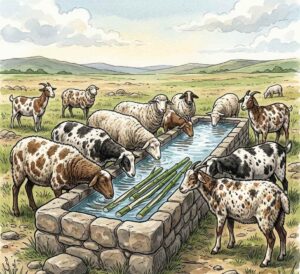
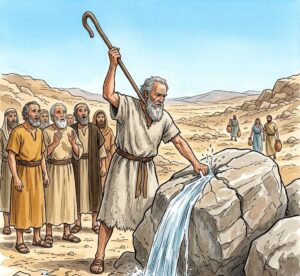
The old man had dug a well. His servants had labored in the hard ground, breaking through rock and sand until water bubbled up from below. A well in that dry country was a treasure. A well meant life for the flocks and the herds and the household. And the servants of Abimelech had seized it by force.
Abimelech looked at Abraham with surprise. “I wot not who hath done this thing. Neither didst thou tell me, neither yet heard I of it, but today.”
The king claimed ignorance. He had not known about the seized well. His servants had acted without his knowledge. But now he knew, and Abraham had brought the matter into the open where it could be settled. The old man did not let the offense pass in silence. He named the wrong and demanded it be made right.
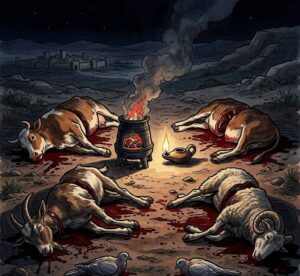
Then Abraham did something that showed the oath was more than words. He took sheep and oxen and gave them to Abimelech. The gift was a sign of goodwill, a tangible act that backed up the spoken promise. The two men made a covenant together, and the sheep and oxen were the witness.
The Seven Ewe Lambs
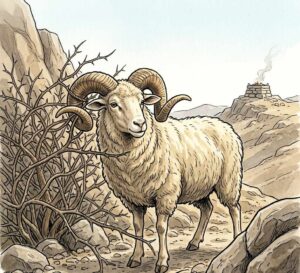
Then Abraham set apart seven ewe lambs of the flock. He placed them to one side, separate from the other animals, and Abimelech looked at them and understood that something more was happening.
“What mean these seven ewe lambs which thou hast set by themselves?”
“For these seven ewe lambs shalt thou take of my hand, that they may be a witness unto me, that I have digged this well.”
The seven lambs were a testimony. They were a legal transaction, a public declaration that the well belonged to Abraham. He had dug it. The water had come from his labor. And these lambs were the proof that Abimelech acknowledged his ownership. The gift was not charity. It was a deed of property sealed in blood and wool.
Wherefore the place was called Beersheba, which means the well of the oath, or the well of the seven. Because there the two men swore an oath. Because there the seven ewe lambs were given. The name would remain long after both men were dead and buried. The well of the oath. The well of the covenant. The place where a wandering shepherd and a Philistine king made peace under the open sky.
The Departure of the King
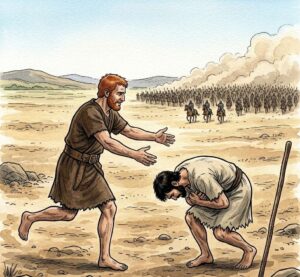
Abimelech rose up, and Phichol the chief captain of his army, and they returned into the land of the Philistines. The king had what he came for. An oath. A covenant. A promise that Abraham would deal honestly with him and with his descendants. The seven ewe lambs had settled the matter of the well. The sheep and oxen had sealed the bond. The two men parted in peace, and the dust of their departure settled on the road back to Gerar.
Abraham stood beside the well and watched them go. The old man had been a stranger in the land for decades, a wanderer with no permanent home, a man whose only title to the ground he walked on was the promise of the Lord. But now he had a well that no one could dispute. He had a covenant with a king that no one could break. He had planted a tree in Beersheba, a tamarisk that would grow for generations, its branches spreading over the place where two men had sworn before God.
And he called there on the name of the Lord, the everlasting God.
The name was a confession. The God who had called him out of Ur, the God who had promised him a seed and a land, the God who had made a covenant with him in blood and fire, was the everlasting God. The God who had no beginning and would have no end. The God whose promises reached beyond the grave and whose faithfulness extended to a thousand generations. Abraham was old now. His wife was buried in the cave at Machpelah. His son Isaac was grown, the child of the promise, the laughter of his old age. And the old man stood by the well of the oath and worshiped the God who had kept every promise he had ever made.
Abraham sojourned in the land of the Philistines many days. The tamarisk grew. The well gave water. And the oath between the shepherd and the king held firm, a covenant of peace in a land where peace was rare, a testimony that the God of Abraham was indeed with him in all that he did.