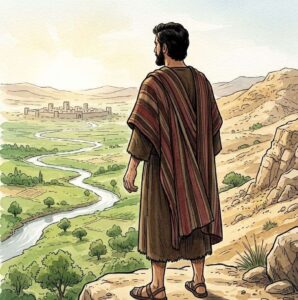

Joseph had walked for days to find them. From the valley of Hebron to Shechem, and from Shechem to Dothan, he had followed the trail of his brothers and their flocks. The coat of many colours marked him from a distance, a bright speck moving across the brown hills, the garment of their father’s love wrapped around the shoulders of the dreamer.
The brothers saw him coming. “Behold, this dreamer cometh. Come now therefore, and let us slay him, and cast him into some pit, and we will say, Some evil beast hath devoured him. And we shall see what will become of his dreams.”
Reuben heard the words and intervened. The eldest brother, the one who had lost his birthright through defiling his father’s bed, stepped forward to save the boy. He convinced the others to throw Joseph into a pit instead of killing him, planning to rescue him later and return him to Jacob. The brothers agreed. They stripped Joseph of his coat, the beautiful garment that had been the sign of their father’s favor, and they cast him into a dry pit in the wilderness. The boy cried out from the darkness, but the brothers sat down to eat bread.
Then a caravan appeared on the horizon. Ishmaelites coming from Gilead, their camels loaded with spices and balm and myrrh, traveling down to Egypt. Judah saw them and saw an opportunity. “What profit is it if we slay our brother, and conceal his blood? Come, and let us sell him to the Ishmaelites, and let not our hand be upon him. For he is our brother and our flesh.”
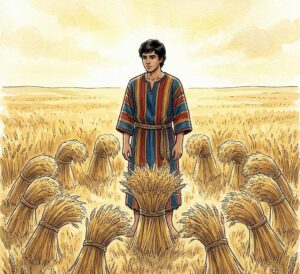
The brothers listened. They pulled Joseph out of the pit and sold him to the Ishmaelites for twenty pieces of silver. The traders lifted him onto a camel and continued their journey south. The boy who had dreamed of sheaves bowing down and stars making obeisance was now a slave, his hands bound, his coat gone, his future sealed by the brothers who had hated his dreams.
But Reuben had been away when the sale happened. He returned to the pit and found it empty. His clothes he tore in grief, the ancient sign of mourning and despair. “The child is not. And I, whither shall I go?”
The eldest brother had lost the boy. The one chance to redeem himself in the eyes of his father had vanished into the desert on the back of a camel. Now the brothers had to face Jacob with a story that would cover their crime. And they had the coat.
The Killing of the Goat
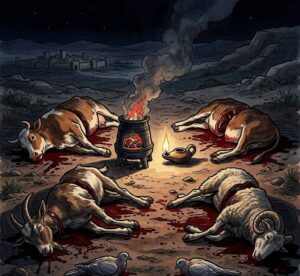
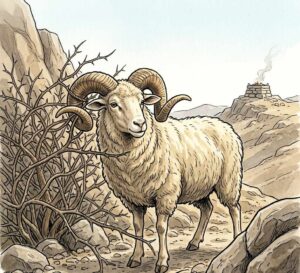
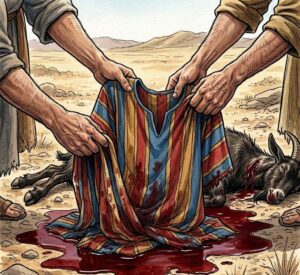
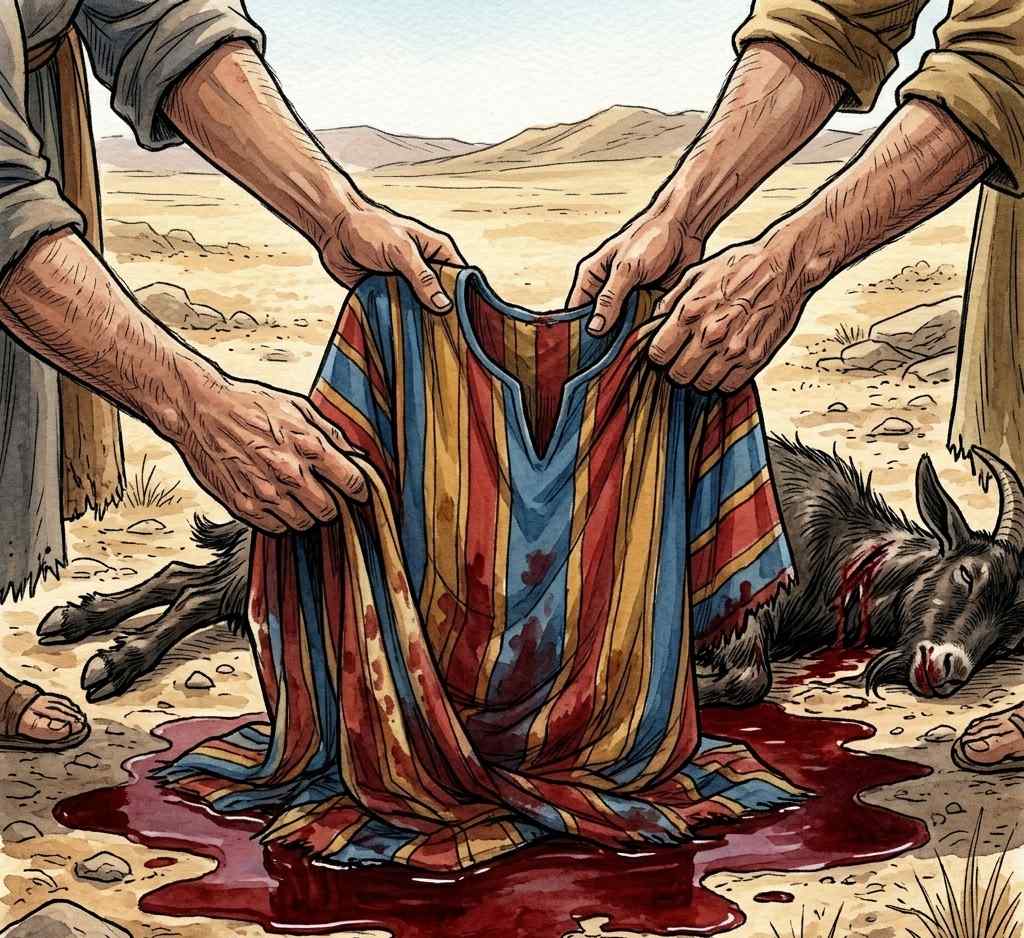
They took a kid of the goats. One of the brothers caught the animal and held it while another drew the knife across its throat. The blood spilled onto the ground, dark and warm, and the goat’s life poured out into the dust. They had killed no brother, but they had killed something. A goat for a son. An animal’s blood for a father’s heart.
They took the coat of Joseph, the beautiful garment their father had made for the son of his old age, the symbol of a love that had wounded them every day of their lives. They dipped the coat in the blood. The rich colours of the fabric soaked up the red stain, the bright stripes darkening to crimson, the beautiful thing becoming a thing of horror. The coat that had declared their father’s favor now declared their brother’s death.
The hands that dipped the coat were the hands of shepherds, men who killed animals every day for food and sacrifice. They knew how blood worked. They knew how it soaked into wool and dried to a dark brown stain. They knew how a father would react when he saw the garment of his beloved son covered in gore. They had planned the deception carefully, and the goat’s blood was the final piece.
The Return to Hebron
They brought the coat to Jacob. The brothers who had sold their own flesh into slavery stood before their father with the blood-soaked garment in their hands. They had rehearsed the words on the journey home. They had agreed on the story. They had prepared their faces to show grief they did not feel.
“This have we found. Know now whether it be thy son’s coat or no.”
The words were carefully chosen. They did not say, “We found Joseph dead.” They did not say, “A wild beast has eaten him.” They simply presented the evidence and let their father draw his own conclusion. The bloodied coat spoke louder than any lie they could have told. The garment that had been the sign of Jacob’s love for Joseph was now the sign of Joseph’s death.
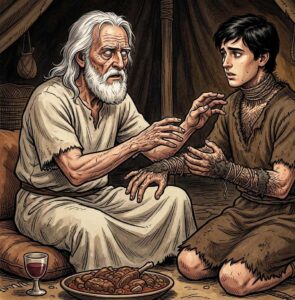
Jacob knew the coat. He had made it with his own hands, chosen the colours, stitched the seams, wrapped it around the shoulders of the boy who reminded him of Rachel. He had seen that coat every day since he gave it to Joseph, a bright spot among the tents, a reminder that the son of his beloved wife was near. Now he saw it soaked in blood, and his world collapsed.
“It is my son’s coat. An evil beast hath devoured him. Joseph is without doubt rent in pieces.”
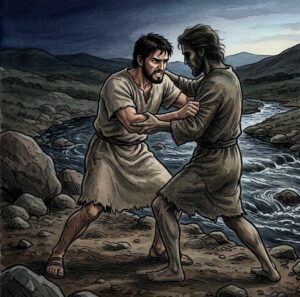
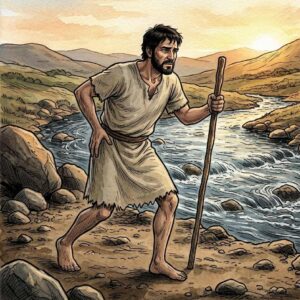
The words tore out of him. The old man who had wrestled with God and prevailed, who had limped across the Jabbok with a new name and a lasting wound, was now broken by grief. He rent his clothes in the ancient gesture of mourning. He put sackcloth on his loins, the rough fabric scratching against his aged skin. He mourned for his son many days.
The Grief of the Father
All his sons and all his daughters rose up to comfort him. The brothers who had sold Joseph into slavery came to their father with words of consolation. They stood beside him and spoke of acceptance and healing. Their hands, which had dipped the coat in goat blood, now touched his shoulders in feigned sympathy. Their mouths, which had lied about the evidence, now offered empty words of comfort.
Jacob refused to be comforted. “For I will go down into the grave unto my son mourning.”
The old man had lost Rachel on the road to Ephrath, buried her beside the way and raised a pillar over her grave. Now he had lost her firstborn son, the child she had prayed for when her womb was closed, the boy whose name meant “he will add.” The grief of the wife and the grief of the son merged into one great sorrow, and Jacob said he would carry that sorrow down to the grave.
Thus his father wept for him. The words are spare and final. The brothers had succeeded in their deception. Their father believed Joseph was dead. The dreams of sheaves and stars had been buried in a pit in the wilderness, and the coat dipped in goat blood was the monument over the grave.
But Joseph was alive. Far to the south, in the land of Egypt, the Midianites sold him to Potiphar, an officer of Pharaoh and captain of the guard. The dreamer had become a slave. The son of the beloved wife had become property in a foreign land. The sheaves were still standing in the field, waiting to bow. The stars were still fixed in the heavens, waiting to make obeisance. And the coat that had been dipped in goat blood was still in the hands of Jacob, who wept for a son who would one day save his life.