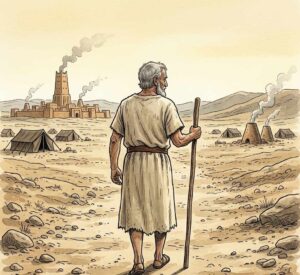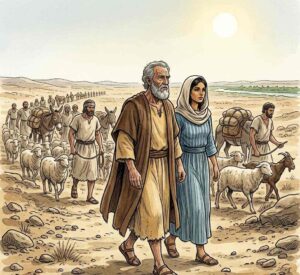

The children of Israel had marched out of Egypt with their flocks and their herds and their kneading troughs bound up in their clothes upon their shoulders. The Lord went before them by day in a pillar of cloud to lead them the way, and by night in a pillar of fire to give them light. They had not taken the short road through the land of the Philistines, the road that would have brought them to war before they were ready. Instead, the Lord had led them toward the Red Sea, toward a place where the wilderness and the water would hem them in on every side.
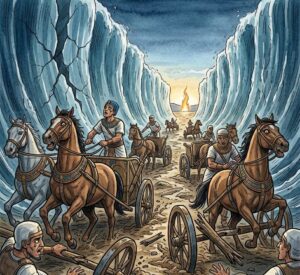
Pharaoh had let them go, but the hardening of his heart had returned like a sickness that would not be cured. The king of Egypt looked at his empty brick pits and his silent fields and realized what he had done. He had released the entire labor force of his empire. He had freed the slaves who built his cities and worked his land. And now he would pursue them. He gathered six hundred chosen chariots, all the chariots of Egypt, and captains over every one of them. His army thundered after the Hebrews, the dust of their horses rising like a storm on the horizon.
The children of Israel lifted up their eyes and saw the Egyptians marching after them. The sea was before them. The mountains were on either side. The chariots of Pharaoh were behind them. They were trapped, and they were terrified, and they cried out to the Lord.
The Cry of Fear
They turned on Moses with the bitterness of a people who had seen the power of God but could only see the danger before them. “Because there were no graves in Egypt, hast thou taken us away to die in the wilderness? Wherefore hast thou dealt thus with us, to carry us forth out of Egypt? Is not this the word that we did tell thee in Egypt, saying, Let us alone, that we may serve the Egyptians? For it had been better for us to serve the Egyptians, than that we should die in the wilderness.”
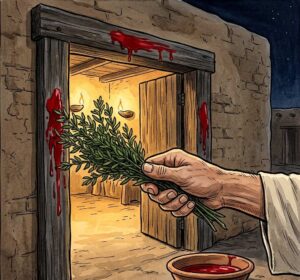
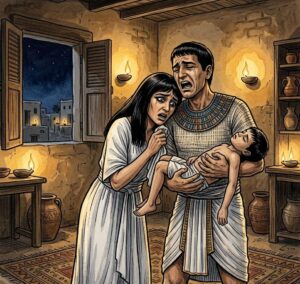
The words were sharp with fear. They had forgotten the plagues. They had forgotten the blood on the doorposts. They had forgotten the cry that rose from every house in Egypt while their own children slept in safety. The Egyptians were coming, and the sea was before them, and the faith that had sustained them through the Passover was crumbling at the first sign of danger.
Moses answered the people with words that were steady and sure. “Fear ye not. Stand still, and see the salvation of the Lord, which he will shew to you today. For the Egyptians whom ye have seen today, ye shall see them again no more for ever. The Lord shall fight for you, and ye shall hold your peace.”
The command was to stand still. The people wanted to run. They wanted to fight. They wanted to do something. But the Lord was telling them that their salvation would come not by their own effort but by his power. They would not need to lift a sword. They would not need to raise a shield. They would only need to watch.
The Stretching Out of the Rod
Then the Lord spoke to Moses. “Wherefore criest thou unto me? Speak unto the children of Israel, that they go forward. But lift thou up thy rod, and stretch out thine hand over the sea, and divide it. And the children of Israel shall go on dry ground through the midst of the sea.”
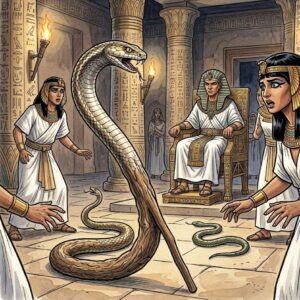
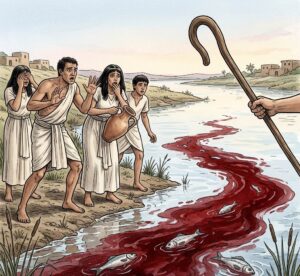
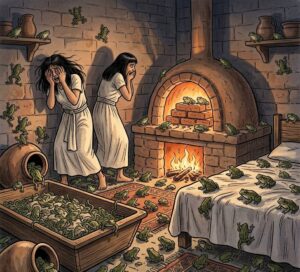
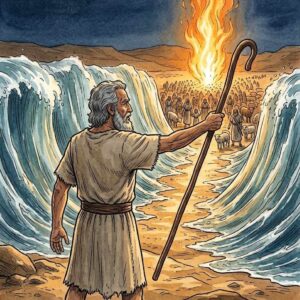
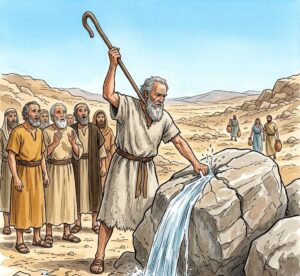
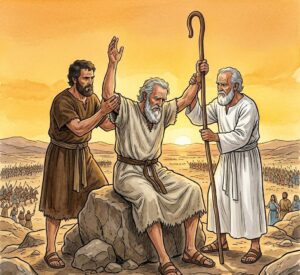
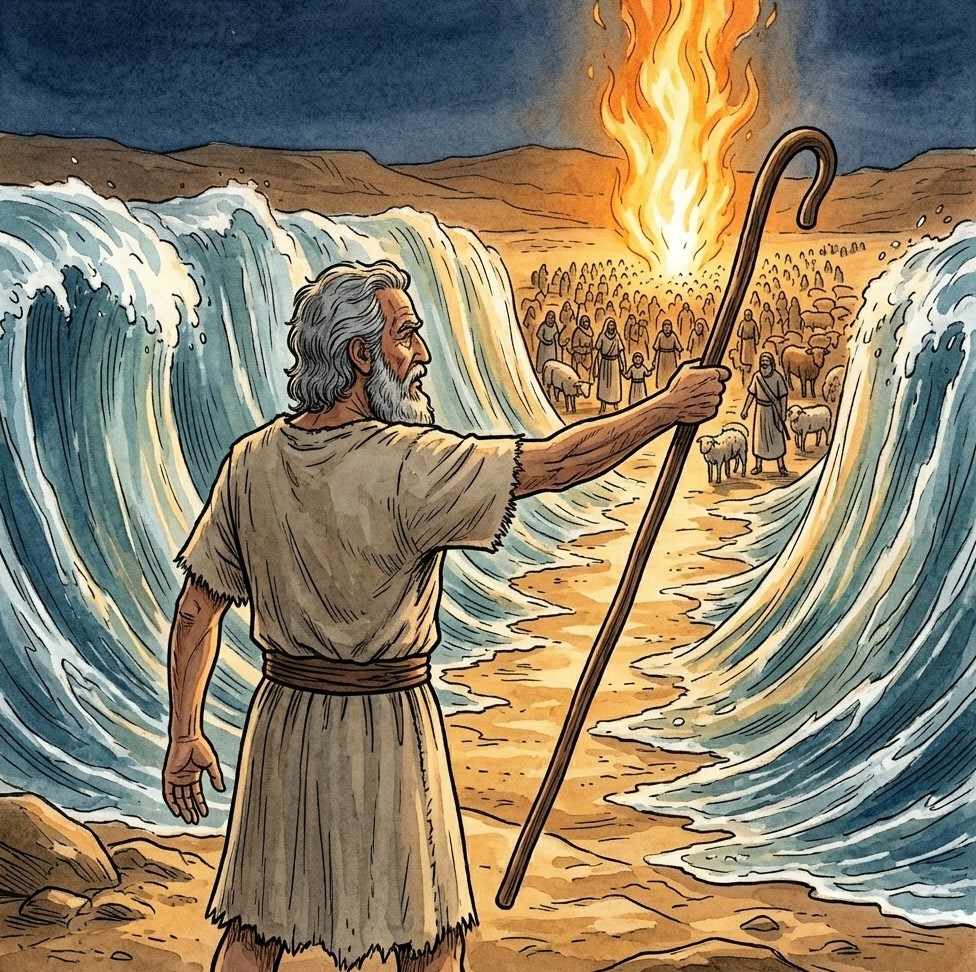
Moses lifted up his rod. The same staff that had become a serpent before Pharaoh, the same staff that had struck the Nile and turned it to blood, the same staff that had summoned the frogs and the lice and the hail and the locusts, was now stretched out over the waters of the Red Sea. The shepherd’s tool that had become the instrument of judgment was now becoming the instrument of deliverance.
The angel of God, which went before the camp of Israel, removed and went behind them. The pillar of cloud moved from the front of the column to the rear, standing between the Hebrews and the Egyptians. It was a cloud and darkness to the Egyptians, but it gave light by night to the children of Israel. The pursuing army could not come near the fleeing slaves all night. The Lord had placed himself between his people and their enemies.
Moses stretched out his hand over the sea. And the Lord caused the sea to go back by a strong east wind all that night.
The Waters Divided
The wind blew across the surface of the water, and the sea began to move. The waves that had lapped against the shore began to draw back. The water that had filled the basin of the Red Sea began to pile up on either side. The wind continued through the darkness, a steady force that was not natural but divine, the breath of the Lord pushing back the deep.
The sea split open. The waters stood up like a wall on the right hand and on the left. The floor of the sea became dry ground, a path where no path had ever existed, a road through the heart of the deep. The children of Israel looked at what the Lord had done, and they began to move. They went into the midst of the sea upon the dry ground. The waters were a wall unto them on their right hand and on their left.
The entire nation walked through the sea. The men and the women and the children. The flocks and the herds and the camels. The kneading troughs and the bundles of clothing. The young and the old, the strong and the weak, the faithful and the doubting. They all walked on the dry ground at the bottom of the sea, the walls of water towering above them, the wind of the Lord holding back the judgment that should have drowned them all.
The crossing took all night. The pillar of fire held the Egyptians at bay while the Hebrews passed through the sea. And when the last foot stepped onto the far shore, the morning was beginning to break. The deliverance was almost complete. But the Egyptians were still pursuing.