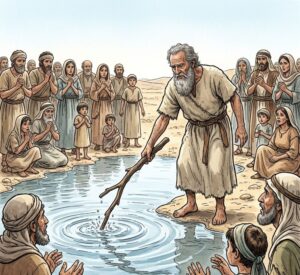

The whole congregation of the children of Israel murmured against Moses and Aaron in the wilderness. The water of Marah had been made sweet, and the twelve wells of Elim had refreshed their bodies, but the memory of provision was already fading. The people looked at the barren wilderness around them and longed for the land of their slavery. Their hunger made them forget the lash of the taskmasters and the weight of the bricks. All they could remember was the food.
“Would to God we had died by the hand of the Lord in the land of Egypt, when we sat by the flesh pots, and when we did eat bread to the full. For ye have brought us forth into this wilderness, to kill this whole assembly with hunger.”
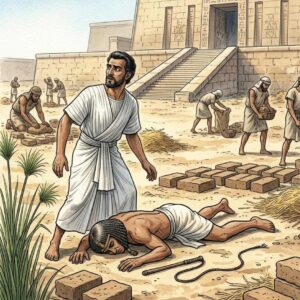
The words were a bitter inversion of the truth. They had not sat by the flesh pots in Egypt. They had labored under the sun while the Egyptians ate. They had not eaten bread to the full. They had been beaten when they failed to meet their quotas. But hunger has a way of rewriting the past, and the people remembered Egypt as a land of plenty rather than a house of bondage.
The Lord heard their murmurings and answered with mercy instead of judgment. “Behold, I will rain bread from heaven for you. And the people shall go out and gather a certain rate every day, that I may prove them, whether they will walk in my law, or no.”
The Glory in the Cloud
Moses and Aaron gathered the people and told them what the Lord had promised. “At even, then ye shall know that the Lord hath brought you out from the land of Egypt. And in the morning, then ye shall see the glory of the Lord, for that he heareth your murmurings against the Lord. And what are we, that ye murmur against us?”
The words were a reminder of who was truly leading them. Moses and Aaron were servants, instruments in the hand of the Lord. The murmurings of the people were not against men but against God. And the Lord would answer their complaints with a display of his glory that would leave them without excuse.
As Aaron spoke to the congregation, they looked toward the wilderness, and behold, the glory of the Lord appeared in the cloud. The pillar that had led them through the sea and stood between them and the Egyptians now blazed with the presence of the Lord. The cloud was no longer just a guide. It was a throne, and the King of heaven was seated upon it, looking down on the people who had doubted his power to provide.
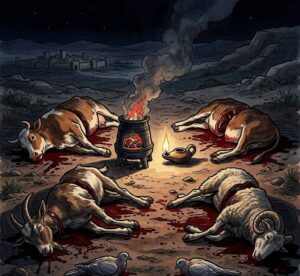
That evening, quails came up and covered the camp. The birds flew in from the wilderness, thousands upon thousands of them, settling on the ground around the tents of Israel. The people who had longed for the flesh pots of Egypt were given meat in abundance. The Lord had heard their complaint and answered with provision beyond their asking.
The Bread from Heaven
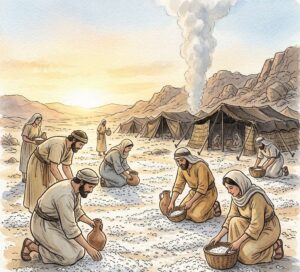
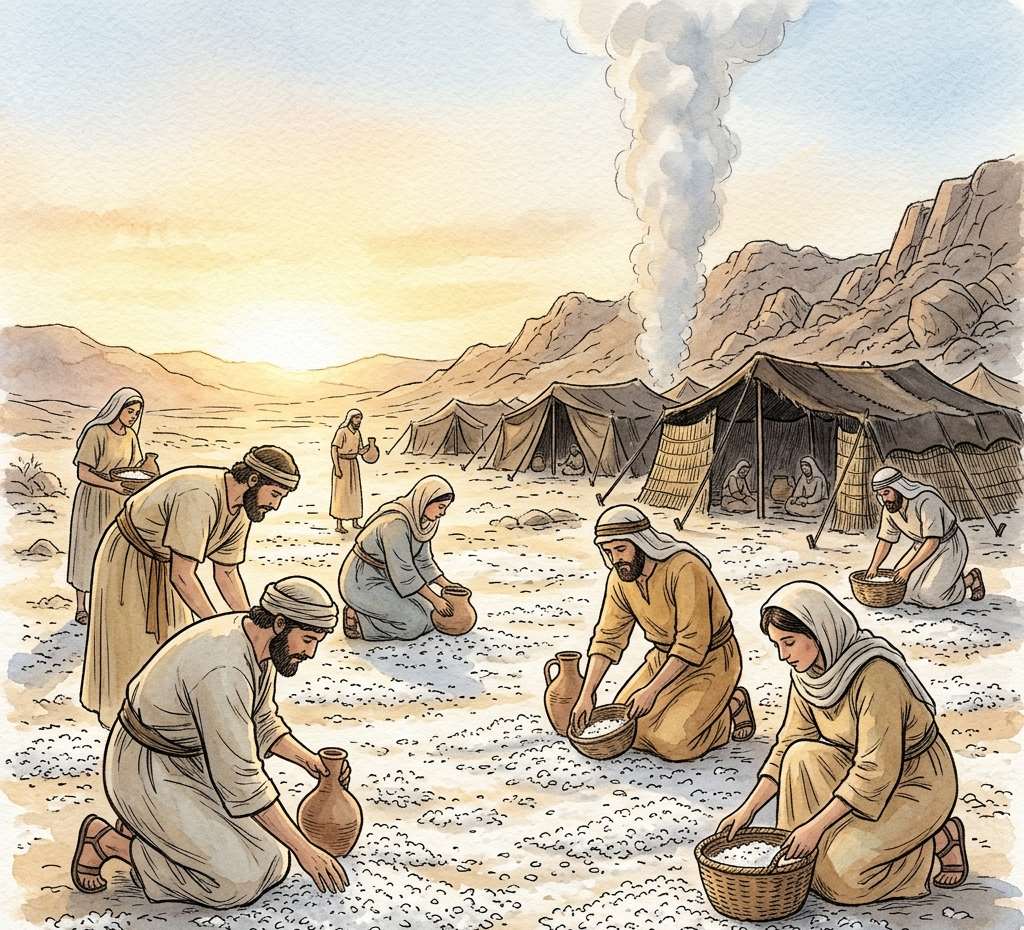
In the morning, the dew lay round about the host. The sun rose over the wilderness, and the camp of Israel was covered with the moisture of the night. But when the dew went up, something remained on the ground that no one had ever seen before. A small round thing, as small as the hoar frost on the ground. It was white, like coriander seed, and it covered the face of the wilderness like a blanket of snow.
The children of Israel looked at the strange substance and turned to one another in confusion. “It is manna.” The word meant “What is it?” and the name stuck. They did not know what it was, but they would learn. This was the bread that the Lord had promised, the food that would sustain them through forty years of wandering, the daily provision that would teach them to trust in the hand of God.
Moses spoke the command of the Lord. “This is the bread which the Lord hath given you to eat. Gather of it every man according to his eating, an omer for every man, according to the number of your persons. Take ye every man for them which are in his tents.”
The Daily Gathering
The people went out and gathered. They bent down and scooped the white flakes from the ground, filling their vessels with the bread of heaven. The manna was like coriander seed, white, and the taste of it was like wafers made with honey. It could be ground in mills, beaten in a mortar, baked in pans, and made into cakes. The Lord had given them food that was both nourishing and sweet, a daily reminder that he could spread a table in the wilderness.
The command was precise. Gather an omer for each person. No more and no less. Those who gathered much had nothing over, and those who gathered little had no lack. The Lord had measured the provision exactly to the need of the people. The manna was a lesson in trust. They could not store it up for the future. They could not gather enough on one day to last for the next. If they tried to keep it overnight, it bred worms and stank. The Lord was teaching them to depend on him one day at a time.
On the sixth day, they gathered twice as much. The Lord had commanded that the Sabbath be a day of rest, and the manna that was gathered on the sixth day did not spoil when kept for the seventh. The double portion on the sixth day was a sign that the Lord would provide even when they did not work. The Sabbath was a gift of rest, and the manna was the guarantee that rest would not lead to hunger.
The children of Israel did eat manna forty years, until they came to a land inhabited, to the borders of the land of Canaan. Every morning, except the Sabbath, the bread of heaven appeared on the ground like frost. Every morning, the people went out and gathered their daily portion. The Lord who had divided the sea and turned bitter water sweet now fed his people with bread from heaven. The bread that fell on the desert floor was the daily proof that the God of Abraham had not brought them into the wilderness to die. He had brought them there to teach them that man does not live by bread alone, but by every word that proceeds from the mouth of the Lord.